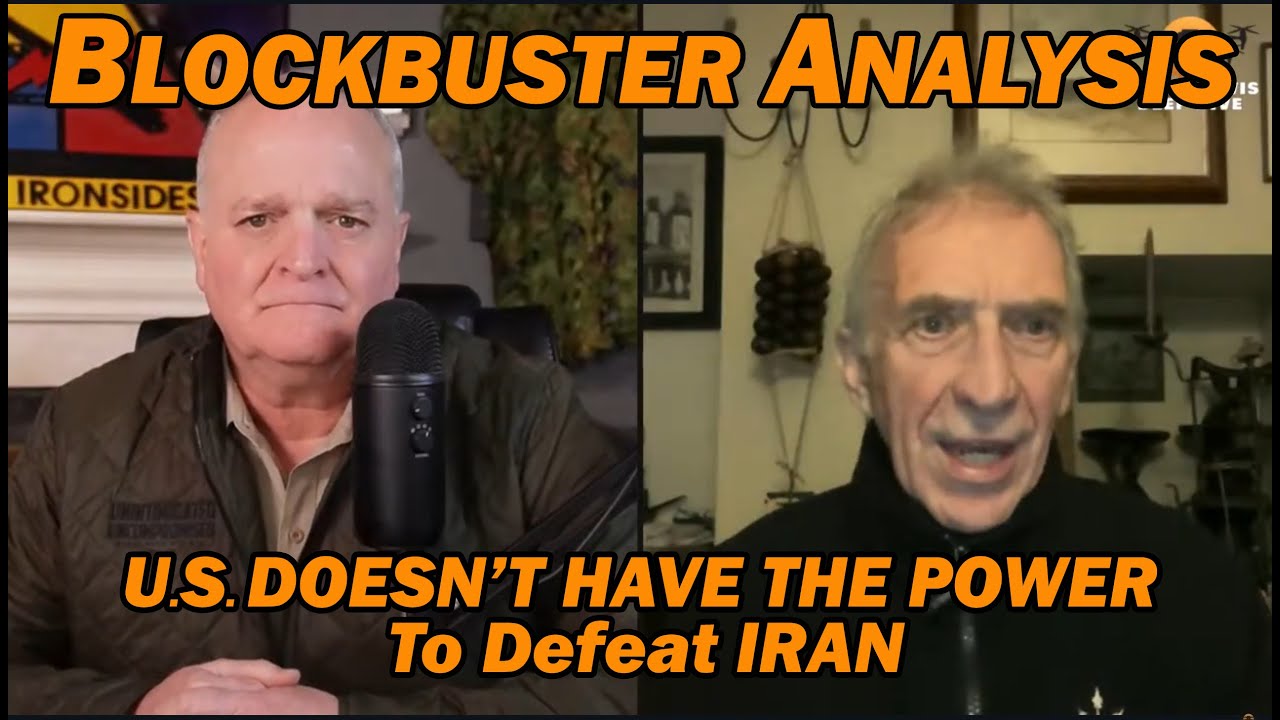
BLOCKBUSTER ANALYSIS: U.S. Doesn't Have the Power to Defeat Iran /Steve Jermy & Lt Col Daniel Davis
Автор: Daniel Davis / Deep Dive
Загружено: 2026-01-30
Просмотров: 98960
Описание:
** NEW MERCH ** Jackets & Sweatshirts, Thermo Mugs!!
Daniel Davis Deep Dive Merch: Etsy store
https://www.etsy.com/shop/DanielDavis...
Threat from Iranian missiles to a U.S. carrier fleet
Primary naval threat isn’t Iranian bases in the Gulf: Aside from Bandar Abbas (near the Strait of Hormuz), Iranian Gulf bases and conventional submarines are a secondary concern. Their Kilo-class subs are quiet but operate best in shallow water, limiting their effectiveness in deeper seas.
Carrier operating environment: Deep waters near Iran actually favor U.S. nuclear submarines (SSNs), reducing Iranian undersea threats there. Carrier strike groups would operate in carefully chosen “boxes,” trading distance for safety and access to airspace.
Air operations are constrained: Iran is far inland. Carrier aircraft would need to fly hundreds of miles over defended territory, increasing risk. Deep strikes without clear objectives would put pilots and aircraft at real risk, especially once losses begin.
Iranian air defenses are the key risk to aircraft: Systems like S-300/S-400 pose serious danger. The U.S. relies heavily on electronic warfare (Growlers) and jamming, but defenses can saturate jamming over time. Achieving air superiority is not guaranteed and could take days—or longer.
Suppression of air defenses (SEAD) isn’t a sure thing: Iran has learned from past attacks. Air defense units can move, hide, shut down radars, and reappear later. Knocking them all out quickly is unlikely.
Anti-ship missiles (cruise-type): Iran’s traditional Russian-derived anti-ship missiles (low- or medium-altitude) are considered manageable by U.S. ship defenses.
Big uncertainty: ballistic & hypersonic missiles:
The real question is whether Iran can accurately hit a moving carrier with ballistic or hypersonic missiles.
Hitting a carrier requires real-time tracking, midcourse updates, and terminal guidance—far harder than striking a fixed base.
The speaker doubts Iran currently has reliable terminal guidance for this mission, but no one can be fully certain.
Carrier survivability: Unlike land bases, carriers move fast and constantly change position, complicating missile targeting. U.S. ships also carry layered missile defenses.
Bottom line:
The U.S. can create significant destruction and chaos, but not with certainty or without risk.
Iranian retaliation—especially missile-based—is the main danger, and while a catastrophic carrier loss isn’t assured, the threat is real enough to make commanders cautious.
Overall, this is a high-risk operation with unclear strategic payoff, not a clean military solution.
Повторяем попытку...
Доступные форматы для скачивания:
Скачать видео
-
Информация по загрузке: