Understanding Shoulder Impingement: Symptoms, Tests, Treatment, and Surgery
Автор: nabil ebraheim
Загружено: 2024-10-15
Просмотров: 18199
Описание:
Join and support this channel.
/ @nabilebraheim
Understanding Shoulder Impingement: Symptoms, Tests, Treatment, and Surgery
Introduction
Shoulder impingement is a common cause of shoulder pain in approximately 50% of patients reporting shoulder problems. It may also be referred to as cuff tendonitis or shoulder bursitis, which is more familiar to patients. This condition involves irritation of the rotator cuff tendons, which, if untreated, can result in tendon degeneration or tears, often due to overuse.
Anatomy of the Shoulder
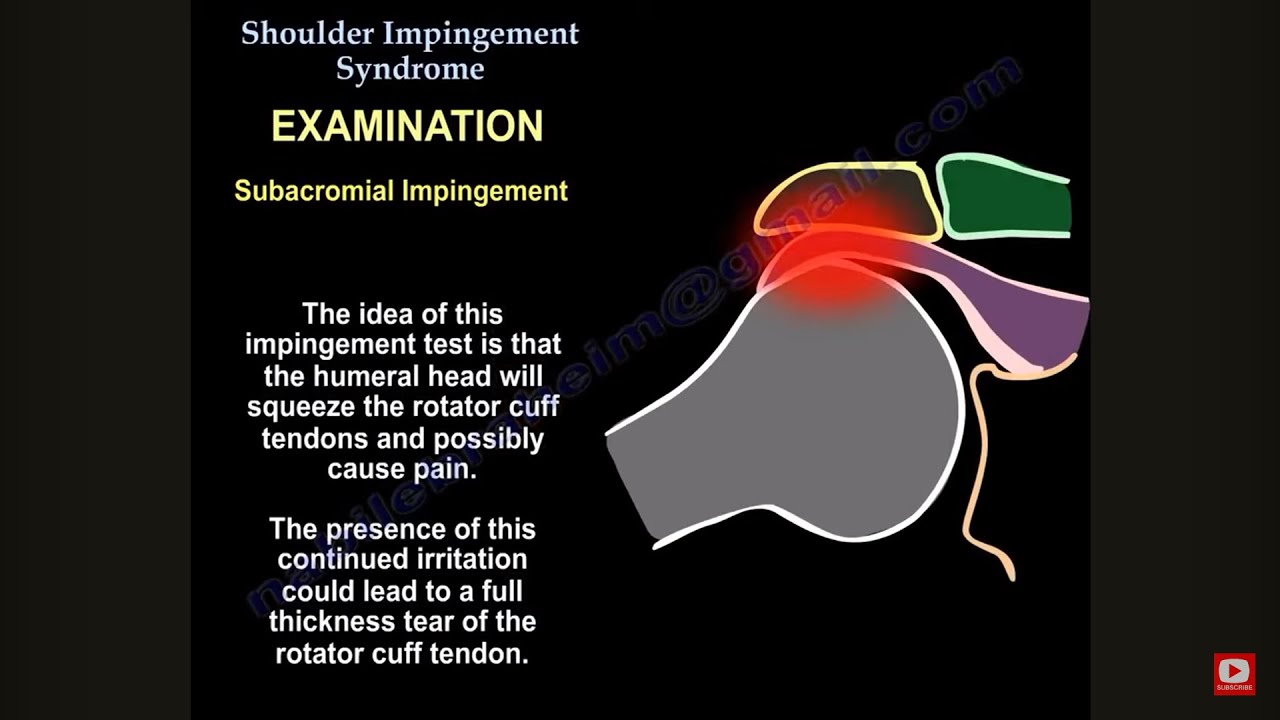
The shoulder is a complex joint involving several key structures: the scapula, glenoid, head of the humerus, and the rotator cuff muscles inserted into the greater tuberosity. Above the rotator cuff lies the bursa, and above the bursa is the acromion. The rotator cuff tendons pass through a narrow space between the bones as the arm moves. This limited space increases the risk of compression and irritation, leading to pain and dysfunction.
Symptoms and Diagnosis
Patients often present with shoulder pain that worsens with overhead activities. If the patient experiences night pain, it may indicate a cuff tear, suggesting that non-operative treatment might not be effective. Diagnosis begins with a thorough history and physical examination, where the patient’s arm is moved cautiously to assess for pain and discomfort. Several tests help identify impingement:
Neer Impingement Sign: Pain caused by compression of the rotator cuff.
Neer Impingement Test: Pain relief after injecting a numbing agent confirms impingement.
Hawkins' Sign: Pain occurs when the greater tuberosity is brought under the acromion, reproducing impingement symptoms.
Imaging Techniques
Imaging studies play a crucial role in confirming the diagnosis of shoulder impingement. X-rays and MRI are typically used:
X-rays:
True AP view
Scapular Y view (lateral)
Supraspinatus outlet view
X-rays can reveal bone spurs on the under-surface of the acromion, which irritates the rotator cuff tendons. MRI is particularly useful for detecting soft tissue injuries and assessing the integrity of the rotator cuff.
Treatment Options
Non-Operative Management
Conservative treatment options are often the first step in managing shoulder impingement:
NSAIDs to reduce inflammation
Physiotherapy to restore movement and strengthen muscles
Subacromial injections of cortisone and anesthetic to relieve pain
Surgical Intervention
Surgery is recommended if non-operative treatment fails after 4-6 months. However, outcomes may vary, particularly in cases involving worker’s compensation claims. Common surgical interventions include:
Subacromial decompression: Shaving the underside of the acromion to create more space for the tendons.
AC joint excision: Removing part of the clavicle if AC joint pain coexists with impingement.
Biceps tenotomy or tenodesis: Treating biceps tendonitis if it is associated with the rotator cuff injury.
Post-Surgery Recovery
Recovery following shoulder surgery is typically straightforward:
Sling usage: For the first few days post-surgery.
Return to daily activities: Within 1-2 days.
Lift arm above the head: Within 2 weeks.
Near normal condition: Achieved by 2 months.
Surgical Complications
Though surgery generally yields favorable outcomes, certain complications may arise:
Deltoid dysfunction:
May occur due to acromionectomy or OS excision. Proper healing is crucial before performing an acromioplasty.
Coracoacromial ligament excision risks:
In cases involving massive cuff tears, avoid acromioplasty and coracoacromial ligament release to maintain the coracoacromial arch and prevent further instability.
Conclusion
Shoulder impingement is a common but manageable condition. Early diagnosis, appropriate non-operative management, and timely surgical intervention, when necessary, are essential for a positive outcome. Patients who follow the recommended rehabilitation protocols can expect to regain normal function within a few months after surgery.
Повторяем попытку...
Доступные форматы для скачивания:
Скачать видео
-
Информация по загрузке:


