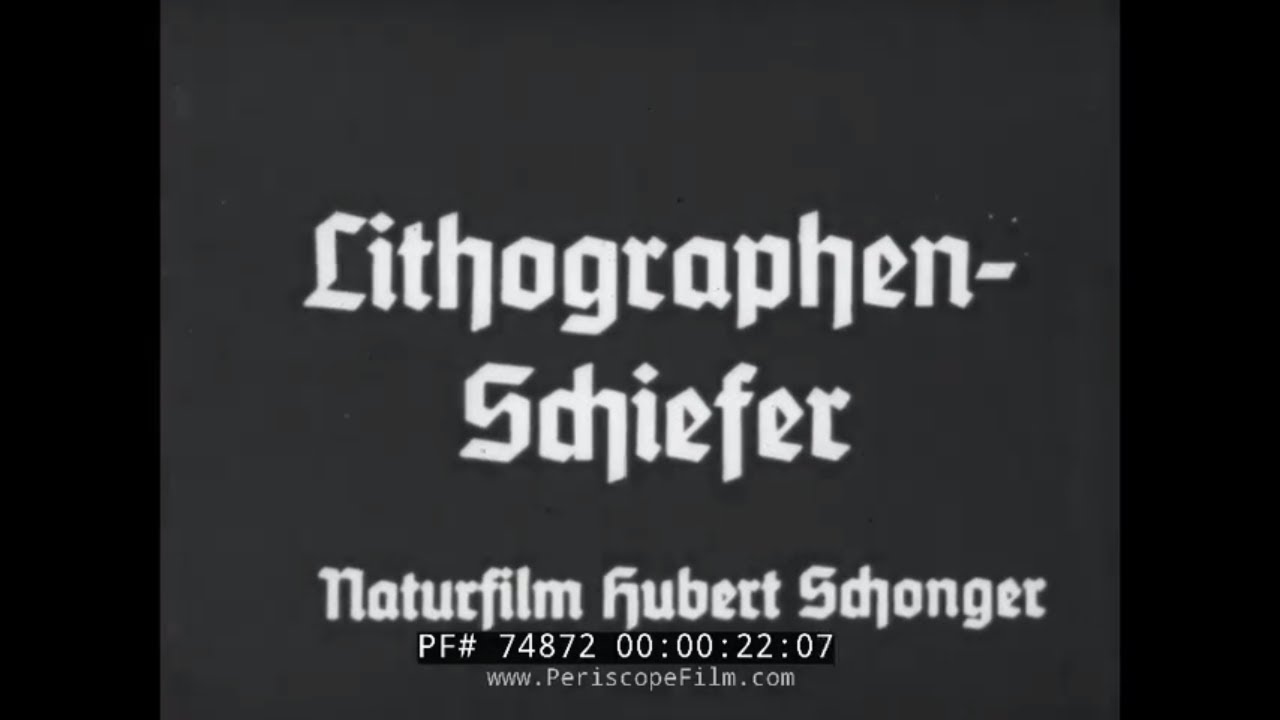
“LITHOGRAPHEN-SCHIEFER” 1930’S SOLNHOFEN, GERMANY LIMESTONE QUARRY & LITHOGRAPHY (SILENT) 74872
Автор: PeriscopeFilm II
Загружено: 2019-02-26
Просмотров: 4247
Описание:
Join this channel to get access to perks:
/ @periscopefilm
Support us on Patreon, visit / periscopefilm
Visit our website www.PeriscopeFilm.com
View our Amazon store here: https://amzn.to/3XQHsVD
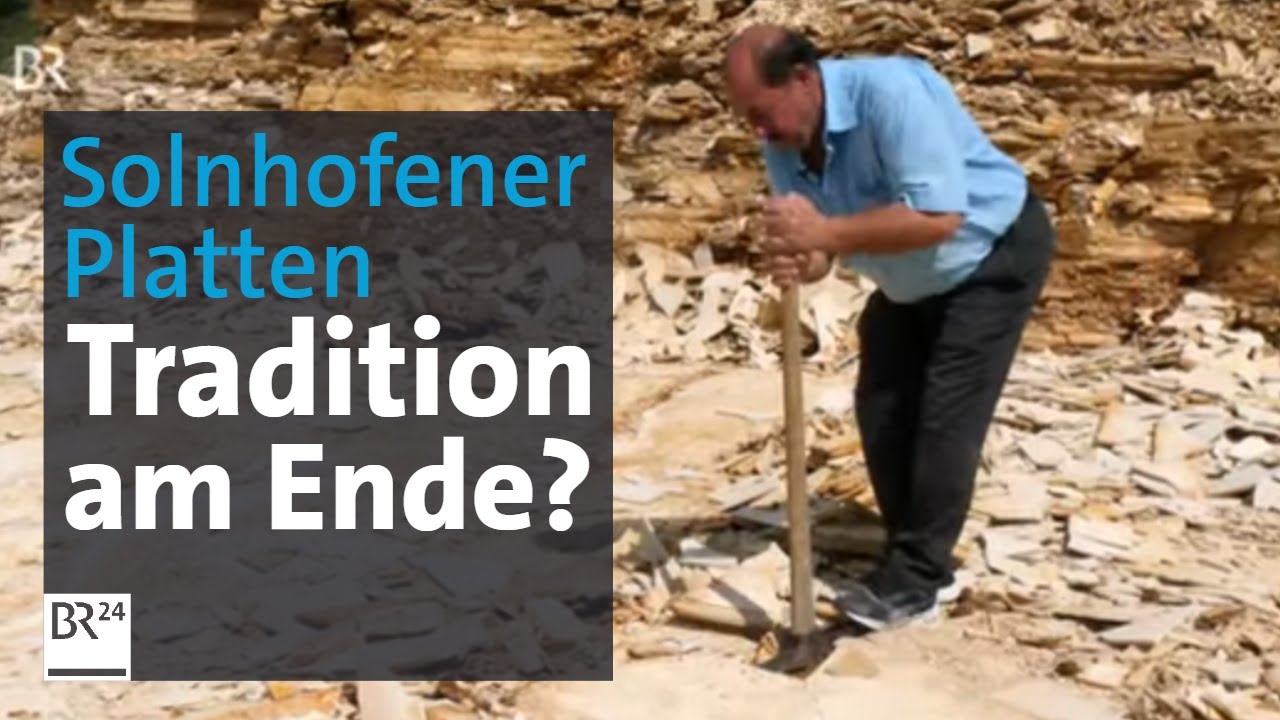
“Lithographen-Schiefer” is a black and white silent by German film director; Hubert Schonger about the Solnhoffen limestone quarry in the 1930’s. Hubert was a film director, producer and screenwriter active between 1937 and 1969. Here he tours the rich limestone quarry of Bavaria between Munich and Nuremburg in the town of Solnhofen from which the quarry received it’s name. The site began as the original source for lithographic limestone and for many years it would remain the only source. It produces hard limestone that is sufficiently fine grained, homogenous and detect free making it ideal for lithography. The beds cover the Swabian and Franconian Albs. Lithography; developed by German author and actor Alois Senefelder in 1796, is a method of printing onto stone or metal plate initially used for music scores or maps. Extensive quarrying for limestone in the 19th century led to the discovery of precious fossils. It is known as a Jurrasic Konservat-Lagerstatte; a sedimentary deposit rich with fossils from the Jurassic period at times even preserved with soft tissues. The fossils are so well maintained they are known to be of the world’s most impressive. The early feathered dinosaur, the Archaeopteryx was unearthed here. Solnhofen has provided a rare glimpse into ancient ecosystems of the Tethys Sea. Sites such as this are valuable for providing important historic information on the evolution of life. The 1930’s saw the area as a meeting place of ancient geological treasures and human industry producing printing plates and fossils. Modern printing methods were, however, rising in popularity. It is also relevant to note Bavaria was transforming from a center of the Nazi movement into a fully controlled Nazi state. It provides a view of 1930’s style limestone quarrying showing methods of extraction and processing limestone for lithography. It begins in the pits touring benches and the floor of the mine following workers as they utilize hand tools such as picks, mattocks, wedges, sledge hammers, galamanders, adze’s and crowbars to crack and separate the precious stone for transport. Minecarts and forklifts move materials for stock piles and later to processing plants. The slabs are polished, separated into sheets, sent for the print shop and run through flatbed presses. Limestone is still quarried here for prime flooring, roof tiles and lithographic limestone. It is still quarried by hand adding to it’s value.
00:00 Title screen with credit to Schonger (:10). Views of the Altmuhl River Valley and town of Solnhofen near Eichstatt (:24). The Solhofen church. The pits sweeping the rich limestone cliffs (:46), benches (1:29), mine carts (1:47) and workers hammering wedges into splits in the stone in unison (1:56-2:06). Miners use long handled adzes (2:32). Wedges sit behind them in back shots (3:06). One worker hammers across the center of the floor creating cracks (3:09), others use wedges to separate layers of limestone (3:28) and crowbars to lift large flat chunks (3:34). Smaller hand tools are utilized to separate thinner portions (3:54). Shovels push off the separated chunks (4:15). Close shots watch the crowbar breaking cracks into limestone (4:50). Small hammers create fractures and adze’s lift cracked portions (5:21) for separation (5:35). Stone is lifted onto a galamander for transport (6:35). Pieces are cut to specific sizes (7:25). Marked parts are broken off (7:45). Hammers create indents across the sheet to enable easy separation (7:58).A forklift transports materials from the mine and through town (8:24). Miners hand push carts full of stone over tracks (8:59). Views pan up stockpiles of limestone (9:08) towards delivery trucks adding more (9:20). Machinery begins the process of graining the limestone (10:02). Workers break stones into smaller pieces and hand polish slabs (11:50). Hand tools are used for proper sizing (13:18). Slabs are added to stockpiles out side the plant (13:44). Fine sheets are run through flatbed printing presses (14:29) and a man inspects a lithographic relief map (14:38). The End.
Motion picture films don't last forever; many have already been lost or destroyed. We collect, scan and preserve 35mm, 16mm and 8mm movies -- including home movies, industrial films, and other non-fiction. If you have films you'd like to have scanned or donate to Periscope Film, we'd love to hear from you. Contact us via the link below.
This film is part of the Periscope Film LLC archive, one of the largest historic military, transportation, and aviation stock footage collections in the USA. Entirely film backed, this material is available for licensing in 24p HD and 2k. For more information visit http://www.PeriscopeFilm.com
Повторяем попытку...
Доступные форматы для скачивания:
Скачать видео
-
Информация по загрузке: