Pakistan's first nuclear Plant | History of Pakistan
Автор: Sajid Afzal (Mahar)
Загружено: 2022-11-19
Просмотров: 25891
Описание:
PAKISTAN'S NUCLEAR POLICY UNDER Z.A. BHUTTO : • PAKISTAN'S NUCLEAR POLICY UNDER Z.A. BHUTT...
1955: Establishment of Pakistan Atomic Energy Commission (PAEC).
1965: Prime Minister Zulfikar Ali Bhutto announces “If India builds the bomb, we will eat grass or leaves, even go hungry. But we will get one of our own.”
November 1965: The 5 MWt Pakistan Research Reactor (PARR-1), fueled with highly enriched uranium (HEU), achieves criticality.
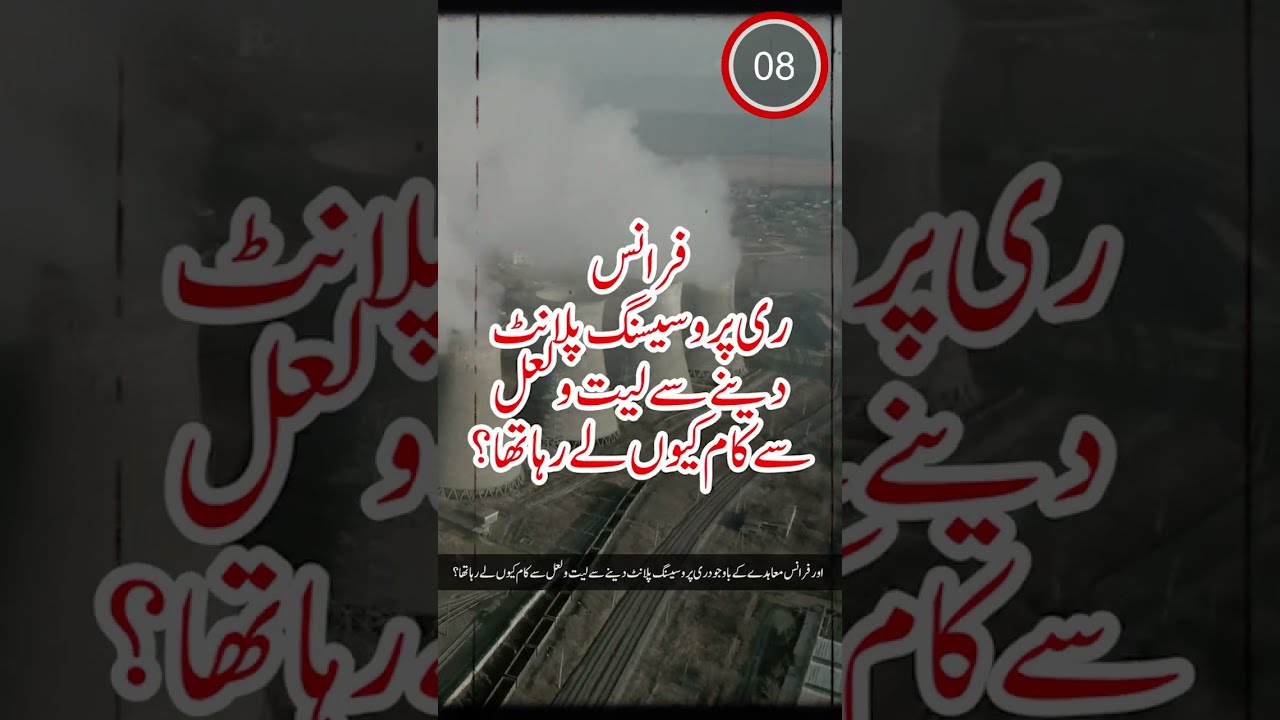
1970s: Pakistan reportedly obtains technology and equipment for the New Labs reprocessing plant from Belgium and France, with the majority coming from Belgonucleaire, according to Pakistani sources.
1971: Pakistan’s 125 MWe Karachi Nuclear Power Plant (KANUPP) pressurized heavy water reactor (PHWR) becomes operational. According to a report from the American Nuclear Society, Canadian General Electric Co. has served as the supplier, architect-engineer, and constructor of the facility.
1972: Z.A. Bhutto gathers Pakistan’s top scientists at Multan, and orders them to build an atomic bomb.
1972: Dr. Abdul Qadeer Khan (a.k.a. A.Q. Khan) reportedly begins work in Amsterdam at the engineering company Physical Dynamics Research Laboratory (FDO), which worked closely with the Urenco uranium consortium.
1974: India conducts its first nuclear test.
1976: A.Q. Khan becomes director of the Engineering Research Laboratories at Kahuta.
1976: Canada terminates the supply of technical assistance, spare parts, and fuel to Pakistan’s KANUPP nuclear facility.
April 1978: According to A. Q. Khan, Pakistan achieves its first centrifugal enrichment of uranium in Rawalpindi.
1979: The United States suspends economic and military aid to Pakistan under section 669 of the Foreign Assistance Act of 1961, after receiving what it believes to be credible evidence of Pakistan’s covert construction of an uranium enrichment facility.
Early 1983: According to A. Q. Khan, Pakistan achieves ninety percent enrichment of uranium.
1984: Kahuta enrichment plant produces enriched uranium. Pakistan’s President General Mohammed Zia ul-Haq is quoted as saying that “Pakistan has acquired very modest research and development capability of uranium enrichment very successfully,” emphasizing that it is for “nothing but peaceful purposes.”
1984: According to A. Q. Khan, Pakistan possesses a nuclear bomb that can be detonated in one week’s notice.
1985: Congress passes the Pressler Amendment conditioning U.S. aid on whether the U.S. can certify Pakistan does not possess a nuclear explosive device.
1986: According to a classified Defense Intelligence Agency (DIA) report cited in the press, Pakistan has succeeded in enriching uranium to 93.5 percent at Kahuta and has been developing the mechanisms necessary for nuclear explosions.
1988: Pakistan and India agree to exchange lists of nuclear installations, as part of an agreement not to attack each others’ nuclear facilities. The first exchange occurs in January 1992.
1989: Pakistan’s 30 kW PARR-2 research reactor achieves criticality.
Late 1980s: Pakistan reportedly completes a computerized “cold test” of its nuclear weapon technology, according to retired army chief of staff Mirza Aslam Beg.
1990: France announces approval of the sale of a nuclear power plant to Pakistan, ending a 14-year embargo.
1990: President Bush can no longer certify Pakistan has no nuclear weapons. The United States suspends military aid to Pakistan.
1991: China and Pakistan conclude an agreement for cooperation in constructing a 300 MWe reactor at Chashma. The China Chongyuan Engineering Corporation (CZEC) is to execute the project for China’s National Nuclear Corporation.
1992: Pakistani Foreign Minister Shahryar Khan says Pakistan has the components and know-how to make at least one nuclear explosive “device.”
1994: German officials announce the seizure of preforms for gas centrifuge scoops destined for Pakistan.
1995: On a visit to Washington, Prime Minister Benazir Bhutto says her country does not have nuclear weapons and lobbies for the delivery of American F-16 aircraft to Pakistan.
February 1996: British customs seize a shipment of Swedish laser measuring equipment intended for a Pakistani company known to be a front for Pakistan’s nuclear weapon program.
February 1996: The U.S. Central Intelligence Agency (CIA) reveals that China covertly sold 5,000 ring magnets to Pakistan’s A.Q. Khan Research Laboratories.
September 1996: China secretly sells an industrial furnace and high-tech diagnostic equipment with military applications to “unsafeguarded nuclear facilities in Pakistan.”
December 1996: Pakistan’s Foreign Ministry announces that China will build a second nuclear power plant in Pakistan.
1997: According to former Pakistani Army Chief Mirza Aslam Beg, Pakistan has completed computer simulations of a nuclear weapon explosion.
April 1998: A 50-MW (thermal) plutonium production reactor in Khushab reportedly goes operational.
Повторяем попытку...
Доступные форматы для скачивания:
Скачать видео
-
Информация по загрузке: