UNITED CHARTER SCHOOLS Robotics in schools and classrooms of Karachi | Pakistan
Автор: Technobots53 - Robotics and STEM Education Company
Загружено: 2023-06-19
Просмотров: 437
Описание:
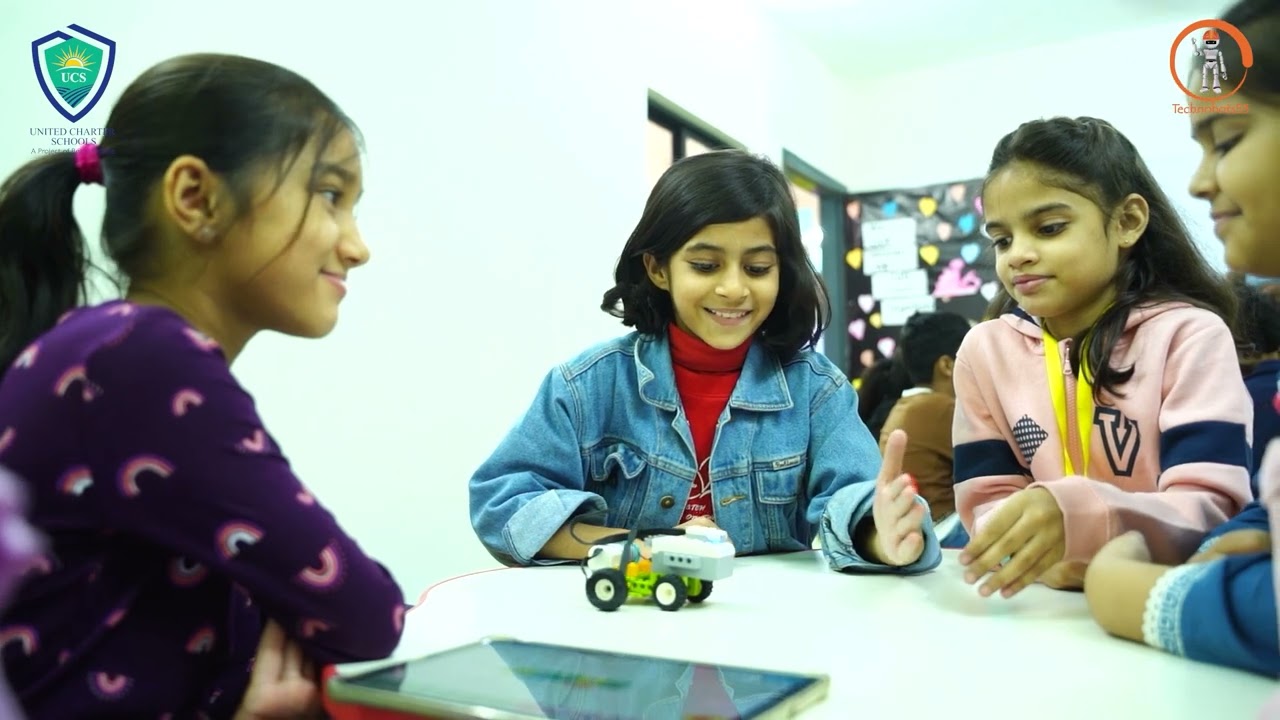
UNITED CHARTER SCHOOLS are truly inspiring their young researchers in the field of Robotics.
In a robotics session, the integration of STEAM (Science, Technology, Engineering, Arts, and Mathematics) principles provides a comprehensive and well-rounded educational experience for students. STEAM education encourages a multidisciplinary approach, fostering creativity, problem-solving skills, critical thinking, and collaboration.
Robotics, as a field, combines elements from various disciplines, making it an ideal platform to incorporate STEAM principles. Here's a breakdown of how each component contributes to the robotics class:
Science: Robotics involves the application of scientific principles to understand the physical properties and mechanisms behind the functioning of robots. Students explore topics such as physics, biology, and materials science to comprehend how robots interact with their environment and replicate human or animal movements.
Technology: Robotics heavily relies on technological advancements, including hardware components, sensors, actuators, and programming languages. Students learn about the latest technological tools and platforms used in robotics, such as microcontrollers, motor controllers, sensors (such as ultrasonic, infrared, or vision sensors), and software frameworks like Arduino, Raspberry Pi, or ROS (Robot Operating System).
Engineering: Engineering principles play a crucial role in designing and building robots. Students delve into engineering concepts like mechanical design, electrical circuits, structural stability, and programming algorithms. They learn how to analyze problems, develop prototypes, iterate designs, and troubleshoot issues to create functional robots.
Arts: The artistic component in robotics involves designing the aesthetics, ergonomics, and user interfaces of robots. Students explore the visual and industrial design aspects to make their robots visually appealing and user-friendly. They may also learn about storytelling and narrative development, using robots as characters in creative projects.
Mathematics: Mathematics provides the foundation for various aspects of robotics, such as kinematics, control systems, algorithms, and trajectory planning. Students apply mathematical concepts like geometry, algebra, trigonometry, and calculus to solve problems related to motion, sensor data processing, and path planning.
Through hands-on activities, projects, and challenges, students in a robotics class engage in the practical application of these STEAM principles. They may work in teams to design, build, program, and test robots, and then participate in competitions or demonstrations to showcase their creations.
Overall, a robotics class that incorporates STEAM principles empowers students to become well-rounded learners with a holistic understanding of science, technology, engineering, arts, and mathematics, while also fostering skills essential for the 21st-century workforce.
#robots #inspiration #curriculum #STEAM #enthusiasm #creativity #21stcenturyskills #inventions #StepTowardsSuccess #leadership #cognitivedevelopment #TechnicalSkills #handsonlearning
Повторяем попытку...
Доступные форматы для скачивания:
Скачать видео
-
Информация по загрузке: