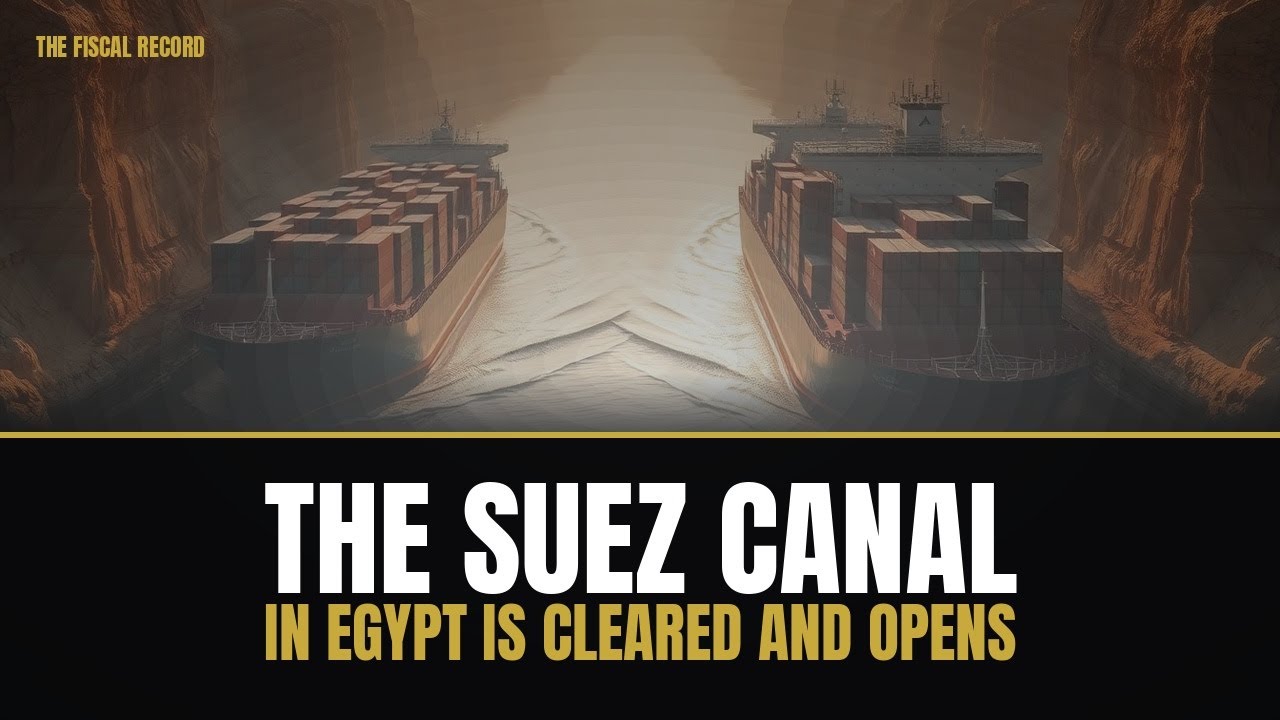
Finance History (4/9/1957): The Suez Canal in Egypt is cleared and opens to shipping following the S
Автор: Fiscal Record
Загружено: 2026-04-09
Просмотров: 9
Описание:
THE SUEZ CRISIS: HOW EMPIRE FOUGHT OVER 193 KILOMETERS AND LOST
120 miles. One canal. Three nations. And the moment the old world order learned it was already dead.
April 9th, 1957. The Suez Canal reopens after being blocked for five months. Fourteen ships lined up waiting to pass through. But this isn't a victory story. This is what happens when empires run out of cards and play them anyway.
Here's what the history books won't tell you in the right order. On July 26th, 1956, Egyptian President Gamal Abdel Nasser did something no Arab leader had done before: he nationalized the Suez Canal. He took it. Not asked permission from Britain and France, who had basically owned it since the 1880s. Just took it.
The numbers matter here. The Suez Canal handled 14,666 ships that year, moving roughly 120 million tons of cargo annually. That's 12% of global maritime traffic. One percent of the world's trade, funneling through 120 miles of Egyptian desert. Britain and France didn't just lose a canal. They lost the mechanism that had made their empires work.
The response was immediate and colonial. On October 29th, 1956, Israel invaded the Sinai Peninsula. Official excuse: Nasser had closed the Straits of Tiran, blocking Israeli shipping. Real reason: it was all synchronized. Israel would invade. Britain and France would demand both sides pull back. When Nasser refused to surrender his own canal, they'd invade "to keep the peace."
On October 31st, British and French forces bombed Egyptian airfields. By November 5th, they'd landed paratroopers. They sank 47 Egyptian ships in the canal itself, filling the waterway with wreckage. They wanted to block it. Control it. Reclaim it.
It didn't work.
The players: British Prime Minister Anthony Eden, who had built his entire political identity on stopping Hitler and couldn't accept that appeasement had never actually been the problem — power had shifted. French Premier Guy Mollet, backing Eden because Nasser was supporting the Algerian independence movement France was desperate to crush. And David Ben-Gurion, Israel's Prime Minister, who saw a chance to reshape the Middle East's military balance in one move.
The decision that mattered: they believed the United States would either back them or stay neutral.
It was November 1956. Eisenhower was President, and he was a Republican in an election year. But here's what they didn't understand: Eisenhower wasn't playing the old game. He'd fought World War II. He knew what imperial overreach looked like. He looked at three nations invading a fourth and saw not strength — he saw the nervous flailing of a world that had already changed.
On November 6th, just one day after the paratroopers landed, Eisenhower issued a statement demanding a ceasefire. Not requested. Demanded. That same day, the British pound crashed on currency markets — traders could see the endgame. By November 7th, under massive pressure from the United States, Britain agreed to withdraw. France followed. Israel held out until March 1957, but the coalition was finished.
The canal sat blocked for months. The wreckage had to be cleared. It took until April 9th, 1957 to reopen it fully.
Here's the detail that reframes everything: this wasn't a surprise outcome to everyone.
In May 1956, three months before the invasion, the State Department's National Security Council had explicitly warned that military action against Egypt would "seriously damage Western prestige and unity." They predicted it would drive Arab nations closer to the Soviet Union. They were right. They were also ignored.
But there's something more important buried in the aftermath. The canal did reopen. Ships did flow through again. And the person controlling it was still Nasser. He got exactly what he wanted: a nationalized Suez Canal, now operated entirely by Egypt, generating revenue for Egypt alone. Britain and France had invaded to prevent exactly this outcome. They got the invasion, the casualties, the international humiliation, and then lost anyway.
That's the pattern nobody talks about: empires that wait too long to let go. The cost of invasion turned out to be far higher than the cost of simply accepting the new reality.
Here's what this teaches you about markets and power: control is expensive, and the people who have it are always the last to know it's gone.
Britain and France had controlled the canal for 75 years. That control was worth billions in shipping revenue, in geopolitical leverage, in the ability to shape global trade. But power isn't a fixed asset. It's a constantly renegotiated agreement. The moment the other side stops accepting the deal, it's worth nothing. You can go to war over it, but war just proves
#Finance #FinanceHistory #MoneyHistory #EconomicHistory #WallStreet #1957
⚠️ Educational purposes only. Not financial advice.
The Fiscal Record
🔔 Subscribe for daily finance history!
Повторяем попытку...
Доступные форматы для скачивания:
Скачать видео
-
Информация по загрузке: