Reform in Pakistan: Decentralization, Democracy & Economic Growth
Автор: PIDE Official
Загружено: 2024-08-12
Просмотров: 7030
Описание:
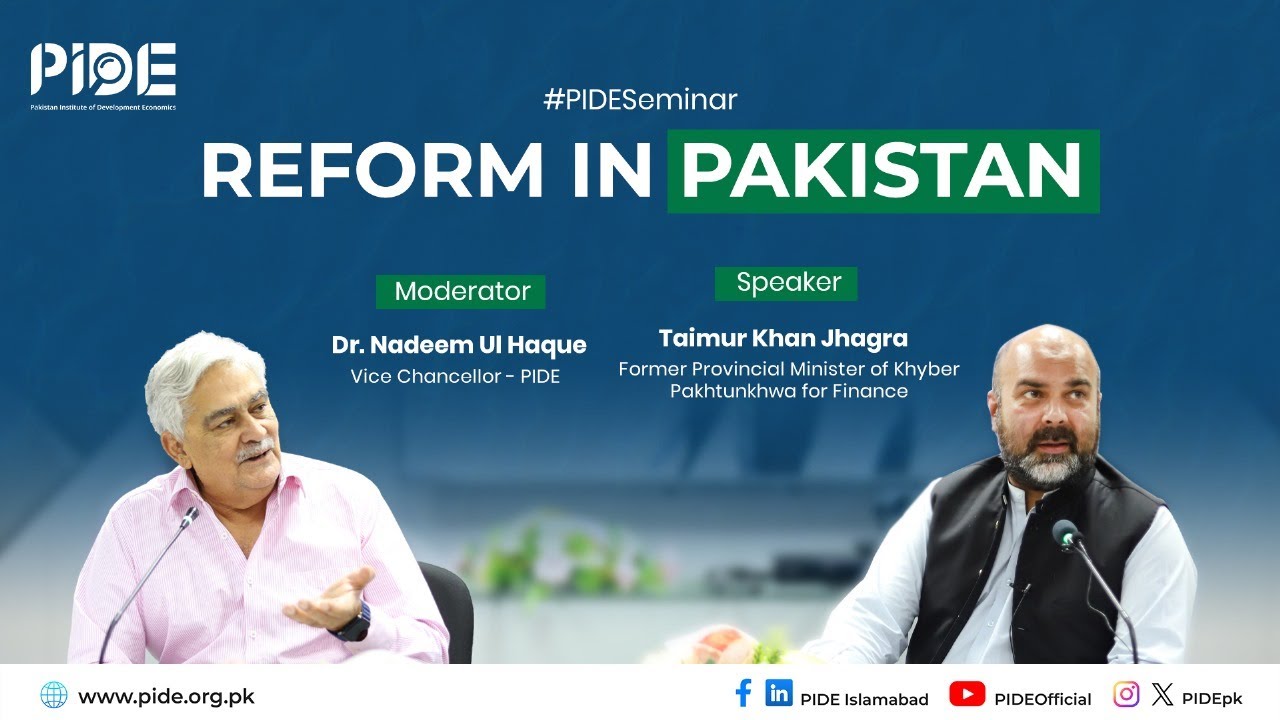
PIDE Seminar featuring Taimur Saleem Jhagra, Former Minister for Finance, Khyber Pakhtunkhwa, as he delves into the critical need for comprehensive reform in Pakistan's governance structure. This seminar will emphasize the pivotal role of local governance in fostering democracy, promoting citizen participation, and initiating bureaucratic restructuring for more responsive and efficient administration.
Moderator: Dr. Nadeem Ul Haque, Vice Chancellor - PIDE
Speaker: Taimur Khan Jhagra (Former Provincial Minister of Khyber Pakhtunkhwa for Finance)
Devolution of Power:
The necessity of transferring authority from provincial governments to local city, town, and union council levels.
Ensuring that local governments are equipped with substantial powers to address local needs effectively.
Drawing parallels with the 18th Amendment, which granted provinces authority from the federal government, and advocating for a similar devolution to local levels.
Bureaucratic Restructuring:
Redefining the role of bureaucracy at the district level to operate under local governments rather than provincial directives.
Encouraging a collaborative relationship between elected local officials and the bureaucracy to eliminate provincial interference.
Proposing that Chief Ministers should not have unilateral authority to transfer or suspend officers without local government approval.
Divisional Assemblies:
Proposing the establishment of Divisional Assemblies with elected representatives to foster regional legislative empowerment.
Decentralizing legislative power from provincial to regional bodies for more inclusive decision-making.
Citizen Participation:
Highlighting the importance of local elections in introducing fresh political leadership and enhancing democratic representation.
Encouraging active involvement of citizens in governance to transform them from passive observers to engaged participants.
Overcoming Bureaucratic Resistance:
Addressing the colonial-era bureaucratic structures that hinder reform.
Aligning bureaucratic processes with the demands of local governance to enhance efficiency and responsiveness.
Enhancing Administrative Efficiency:
Emphasizing the need for a consultative process over the transfer and suspension of government officers to preserve the autonomy and effectiveness of local governments.
Ensuring that bureaucratic decisions align with local priorities to create a more efficient and accountable administration.
Empowering Communities:
Stressing the importance of empowering communities for impactful and lasting bureaucratic reform.
Advocating for a stronger democracy where a handful of politically strong families do not hijack the democratic process for personal gains.
Near Default? The Current CRISIS:
Discussing the current economic crisis and the risks of near default.
Understanding the immediate steps needed to stabilize the economy.
Going Forward:
Setting a growth target required by demography and debt sustainability.
Highlighting the investment requirement of 28.8% to achieve an 8% growth rate.
Analyzing the growth impact of regulatory modernization and the need to streamline regulations.
Chasing Taxes: Hampering Growth:
Evaluating how aggressive tax policies can stifle economic growth.
Proposing balanced tax reforms to foster economic expansion.
Opening Up the Economy:
Discussing the importance of liberalizing various markets, including the energy market, real estate market, and agriculture market.
Addressing the role of the banking sector and capital markets in supporting economic growth.
Exploring the concept of a stock economy as a cornerstone of capitalism.
State-Captured Real Estate: An Underutilized Resource:
Identifying the vast potential of state-captured real estate as an underutilized asset.
Proposing efficient utilization strategies for these properties to unlock economic value.
Way Forward: Efficient Utilization of State-Captured Real Estate:
Discussing the necessary decisions and their impacts on the efficient utilization of state-captured real estate.
Highlighting the potential economic benefits of transforming these assets into productive resources.
#Pakistan #Reform #Economy #RealEstate #Taxes #Resources #Democracy #currentaffairs #EconomicCrisis #Default #Communities #Power
For Further Details Please Visit:
www.pide.org.pk
/ pidepk
/ pideislamabad
/ pidepk
/ pidepk
Повторяем попытку...
Доступные форматы для скачивания:
Скачать видео
-
Информация по загрузке: