Why Whales Still Baffle Scientists After 100 Years,
Автор: GLOBE SOCIAL NETWORK
Загружено: 2026-01-16
Просмотров: 24
Описание:
Join this channel to get access to perks:
/ @globesocialnetwork
The Majestic World of Whales
Whales are some of the most fascinating animals on Earth. For centuries, people have been amazed by their huge size, unique behaviors, and the mysteries of their lives underwater. From tiny porpoises to the giant blue whale, whales show us just how incredible evolution and adaptation can be.
Evolution and Diversity
Whales are part of the Cetacea group, which also includes dolphins and porpoises. Their evolution is interesting because their ancestors were land animals that moved back to the ocean about 50 million years ago. Over time, they developed smooth bodies, strong tails, and blowholes to help them live in the water.
Whales are divided into two main groups: baleen whales and toothed whales. Baleen whales, like blue, humpback, and gray whales, use special plates called baleen to filter food from the water. Toothed whales, such as sperm whales, orcas, and belugas, use their teeth to catch fish, squid, and other sea animals.
Size and Physical Characteristics
The blue whale is the largest animal ever known, growing up to 100 feet long and weighing up to 200 tons. Its heart can weigh as much as a car, and its tongue can weigh as much as an elephant. Even though they are so big, many whales eat tiny ocean creatures like krill and plankton.
Whales are also built for deep diving. For example, sperm whales can dive to more than 7,000 feet and hold their breath for over 90 minutes while searching for giant squid in the deep, dark parts of the ocean.
Intelligence and Social Behavior
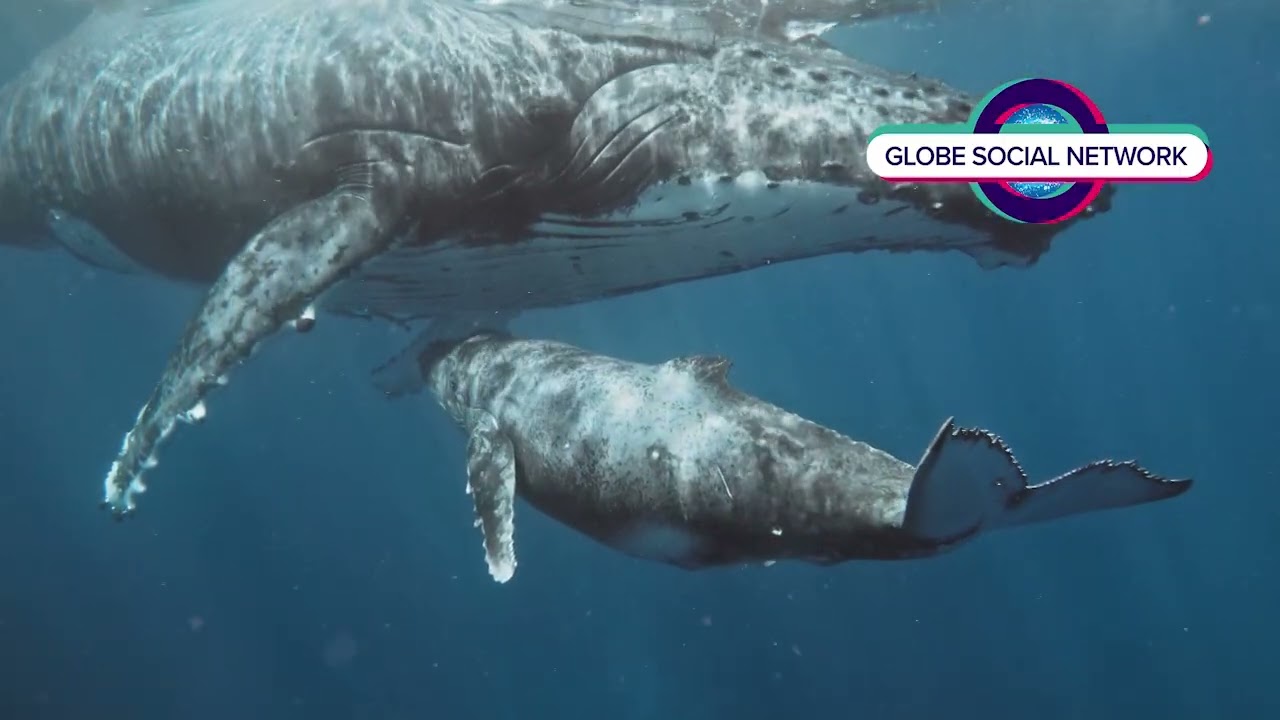
Whales are highly intelligent creatures with complex social structures, further distinguishing them in the animal kingdom. They communicate using sophisticated vocalizations, including the famous songs of humpback whales that can travel vast distances underwater. These songs can last for hours and are thought to play roles in mating and social behavior. Many whales live in groups called pods and work together to hunt and care for their young. Mother whales are very devoted to their calves, feeding and protecting them for months or even years.
Conservation Challenges
Unfortunately, many whale species are threatened by human activities. In the 1800s and 1900s, commercial whaling nearly wiped out some species. Even though international laws have helped some whales recover, they still face risks from ship collisions, getting caught in fishing gear, pollution, and climate change, which affects their food.
To help whales survive, people around the world need to work together and keep up conservation efforts. This way, future generations will also be able to enjoy seeing these amazing animals in our oceans.
Повторяем попытку...
Доступные форматы для скачивания:
Скачать видео
-
Информация по загрузке:


