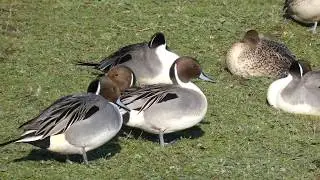
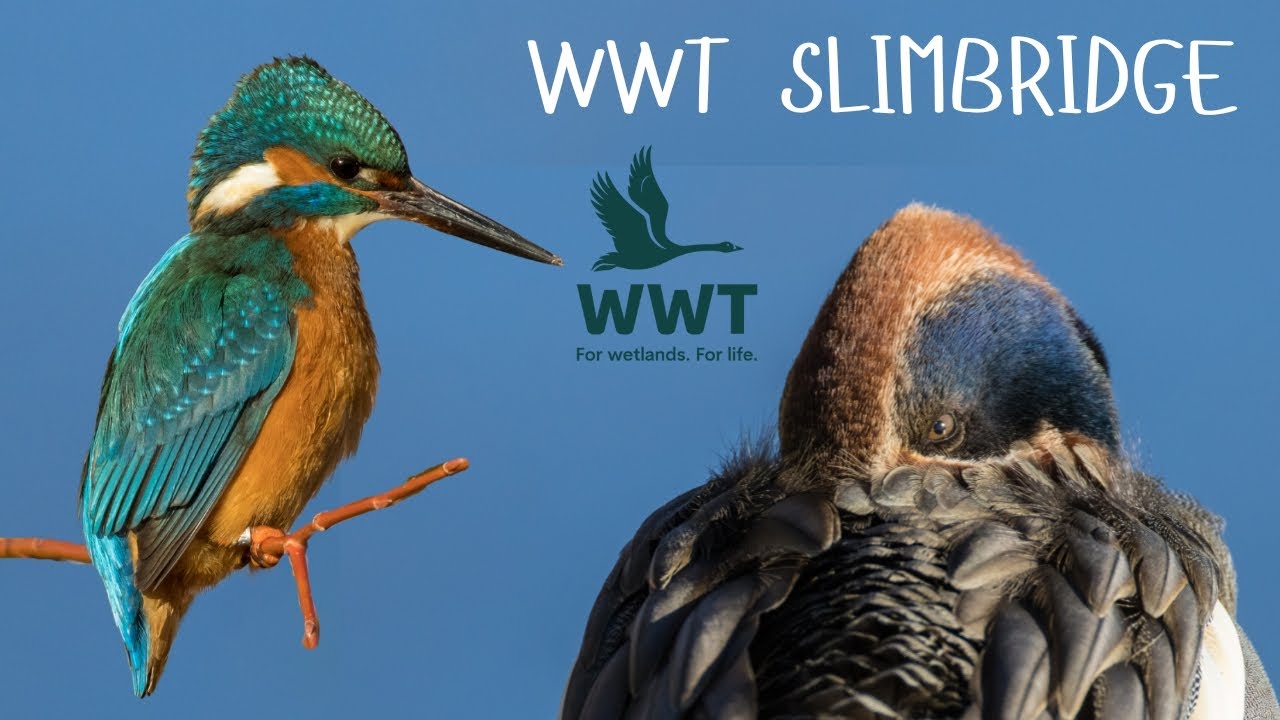
WINTER'S DAY AT WWT SLIMBRIDGE | KINGFISHER, PEREGRINE, TEAL, TUFTED DUCK, COOT, MOORHEN AND POCHARD
Автор: Our Adventures 2
Загружено: 2026-01-14
Просмотров: 34
Описание:
SPECIES INFORMATION:
Common Kingfisher - Fairly common but small, rather timid and discreet. Its beautiful blue and orange plumage, habitat, and behavior together make it easy to identify. It can be seen along the banks of rivers, streams, lakes, and ponds—in almost any type of freshwater or brackish water body where small fish are present. It often perches motionless in trees above the water; it is most often noticed as a turquoise flash that disappears very quickly over the surface. Once its call, a piercing whistle, is known, it is easily spotted even when hidden.
Peregrine Falcon - A robust, powerful raptor with pointed wings, it feeds primarily on birds caught in flight. Found worldwide, its plumage varies considerably between subspecies. It pursues its prey at high speed with powerful, continuous wingbeats. Increasingly common, especially in cities, where it may nest on tall buildings and feed on pigeons, it also frequents mudflats and open areas with shorebirds.
Eurasian Teal - Tiny duck with a petite, thin bill. Males have a brown head with a wide green swatch behind the eye, creamy speckled breast, and mostly gray body. Females are brown, darker overall than other dabbling ducks. Forages by dabbling and tipping-up to reach submerged aquatic vegetation. Also regularly walks around mudflats to feed.
Eurasian Coot - Distinctive stocky waterbird. Adult is dark gray overall with a white bill and forehead shield. Immature has a pale breast and a duller bill that becomes brighter white with age. When walking on shore, note big feet with lobed toes. Inhabits both freshwater and brackish marshes, lakeshores, and riverways; occasionally on saltwater. Breeding pairs aggressively territorial but nonbreeding flocks can number in hundreds. Unmistakable throughout much of range, but compare with very similar Red-knobbed Coot in areas of overlap. Calls are diverse, and include various high-pitched squeaks, squawks, and shorter, more clipped notes.
Common Moorhen - Distinctive dark waterbird that resembles a cross between a duck and a chicken. Adults have a bright red bill with a yellow tip, while immatures have a duller bill and legs. Note big white oval patches under the tail, and white streaks along the flanks. Inhabits fresh and brackish marshes, on ponds, lakes, and along slow-moving watercourses with bordering vegetation. Smaller and more retiring than coot, and rarely far out on open water. Swims with jerky motion and walks with stealthy gait, the tail often slightly cocked; does not usually dive. Gives a variety of loud, somewhat frog-like calls.
Tufted Duck - Common in wetlands from marshy and reed-fringed lakes to open reservoirs; locally on the sea in winter, especially when lakes freeze. Boldly patterned male distinctive: black overall with bright white flanks (whiter than scaup) and floppy crest. Female dark brown overall with short crest, paler flanks, staring golden-yellow eyes, and often a messy white patch at base of bill. In flight, both sexes show bold white wingstripe. Often in flocks in winter; feeds mainly by diving, but often spends much of day sleeping. Widespread breeder across Eurasia, wintering to central Africa, India, and Southeast Asia. Rare winter vagrant to North America, where almost always found singly among flocks of scaup. Compared with scaup, Tufted Duck always shows very dark blackish back, and even nearly tuftless females are darker than scaup with more limited white patch on face.
Common Pochard - Mid-sized diving duck. Male distinctive, with dark rusty head, pale gray body contrasting with black breast, and broad pale bluish band on bill. Female rather nondescript: gray-brown overall with diffuse pale head markings. Note sloping forehead and dark gray bill with pale band near tip. In flight grayish overall (lacks bold white wing stripe). Inhabits marshy and reed-fringed lakes to open reservoirs; locally on the sea in winter, especially when lakes freeze. Locally in flocks, and often associates with winter flocks of Tufted Ducks. Feeds mainly by diving.
ALL LICENSING ENQUIRIES:
-- [email protected] --
EQUIPMENT USED:
Canon R7 Camera
Canon RF 200-800mm Lens
SOCIAL MEDIA:
Instagram: / ouradventur.. .
Twitter: / ouradventures2
Trip Advisor: https://www.tripadvisor.co.uk/Profile....
Facebook: / 0uradventure. .
Thanks for Watching!
Lauren and Tamlyn
Copyright © Our Adventures | All Rights Reserved
Please like, share and subscribe.
Повторяем попытку...
Доступные форматы для скачивания:
Скачать видео
-
Информация по загрузке: