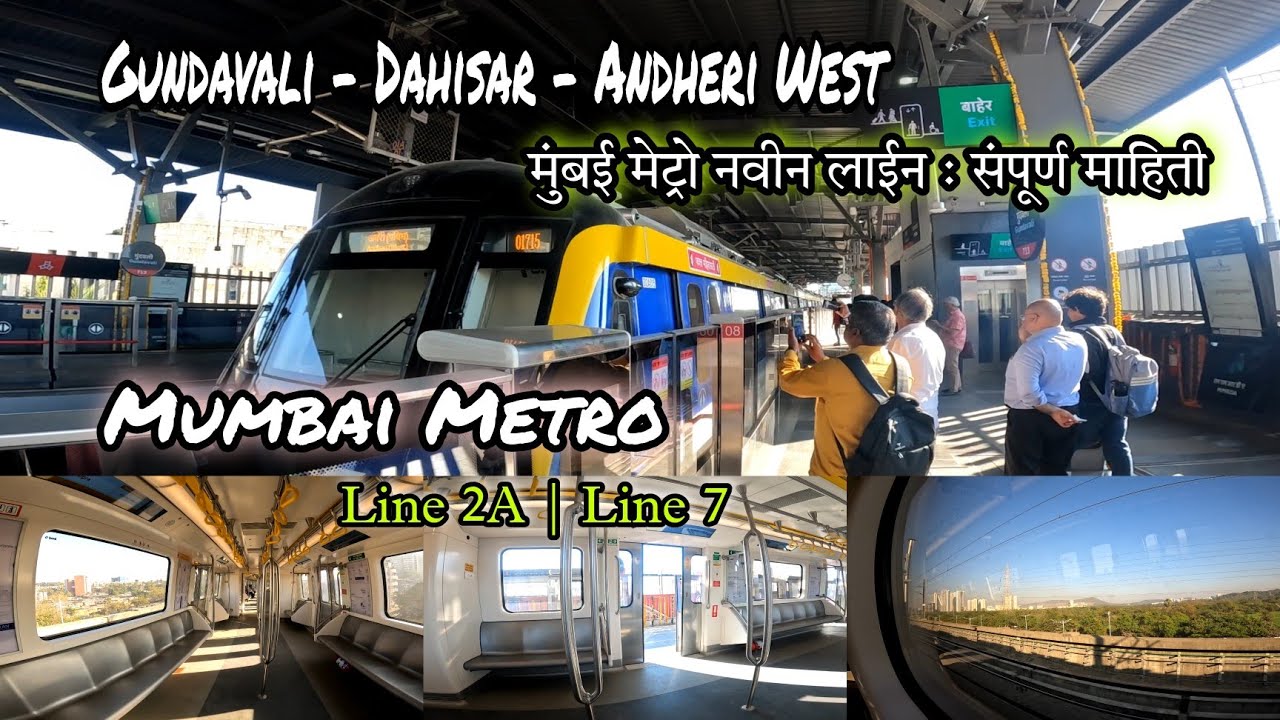
Mumbai Metro Full Journey Dahisar east to Borivali West || station details and environment
Автор: RAIL WORLD
Загружено: 2022-04-07
Просмотров: 526
Описание:
Mumbai Metro Full Journey Dahisar east to Borivali West || station details and environment
#mumbaimetro
#viral #dahisarmetro
#borivalimetro
Mumbai is the capital of Maharashtra. It is among the largest cities in the world, with a total metropolitan area population of over 2 crore (20 million) as of 2011,[16] and a population growth rate of around 2% per annum.[17] Mumbai has the advantage of a high modal share of the public (88%) in favour of a public mass transport system.[citation needed] The existing Mumbai Suburban Railway carries over 70 lakh (7 million) passengers per day,[18] and is supplemented by the Brihanmumbai Electric Supply and Transport (BEST) bus system, which provides feeder services to station-going passengers to allow them to complete their journeys. Until 1980s, transport in Mumbai was not a big problem. The discontinuation of trams resulted in a direct increase of passenger pressure on the suburban railway network. By 2010 the population of Mumbai doubled. However, due to the city's geographical constraints and rapid population growth, road and rail infrastructure development has not been able to keep pace with growing demand over the last 4-5 decades.[19] Moreover, the Mumbai Suburban Railway, though extensive, is not built to rapid transit specifications. The main objective of the Mumbai Metro is to provide mass rapid transit services to people within an approach distance of between 1 and 2 kilometres, and to serve the areas not connected by the existing Suburban Rail network.
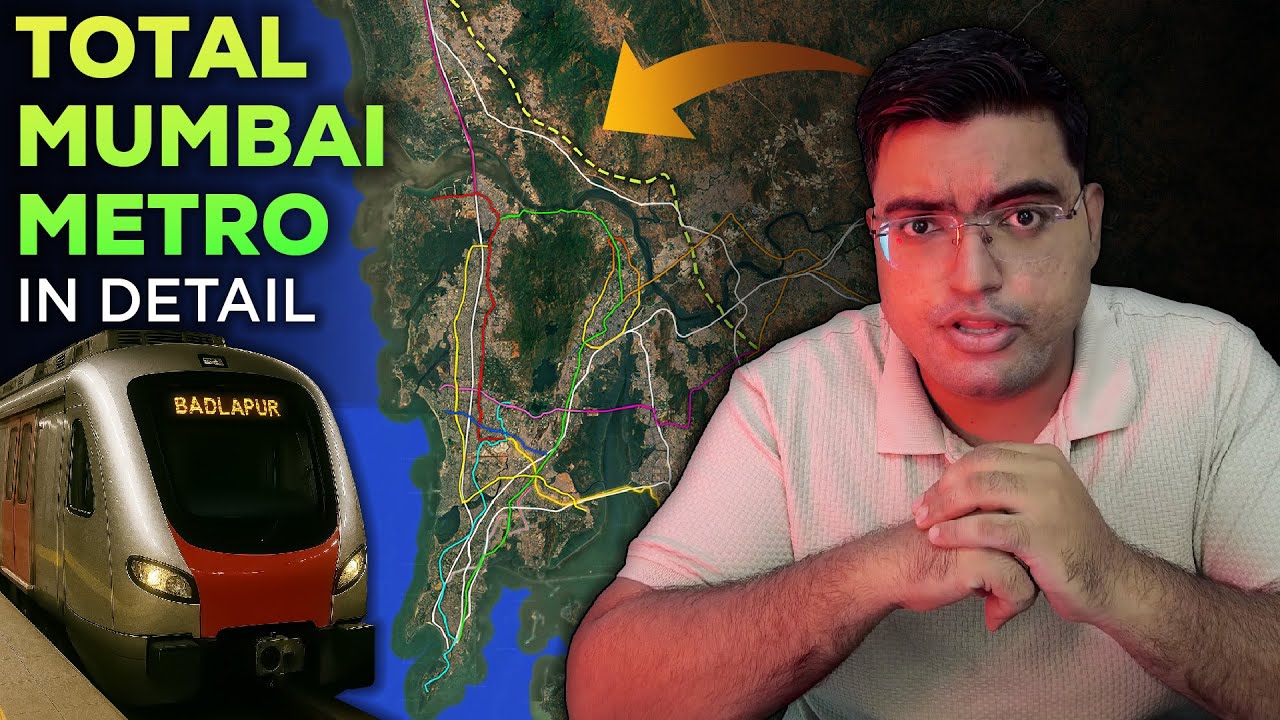
The Mumbai Metro (Marathi: मुंबई मेट्रो) is a rapid transit (MRT) system serving the city of Mumbai and the wider Mumbai Metropolitan Region in Maharashtra, India. The system is designed to reduce traffic congestion in the city, and supplement the overcrowded Mumbai Suburban Railway network. It is being built in three phases over a 15-year period, with overall completion expected in October 2026. When completed, the core system will comprise fourteen high-capacity metro railway lines and one metrolite line, spanning a total of 356.972 kilometres (221.812 mi) (24% underground, the rest elevated, with a minuscule portion built at-grade), and serviced by 286 stations.
Native name
मुंबई मेट्रो
Owner
MMRDA (all lines except Lines 3),
Mumbai Metro Rail Corporation (Line 3)
Area served
Mumbai Metropolitan Region
Locale
Mumbai Metropolitan Region
Transit type
Rapid Transit
Number of lines
Operational 3 | Under-construction 8 | Approved 5 | Proposed 1 |
Line number
Line 1, Line 2A, Line 7, (operational)
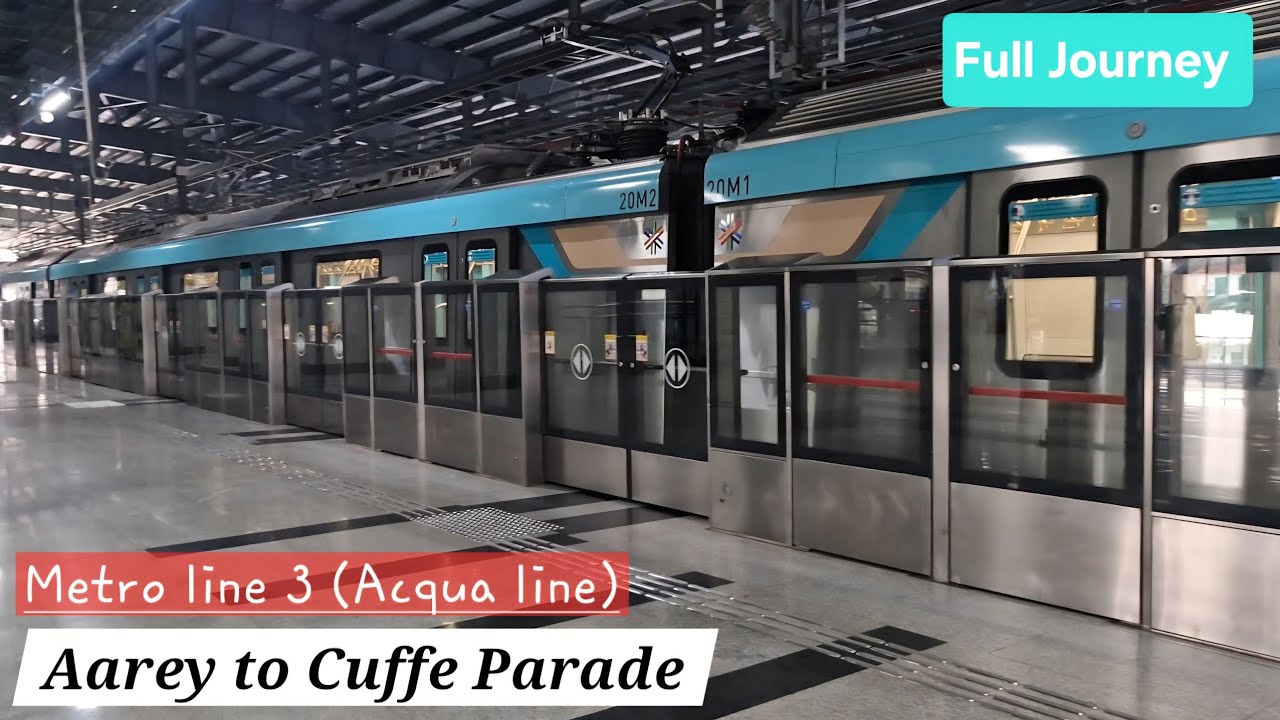
Line 2B, Line 3, Line 4, Line 5, Line 6, Line 9 (Under construction)
Line 7 & Line 4 North extensions, Line 5 (Under Construction)
Line 4 & Line 7 South extensions, Line 5 extension
Line 8 (approved), Line 10 (approved), Line 11 (approved), Line 12 (approved), Line 13 (proposed), Line 14 (approved)
Number of stations
29
Daily ridership
4,50,000 (daily average, Jan 2019)
Annual ridership
12.6 crore (126 million)[1]
Chief executive
Devendra Kumar Sharma
Headquarters
Mumbai
Website
MMOCL
MMRDA
Charkop
WR
towards Virar / Dahanu
Malad
Kasturi Park
Bangur Nagar
Oshiwara
Samartha Nagar
Versova Shastri Nagar
DN Nagar
ESIC Nagar Azad Nagar
JVPD
CR-Harbour Line
extension
Nanavati Hospital WEH
Aryasamaj Cho
Airport Road
National College
Siddhi Vinayak MMRDA
Udyog Bhawan Income Tax Office
Acharya A Chowk
Kurla-LTT
Ghadge
Minerva
Girgaon SG Barve Marg
WR
towards Churchgate
RC Marg
Chandanwadi Shivaji Chowk
Phadke Chowk BSNL
Mumbai CST
Mankhurd
Hutatma Chowk
Nariman Point Thane Creek
Colaba
As of August 2018, Mumbai Metro consisted of one operational line (Line 1 - elevated metro from Versova to Ghatkopar), and four lines under various stages of construction.[4][5]
Line 1 of the Mumbai Metro Line 1 is operated by Mumbai Metro One Private Limited (MMOPL), a joint venture between Reliance Infrastructure (69%), Mumbai Mumbai Metro Railway Corporation Limited (MMRCL). The total financial outlay for the expansion of the metro system beyond the currently operational Line 1 is ₹82,172 crore (equivalent to ₹980 billion or US$12.85 billion in 2020), to be funded through a mix of equity and bilateral, multilateral as well as syndicated debt.[7] In another boost to connectivity, the Mumbai Metropolitan Region Development Authority (MMRDA) has decided to connect Mumbai and Virar with a Metro line.
In June 2006, Prime Minister Manmohan Singh laid the foundation stone for the first phase of the Mumbai Metro project, although construction work began in February 2008.[8][9][10] A successful trial . Many metro projects were being delayed because of late environmental clearances , land acquisition troubles and protests.
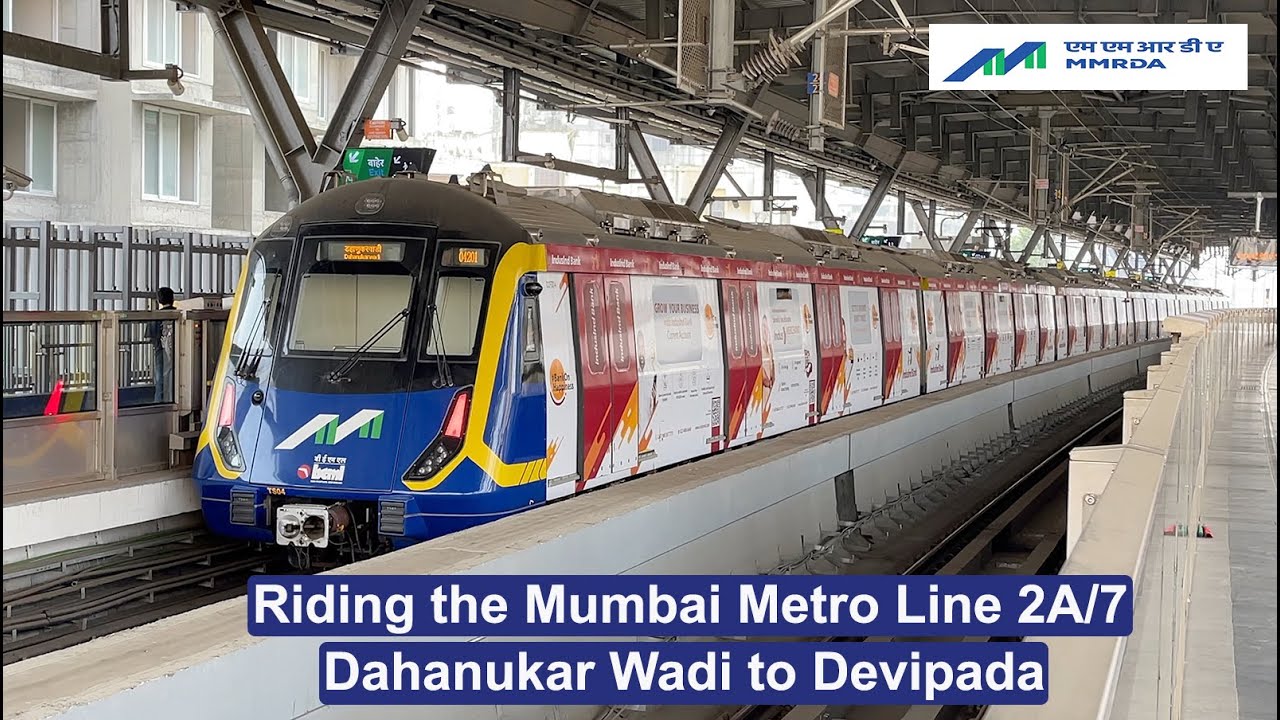
fare is ₹10 for 3km, and the maximum fare is ₹50 for 30km. As a part of the Phase 1 plan, both metro corridors cover a 20 km route(Dhanukarwadi–Dahisar–Aarey). The Metro runs between Dhanukarwadi on Metro Line 2A and Aarey on Line 7.
Повторяем попытку...

Доступные форматы для скачивания:
Скачать видео
-
Информация по загрузке: