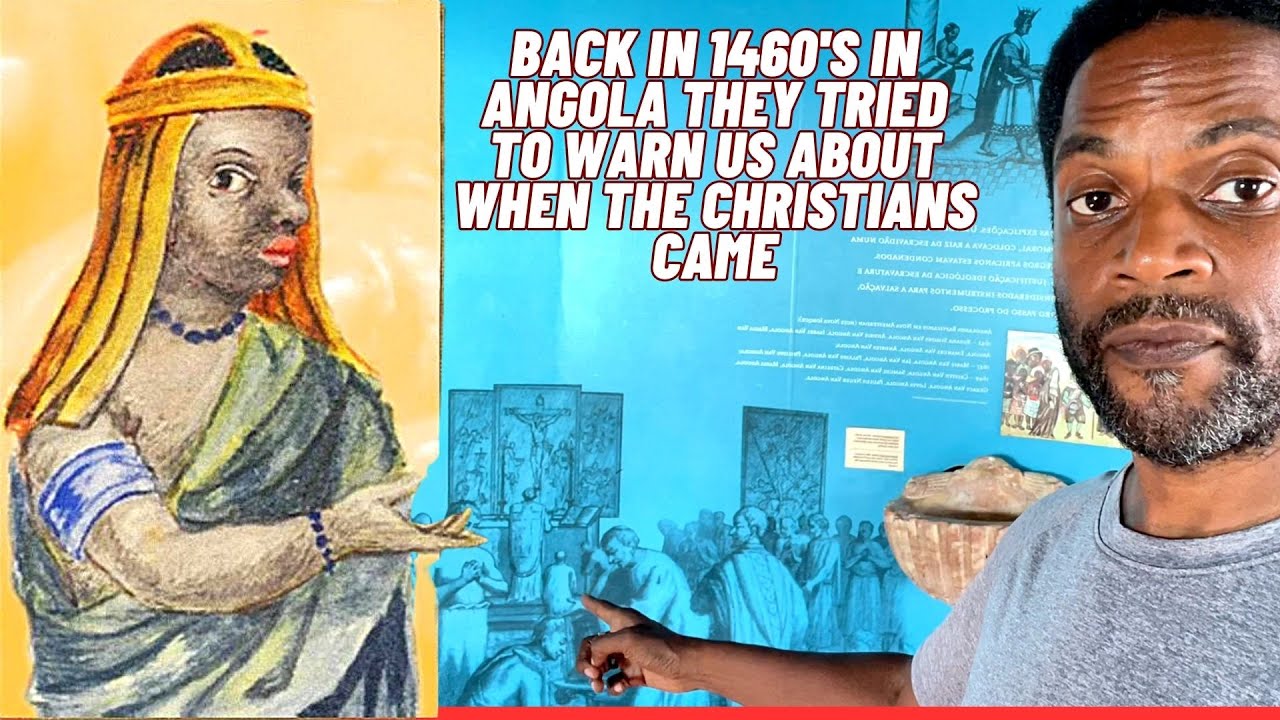
ANGOLA NATIONAL SLAVERY MUSEUM - LUANDA
Автор: Visiting places with Nadia
Загружено: 2022-10-12
Просмотров: 812
Описание:
TOUR TO THE ANGOLAN NATIONAL SLAVERY MUSEUM About the museum: The museum is located in Morro da Cruz, in Benfica district, which is about 20 km drive from the city. When was the museum created and inaugurated? The Slavery Museum was built in 1977 by the Culture and Tourism Ministry in order not to forget the slavery that had caused great harm to Angola, and ruined the social fabric in the past, with the objective of depicting the history of slavery in Angola. The museum adjoins the Chapel of the Big House, a 17th-century structure where slaves were baptized before being put on slave ships for transport to the America, and Europe. Located on the coast of the Atlantic Ocean, the museum neighbors the Mussulo island and Kwanza River, an important trade route where victims of the slave trade lived in the past. The house has 5 small rooms, displaying the history involving Angola in the transatlantic slave trade. The exhibitions are mostly printed displays, given the fact that Angola was the country that gave start to the slavery business, the museum should be more informative and display more artifacts, but unfortunately it lacks alot of information. The museum is getting old, on the first floor there is a room with broken woden floor, which can be very dangerous, the house need serious rehabilitation work, i looks like the museum is forgotten, like many others in Angola. History of the house /current museum building. The museum is located in the former property of Álvaro de Carvalho Matoso. He was one of the largest slave-traders on west African coast in the first half of the 18th Century. Matoso died in 1798, and his family and heirs continued in the slave-trade until 1836, when a decree by Maria II of Portugal prohibited the export of slaves from the Portuguese Empire. The house was built in 1786, Álvaro Carvalho Matoso, used to live in this house to facilitate him in his slave-trade business. He traded slaves to three continents: America (US and Brazil), Europe and Africa. This house has a chapel, they captured the people from other parts of Angola, and brought them right here, to get baptized before bording the ships. The Portuguese used baptizing and the name of god throught the catholic church in order to erase and dominate the African people and the African culture by giving the Angolans Portugues names. In this way they would lose touch with their cultural heritages. Historical background of the role Angola played on transatlantic save trade as a Portuguese colony. According to the records, a British pirate ship – with more than 20 Angolans on board, who were forcibly detained from a Portuguese ship – anchored at Point Comfort, Chesapeake Bay on the east coast of the US in August 1619. The arrival of these Angolans in Virginia 400 years ago is considered the beginning of the slavery that lasted for more than 200 years in the US. Although most of the slaves in Africa were taken from Ghana and Senegal, it is known that more than 5 million slaves came from Angola, and a quarter of approximately 400,000 Africans sent to North America were colonized by the Portuguese who dominated the slave trade for decades. First enslaved Africans arrive in Jamestown, setting the stage for slavery in North America. On August 20, 1619, "20 and odd" Angolans, kidnapped by the Portuguese, arrived in the British colony of Virginia and are then bought by English colonists. They were originally kidnapped by Portuguese colonial forces, who sent captured members of the native Kongo and Ndongo kingdoms on a forced march to the port of Luanda, the capital of modern-day Angola. From there, they were ordered on the ship San Juan Bautista, which set sail for Veracruz in the colony of New Spain. As was quite common, about 150 of the 350 captives aboard the ship died during the crossing. Then, as it approached its destination, the ship was attacked by two privateer ships, the White Lion and the Treasurer. Crews from the two ships kidnapped up to 60 of the Bautista's enslaved people. It was the White Lion which docked at Virginia Colony's Point Comfort and traded some of the prisoners for food on August 20, 1619.
#slavery
#transatlantic
#history
#africahistory
#colonization
#colonização
Hope you enjoyed the tour.
Повторяем попытку...

Доступные форматы для скачивания:
Скачать видео
-
Информация по загрузке:

![Amazing SAHARA: Tassili n'Ajjer, Algeria [Amazing Places 4K]](https://imager.clipsaver.ru/OpFdLHl7Mgs/max.jpg)
![Former Slave Owner Interview in 1929 [Colorized]](https://imager.clipsaver.ru/Le794ObMGm0/max.jpg)