To determine particle size and particle size distribution using microscopic method
Автор: Surabhi Patil
Загружено: 2021-01-20
Просмотров: 17723
Описание:
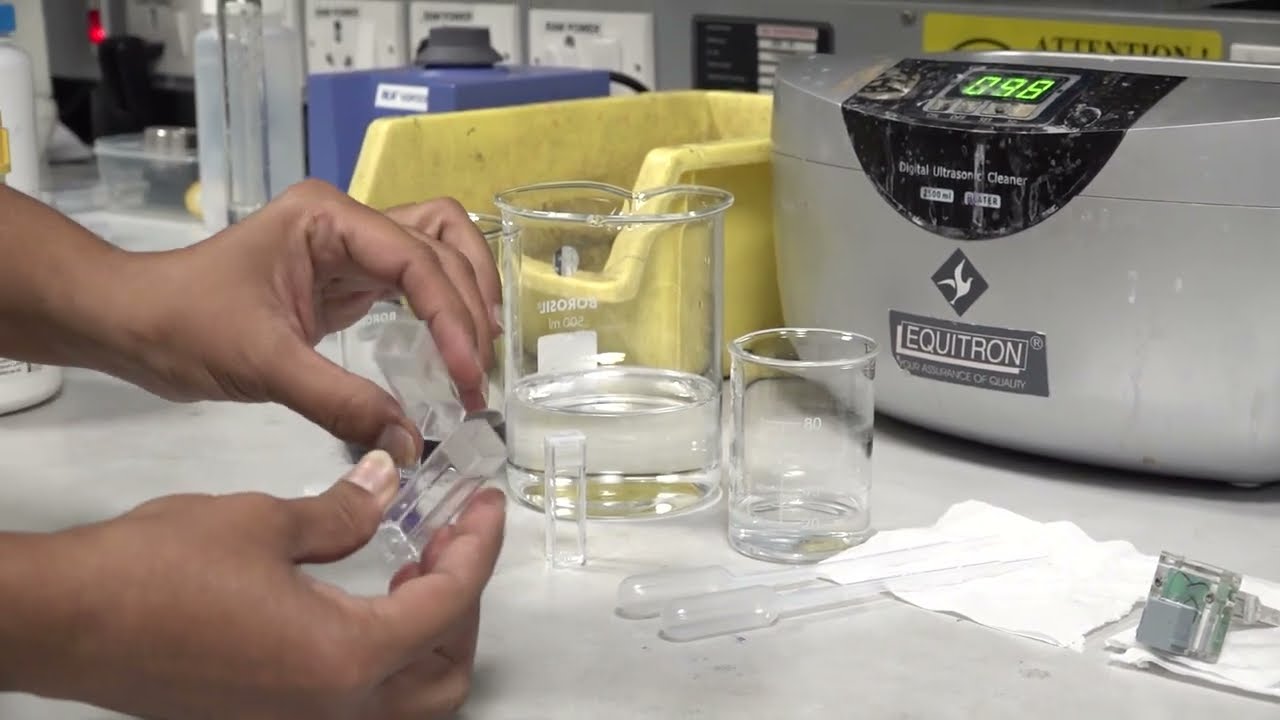
Apparatus: microscope, eyepiece micrometer scale, stage micrometer scale, glass slide, cover slip, etc.
Chemicals : any powder sample or diluted suspension.
The term micromeritics is the science and technology of small particles.
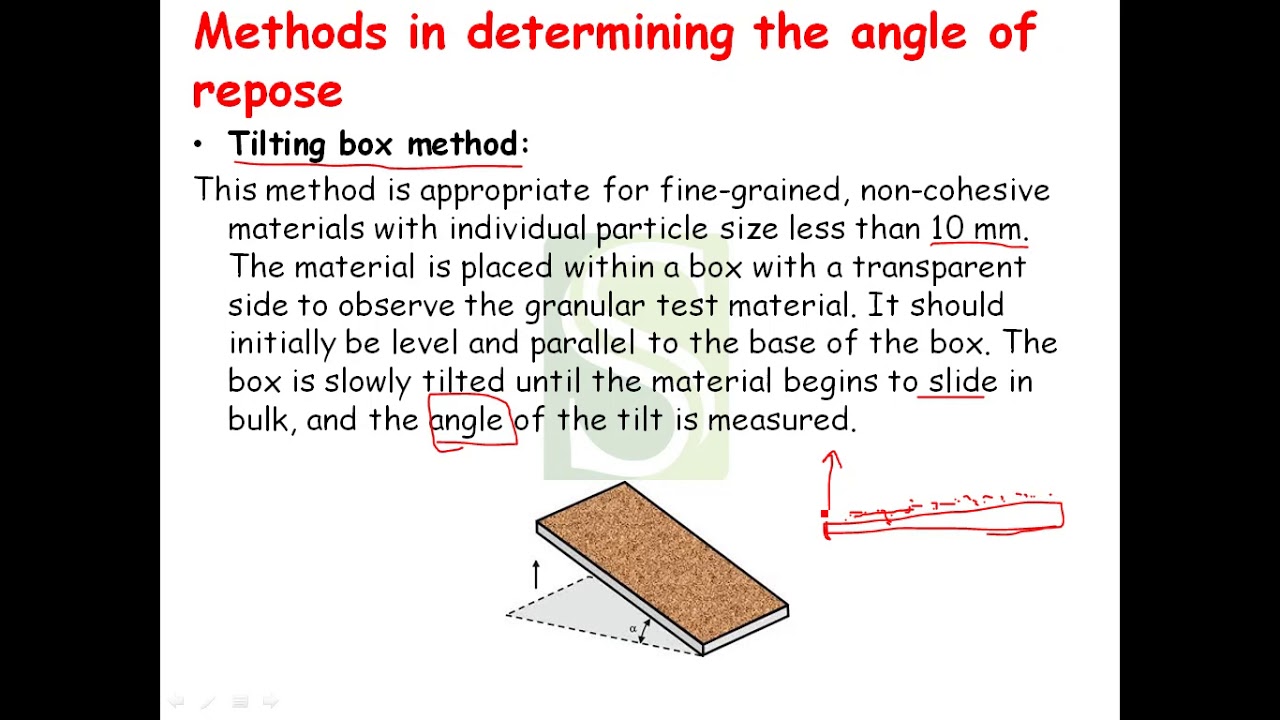
The powder properties are divided into fundamental properties like particle size & shape & derived properties (derived from fundamental ones) like bulk volume, granule volume, tap volume, true volume, bulk density, granule density, true density, flow rate, angle of repose, porosity, bulkiness, compactness, consolidation & compression.
So, it is thus the study of the fundamental and derived properties of individual as well as a collection of particles.
The size and hence the surface area of a particle, can be related to the physical, chemical and pharmacologic properties of drugs.
Clinically, the particle size of a drug can affect its release from dosage forms that are administered orally, parenterally, rectally and topically.
Thesuccessful formulation of suspensions, emulsions and tablets; both physical stability and pharmacologic response also depends on the particle size achieved in the product.
Applications:
Release and dissolution
Particle size and surface area influence the release of a drug from a dosage form that is administered orally, rectally, parenterally, and topically. Higher surface area brings about intimate contact of the drug with the dissolution fluids in vivo and increases the drug solubility and dissolution.
Absorption and drug action
Particle size and surface area influence the drug absorption and subsequently the therapeutic action. The higher the dissolution, the faster the absorption and hence the quicker and greater the drug action.
Physical stability
Micromeritic properties of a particle, i.e. the particle size in a formulation, influence the physical stability of the suspensions and emulsions. The smaller the size of the particle, the better the physical stability of the dosage form owing to the Brownian motion of the particles in the dispersion.
Dose uniformity
Good flow properties of granules and powders are important in the manufacturing of tablets and capsules. The distribution of particles should be uniform in terms of number and weight. Very small particle size causes attraction, which in turn destabilises the suspension by coagulating.
1. Particle size and size distribution
Particle size represents the dimensions of solid powders, liquid particles, and gases bubbles.
Particle size mainly influence dissolution rate.
Absorption rate of poorly soluble drug can be improved by reducing the particle size and thus enhances the bioavailability of drugs.
Particle size is also considered during development of new chemical entities (NCEs) as it affect physical properties of active pharmaceutical ingredients and excipients.
Particle size and shape significantly affect various manufacturing step, such as mixing, granulation, drying, milling, blending, coating, encapsulation, and compression.
As per ICH Guidelines, particle size is critical parameter which affects safety, efficacy, and stability of solid dosage form and certain liquid dosage forms like suspension and emulsion.
During manufacturing of solid dosage forms like tablet and capsule, particle size influences a large number of parameters in processing, including capsule filling, porosity, and flowability.
Similarly in suspension, physical properties and particle size of dispersed particles, both affect the stability of formulation.
2. Particle Size Distribution
Any collection of particles is usually polydisperse.
It is therefore necessary to know not only the size of a certain particle, but also how many particles of the different size exist in the sample.
Thus we need an estimate of the size range present and the number of weight fraction of each particle size.
This is the particle size distribution from which average particle size for the sample can be calculated.
Particle size is related to the shape and surface area of individual particle.
Particle size distribution has profound impact on the stability, aesthetic appearance, rate of absorption, and bioavailability of drugs and is also basic need of various regulatory agencies to establish particle size distribution of excipients as well as pharmaceutical formulations.
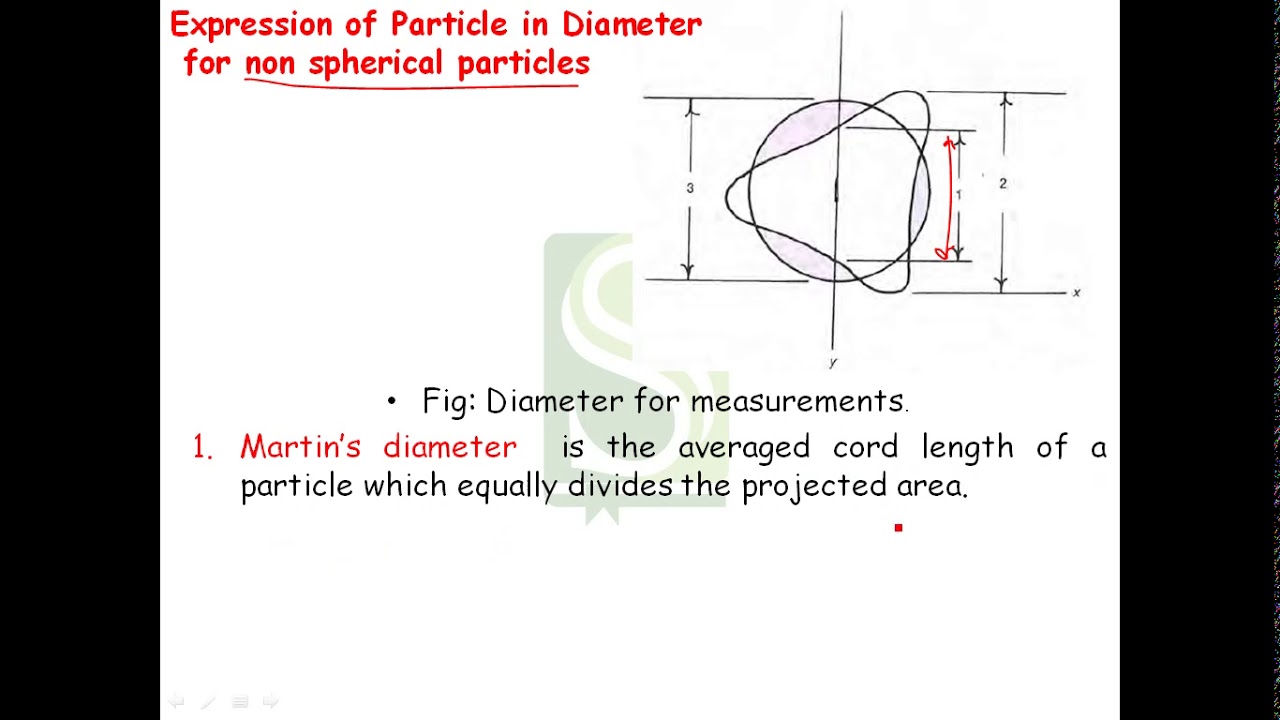
Expression of Particle in Diameter
The size of a sphere is readily expressed in terms of its diameter.
The Surface diameter, ds, is the diameter of a sphere having the same surface area as the particle.
The Volume diameter, dv, is the diameter of a sphere having the
same volume as the particle.
The Projected diameter, dp, is the projected diameter of a sphere having the same observed area as the particle.
The Stokes diameter, dst, is the diameter which describes an equivalent sphere undergoing sedimentation at the same rate as the asymmetric particle.
Повторяем попытку...
Доступные форматы для скачивания:
Скачать видео
-
Информация по загрузке: