The Most Independent Weapon the Navy Has Ever Fielded
Автор: FIRM.
Загружено: 2026-01-30
Просмотров: 21847
Описание:
The Most Independent Weapon the Navy Has Ever Fielded isn’t fast. It isn’t loud. And it doesn’t rely on constant communication to survive.
That’s exactly why it’s dangerous.
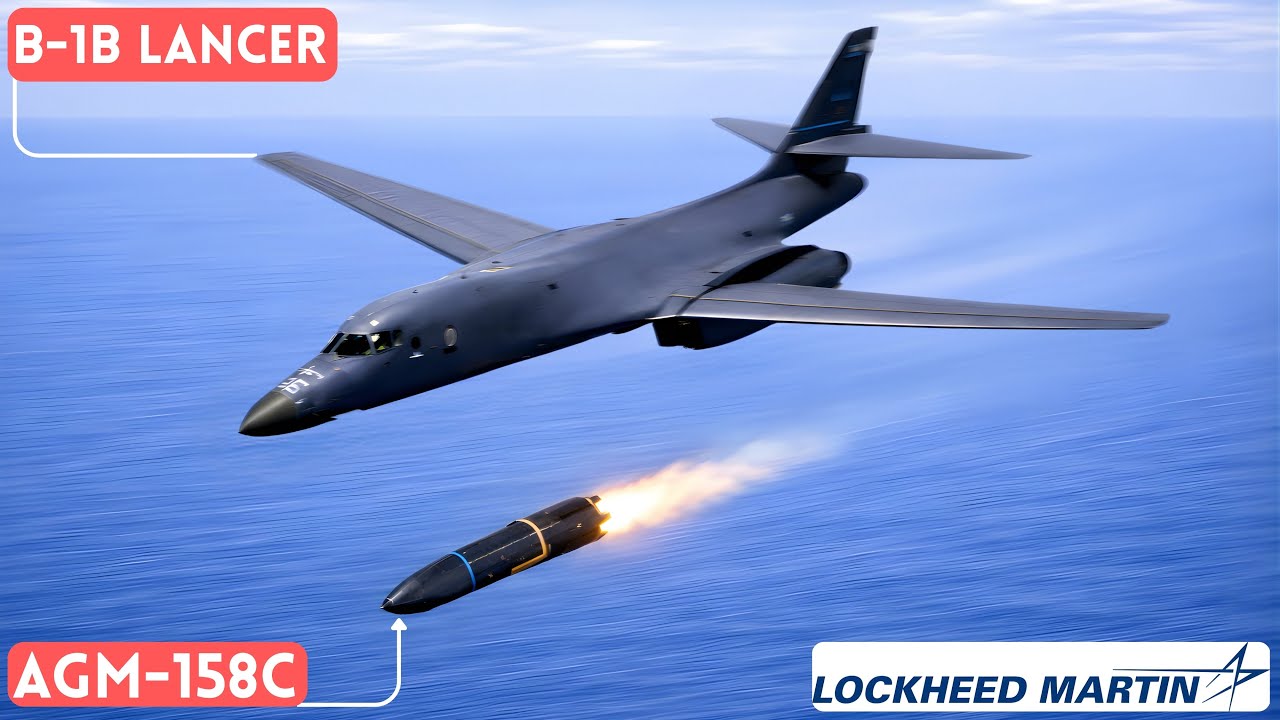
The AGM-158C Long Range Anti-Ship Missile (LRASM) was designed for a future where the kill chain breaks mid-flight. Where GPS is jammed. Satellites are blinded. Datalinks are cut. And the aircraft that launched the weapon may never see the target again.
Most modern weapons fail in that environment. LRASM was built specifically for it.
In this video, we break down how the U.S. Navy fielded a missile that can complete its mission after losing every connection to its operator. From autonomous target discrimination to passive sensors, stealthy sea-skimming profiles, and onboard decision logic, LRASM represents a structural shift in how naval warfare is fought.
We explain why legacy anti-ship missiles like Harpoon depend on intact communications—and why that assumption no longer holds in contested maritime battlespaces. You’ll see how LRASM’s passive RF and imaging infrared sensors allow it to hunt ships without emitting a signal, how it selects high-value targets autonomously, and how it navigates even when GPS is denied.
This isn’t speculative AI warfare. It’s pre-programmed autonomy built around expected failure, not ideal conditions.
We also explore how LRASM enables Distributed Maritime Operations, allowing aircraft, ships, and dispersed forces to strike independently without centralized command. When there is no single kill chain to break, deterrence changes—and so does escalation math.
This video covers:
• Why modern naval kill chains are fragile
• How LRASM operates after total communications loss
• The missile’s stealth, range, and warhead philosophy
• Passive sensing vs active seekers
• Autonomous target prioritization and discrimination
• Why LRASM is not just a “smarter Harpoon”
• The strategic implications of weapons that assume uncertainty
LRASM doesn’t need reassurance mid-flight.
It doesn’t ask for permission.
And it doesn’t expect help.
It was designed to work when everything else fails.
Sources & References:
-U.S. Navy Fact File – AGM-158C LRASM
-Lockheed Martin LRASM Program Overview
-Congressional Research Service: Anti-Ship Missile Developments
-Center for Strategic & Budgetary Assessments (CSBA) – Distributed Maritime Operations
-Naval War College Review – Future Fleet Combat & Autonomy
-GAO Weapon Systems Annual Assessments
#LRASM #NavalWarfare #MilitaryTechnology #ModernWarfare #DefenseAnalysis
Повторяем попытку...
Доступные форматы для скачивания:
Скачать видео
-
Информация по загрузке: