Protein Structure (Part 4 of 4) - Tertiary Structure - Fibrous and Globular Proteins
Автор: Moof University
Загружено: 2013-10-05
Просмотров: 56053
Описание:
UPDATED Tertiary Structure Video: • Protein Structure (Part 7 of 10) - Tertiar...
Moof's Medical Biochemistry Video Course: http://moof-university.thinkific.com/...
For Related Practice Problems with Worked Video Solutions on Protein Structure and Function, visit courses.moofuniversity.com.
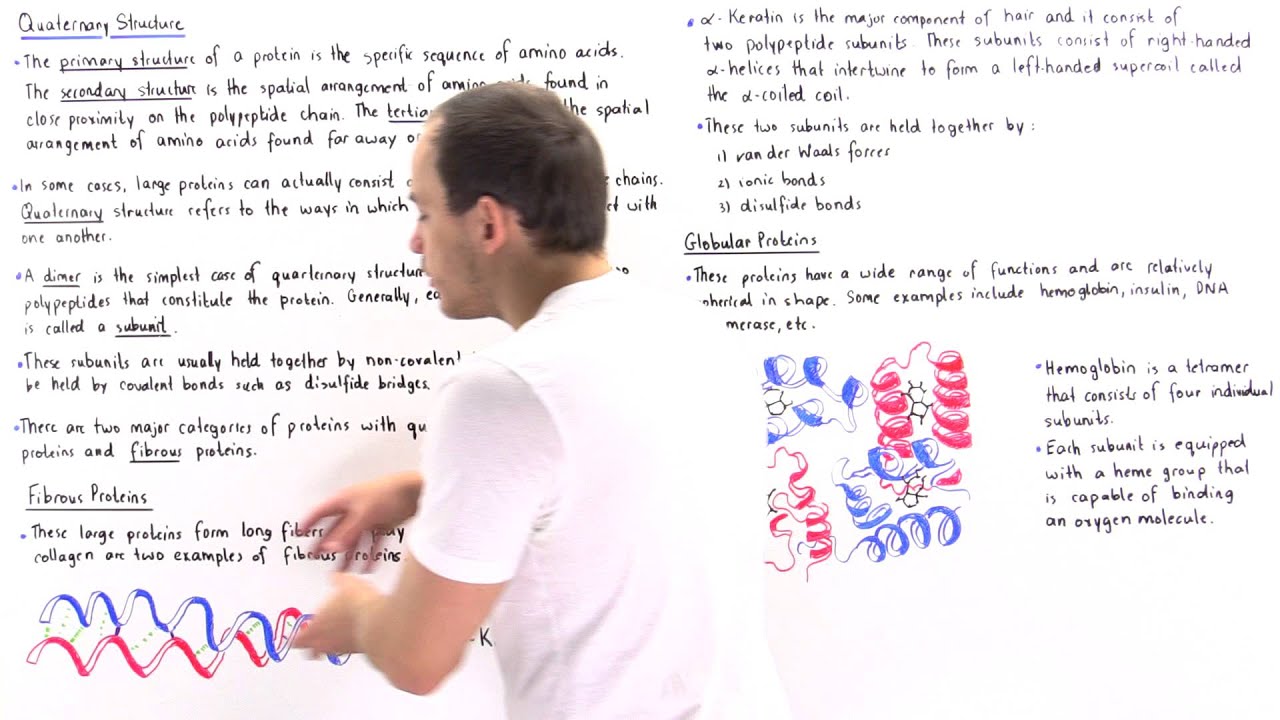
In this video, I explain the tertiary structure of proteins, as well as the differences (and key features) of fibrous and globular proteins.
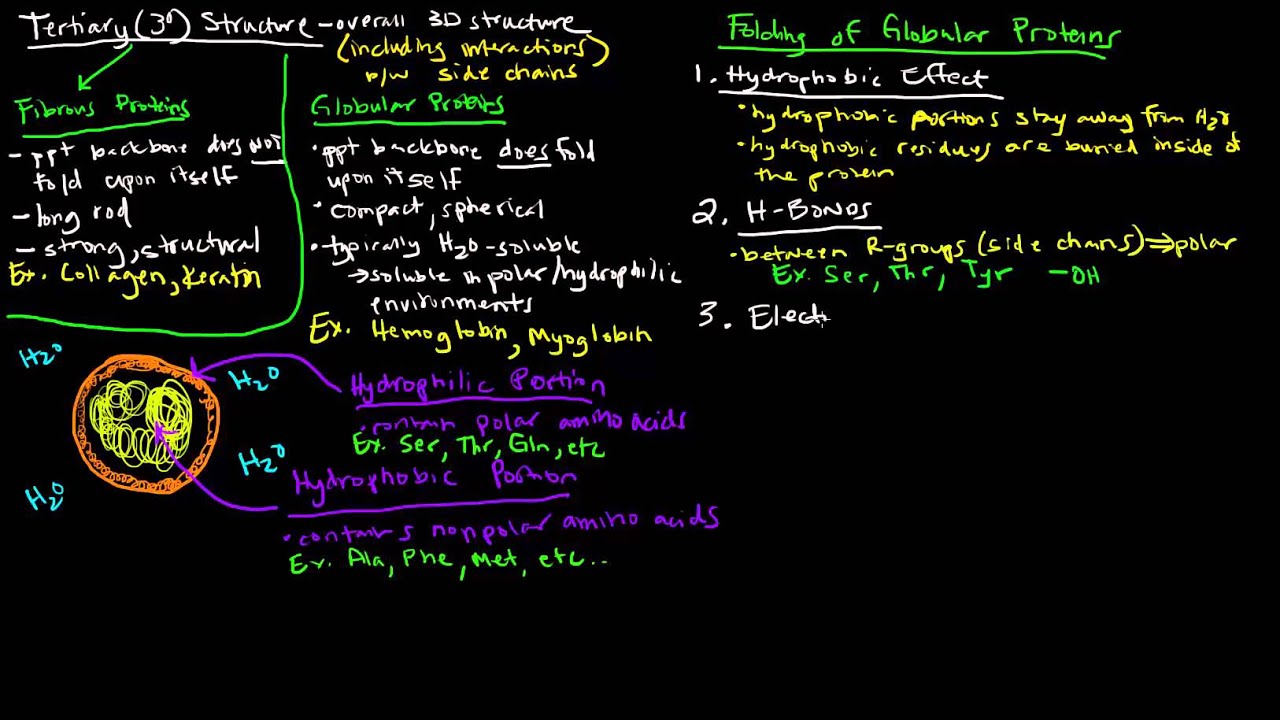
Tertiary structure, generally speaking, refers to the overall 3D structure of a protein, but more specifically includes interactions between side chains of amino acids in the protein.
With fibrous proteins, the polypeptide backbone does not fold back upon itself to form a sort of clump or glob (as is the case with globular proteins). Instead, fibrous proteins are strong, long rods that serve some sort of structural purpose. Examples include collagen and keratin.
With globular proteins, however, the polypeptide backbone does fold upon itself into a spherical sort of shape, and which amino acid residues exist on the surface and which amino acids are buried inside the glob depends on the environment in which the protein exists. Most often, globular proteins (the more common of the two types of 3D structures) exist in aqueous environments. Thus, the surfaces of globular proteins interacting with said aqueous environments are the polar or hydrophilic amino acids, while the interior of the proteins will consist of many nonpolar or hydrophobic amino acid residues burying themselves away from the aqueous environments.
This idea of the hydrophobic residues burying themselves away from aqueous environments is called the hydrophobic effect, which is one of the factors contributing to the folding of the polypeptide into a 3D globular protein. Another factor is hydrogen bonds, specifically those between the side chains (or R groups) of amino acids. These hydrogen bonds differ from the hydrogen bonds between the backbone that hold alpha helices and beta pleated sheets (in secondary structure) together. A third factor is electrostatic interactions. Acidic and basic side chains can carry negative or positive charges, respectively, depending on the pH of the environment. The interactions of said charges contributes to how the protein folds overall. (Remember: like charges repel, while opposite charges attract). The fourth factor, the formation of disulfide bridges / disulfide bonds, is distinct from the rest in that the interactions are covalent bonds between thiol groups on cysteine residues that form in oxidative environments and are denatured in reductive environments. The rest of the interactions are non-covalent interactions. It’s worth mentioning that detergents can denature hydrophobic interactions, heat can disrupt hydrogen bonds, and pH changes can disrupt electrostatic interactions.
For a suggested viewing order of the videos, information on tutoring, personalized video solutions, and an opportunity to support Moof University financially, visit MoofUniversity.com, and follow Moof University on the different social media platforms.
Don't forget to LIKE, COMMENT, and SUBSCRIBE:
http://www.youtube.com/subscription_c...
SUPPORT MOOF UNIVERSITY:
http://www.moofuniversity.com/support...
BUY A T-SHIRT
https://shop.spreadshirt.com/moofuniv...
INFORMATION ABOUT TUTORING AND PERSONALIZED VIDEO SOLUTIONS:
http://www.moofuniversity.com/tutoring/
INSTAGRAM:
/ moofuniversity
FACEBOOK:
/ 1554858934727545
TWITTER:
/ moofuniversity
Повторяем попытку...
Доступные форматы для скачивания:
Скачать видео
-
Информация по загрузке: