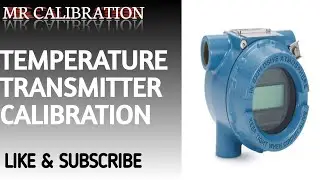
Temperature Transmitter Calibration using Hart
Автор: Mr.Calibration
Загружено: 2025-07-07
Просмотров: 330
Описание:
Temperature transmitter calibration ensures accurate temperature measurements by comparing the transmitter’s output to a reference standard and adjusting as needed. Here’s a concise overview based on current knowledge and industry practices:
Key Steps in Calibration:
1. **Preparation**:
**Gather Equipment**: Use a calibrated reference thermometer (e.g., a platinum resistance thermometer or thermocouple calibrator), a stable temperature source (like a dry-block calibrator or temperature bath), and a multimeter or loop calibrator for signal measurement (4-20 mA).
**Verify Setup**: Ensure the transmitter, reference standard, and test equipment are clean, functional, and within their calibration validity.
**Stabilize Environment**: Allow the equipment to stabilize at ambient conditions to avoid thermal drift.
2. **Connect the Transmitter**:
Wire the temperature transmitter to the calibration setup, ensuring proper connections for power, signal (e.g., 4-20 mA loop), and sensor input (RTD, thermocouple, etc.).
If using a simulator, set it to mimic the sensor type (e.g., Pt100 for RTD).
3. **Apply Test Points**:
Select calibration points covering the transmitter’s range (e.g., low, mid, high, such as 0°C, 50°C, 100°C).
Apply each temperature using the calibrator or bath, allowing sufficient stabilization time (typically 5-15 minutes per point).
Record the transmitter’s output (e.g., mA signal) and the reference temperature.
4. **Compare and Adjust**:
Compare the transmitter’s output (e.g., 4 mA at low range, 20 mA at high range) to the expected values based on the reference.
Calculate errors (difference between actual and expected output).
If adjustable, use the transmitter’s zero and span settings (via HART communicator, software, or manual controls) to correct deviations. For smart transmitters, follow manufacturer-specific protocols.
5. **Verify and Document**:
Repeat measurements to confirm accuracy after adjustments.
Document results, including as-found and as-left readings, calibration date, equipment used, and environmental conditions.
Apply a calibration sticker or certificate if required.
Key Considerations:
**Accuracy Standards**: Use a reference standard at least 4 times more accurate than the transmitter (e.g., if the transmitter accuracy is ±0.1°C, the reference should be ±0.025°C or better).
**Environmental Factors**: Control ambient conditions to minimize errors from drafts, humidity, or electrical noise.
**Sensor Type**: Ensure compatibility between the transmitter and sensor type (e.g., thermocouple types K, J, or RTD Pt100).
**Frequency**: Calibrate based on manufacturer recommendations or industry standards (e.g., annually or per process requirements).
**Traceability**: Ensure all equipment used is traceable to standards like NIST or ISO/IEC 17025.
Hope you liked this video. To see more similar videos, subscribe and share my channel. If you need calibration of any type instrument of mechanical, electrical & thermal then contact me .my mail id is [email protected]
#calibration
#science
#instrument
#presure
#mrbeast
#experiment
#youtubeshorts
Thanks you keep watching...
#calibration #electrical #instrument #electricalmeasurement
For more video see the link :-
1. • How to Calibrate Coating Thickness Gauge#c...
2. • Temperature Calibrator #calibration #tempe...
Повторяем попытку...

Доступные форматы для скачивания:
Скачать видео
-
Информация по загрузке: