DAY 5 ACT I, MOVEMENT 9 Simple Symphony Frolicsome FinaleThe Road Beyond the Gate
Автор: East Meet West
Загружено: 2026-03-14
Просмотров: 2
Описание:
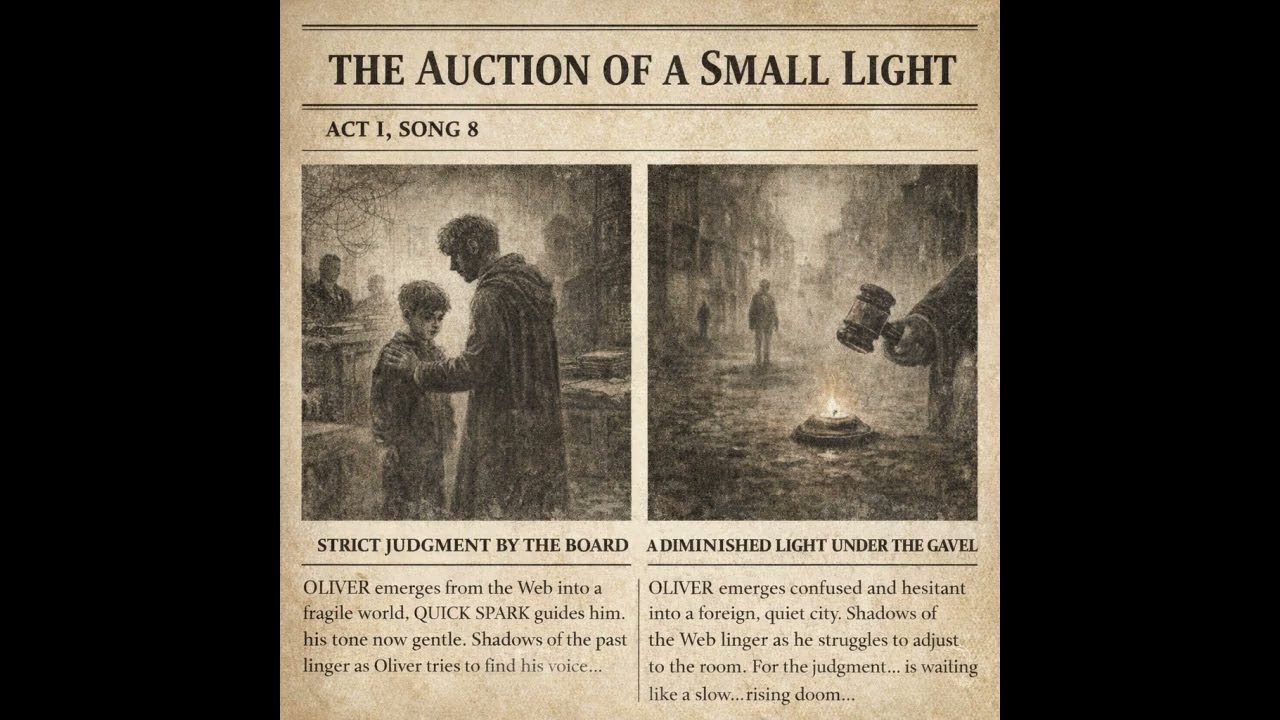
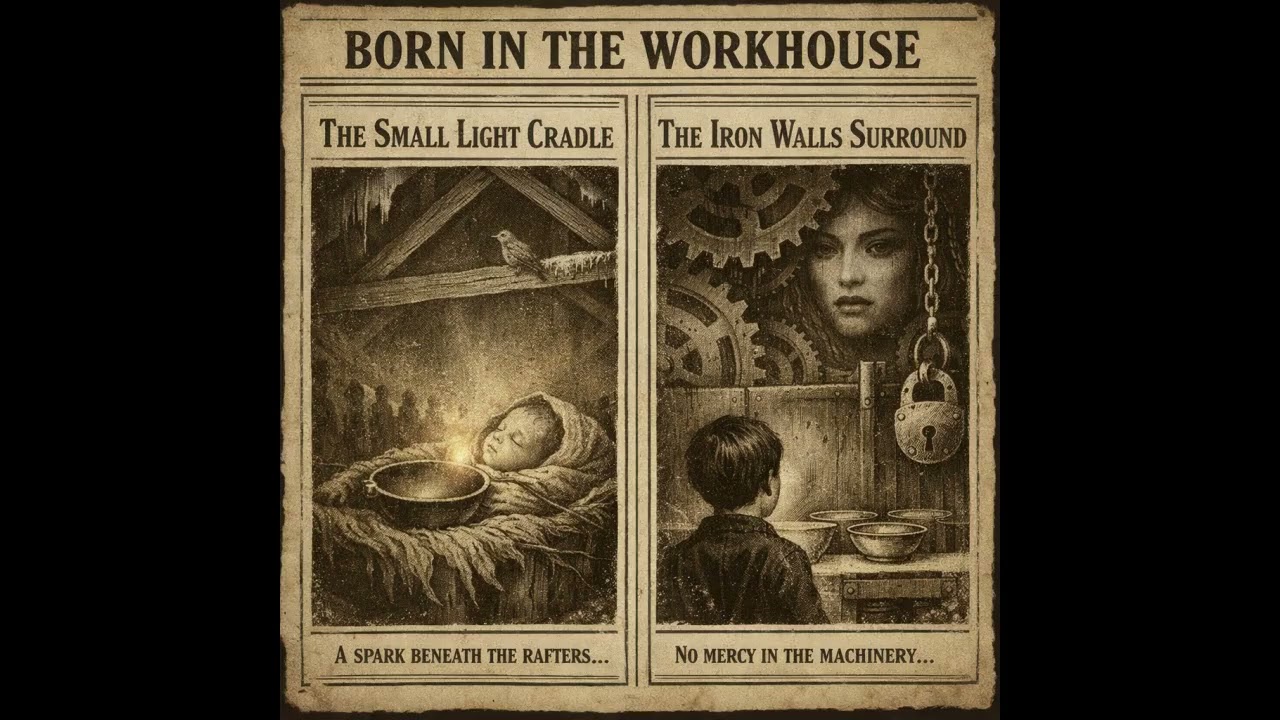
Act I Song 9, “The Road Beyond the Gate,” is the first moment in your Oliver Twist cycle where the Workhouse world releases Oliver instead of crushing him. The release is not hopeful—it is sorrowful, ritualistic, and shaped by the emotional grammar you’ve built across Songs 1–8. The song’s power comes from how it reframes departure: not triumph, not rebellion, but a fragile widening of the world.
Story Movement
Song 9 marks the end of the Workhouse chapter. Oliver is escorted to the gate, not as a hero but as a child carrying fear, silence, and a tiny “Small Light” that has survived the machinery of the parish. The narrative shifts from interior oppression to exterior uncertainty. The boys watch him leave with a mixture of grief and awe; they have never seen one of their own step beyond the ritual walls. The Masters enforce the final decree, the Machine echoes its fading authority, and the world outside appears enormous, cold, and new. The road is not freedom—it is exposure. Yet the Small Light brightens as Oliver steps into the open air, suggesting the first faint possibility of identity.
Musical Characters
Each musical voice expresses a different emotional layer of the departure:
Narrator (children’s choir) carries the sorrow and fragility of the moment. Their thin, breathy timbre makes the world feel enormous and Oliver small.
Machine (processed contralto) represents the Workhouse’s lingering shadow. Even as Oliver leaves, its metallic echo follows him.
Masters (harsh baritone) deliver the final bureaucratic command. Their voice is the last articulation of institutional power.
Boys (children’s choir) provide the aching farewell. Their emotional tone is the heart of the song: grief, love, and the recognition that something irreversible is happening.
The interplay of these voices creates a layered emotional landscape—ritual, authority, sorrow, and the first breath of independence.
Musical Meaning
The Britten × Vaughan Williams dialectic is central. Britten’s Lacrymosa shapes the cold ritual, the metallic pulses, and the oppressive rhythm of the Workhouse. Vaughan Williams enters gradually—first as trembling harmonics, then as rising strings, then as a warm horizon. This shift mirrors Oliver’s internal transformation: the world is still frightening, but it is no longer entirely mechanical. The Small Light motif grows from fragile to steady, signaling the beginning of selfhood.
Dramatic Function
Song 9 is the hinge of Act I. It closes the Workhouse arc and prepares the audience for the chaotic, morally ambiguous world of Act II. Dramatically, it accomplishes four things:
It gives emotional closure to the Workhouse boys, whose farewell humanizes the institution’s victims.
It allows the Masters and Machine to deliver their final statements, completing their thematic roles.
It reframes Oliver not as a passive object but as a child beginning to move through the world.
It establishes the motif of the Small Light as a portable inner identity that will evolve across the musical.
Song 9 is the first widening of the world—and the first moment where Oliver steps into a space not defined by punishment, but by possibility.
Повторяем попытку...

Доступные форматы для скачивания:
Скачать видео
-
Информация по загрузке: