Bounded Rationality: Why We Don’t Always Make Rational Choices
Автор: tutor2u
Загружено: 2025-04-20
Просмотров: 820
Описание:
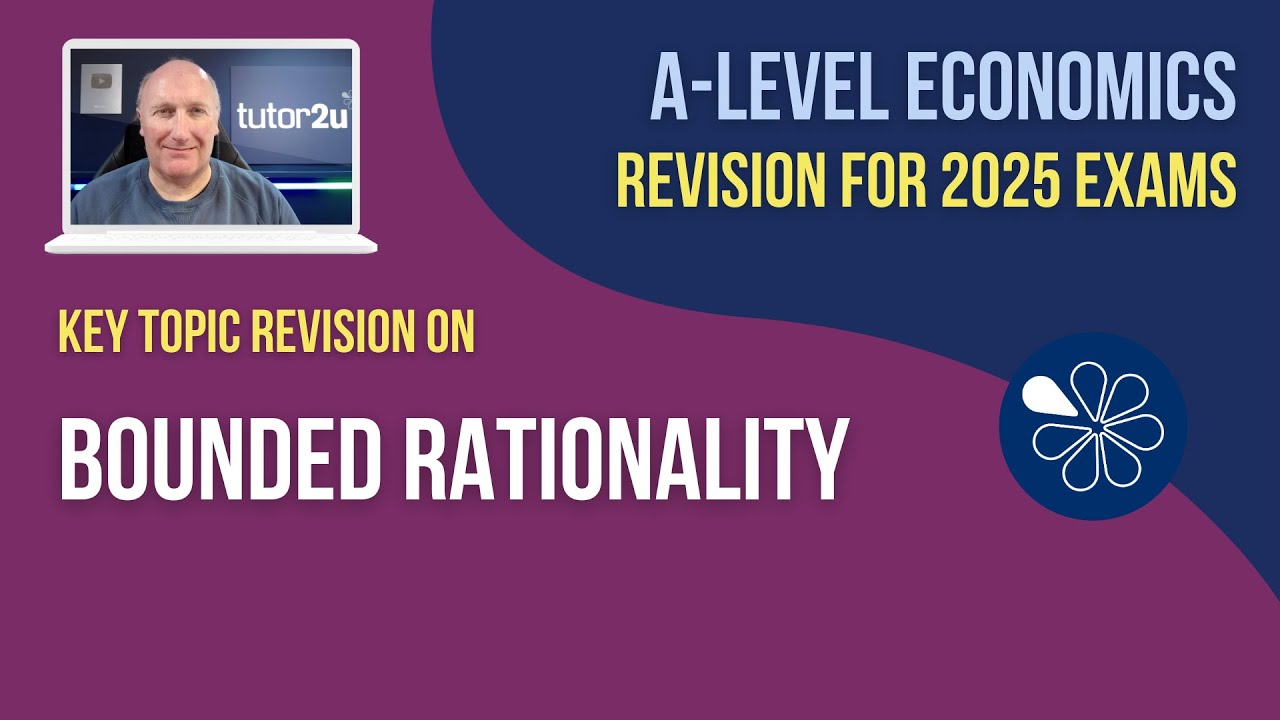
In this video, we’re diving into a key concept from behavioural economics: Bounded Rationality. This case study explores how real-life decision-making often strays from textbook rationality – and what that means for markets, consumers, and businesses in the real world.
Perfect for those aiming for top grades in Microeconomics, this topic links brilliantly with themes of consumer behaviour, market failure, and decision-making under uncertainty.
💡 Hit that Like button if you find this helpful, Subscribe for more weekly revision content, and make sure to tap the notification bell so you never miss an update from tutor2u!
📚 Keynote Summary of Main Arguments:
Bounded Rationality, a concept introduced by Nobel Prize-winner Herbert Simon, challenges the idea that individuals are perfectly rational economic agents.
It suggests that people satisfice – making decisions that are “good enough” rather than optimal – due to:
Cognitive limitations
Limited information
Time constraints
Consumers often rely on heuristics – mental shortcuts – instead of detailed analysis.
🔍 Real-World Case Study Examples:
Consumer Choice: Choosing familiar brands over better options due to overwhelm or limited info.
Investment Decisions: Following the crowd rather than researching deeply.
Loan Agreements: Oversimplifying decisions by focusing on interest rates or monthly costs.
Fast Food Selection: Picking quickly based on familiarity when time is tight.
This topic is essential for understanding irrational market behaviour, consumer fallibility, and why real-world outcomes often deviate from economic theory
#exams2025 #examsuccess #economics #economicssuccess
#ukeconomy #topgrades #microeconomics #tutor2u #EconTeachers
#boundedrationality #behaviouraleconomics #decisionmaking #consumerchoice #rationalchoice
Повторяем попытку...
Доступные форматы для скачивания:
Скачать видео
-
Информация по загрузке: