CUBA: INTERNET INVESTMENT
Автор: AP Archive
Загружено: 2015-07-21
Просмотров: 449
Описание:
(7 Jan 2001) Spanish/Eng/Nat
XFA
The internet highway is making inroads into Cuba with multi-million U-S dollar investments in the pipeline that will revolutionise the island's outmoded technology.
But tough censorship on the island is unlikely to change and Cubans hungry to access the world wide web are quickly learning how to get online, with or without state permission.
An overhaul is underway of telephone cables as old as the Cuban revolution itself.
Etecsa, the state telecommunications company, is converting large chunks of Havana from analogue to digital in a bid to bring its phone services up to date.
For years residents have relied on phone lines that often don't work - and you don't have to look far to see why.
In Nuevo Vedado, one of Havana's smartest districts, loose lines spill out of half open boxes strapped to telegraph poles, unshielded and likely to short circuit.
But the facelift is underway and with it the foundations are being laid for swifter communication in a country where it's closely monitored and controlled.
Digital lines so far allow an estimated 40-thousand Cubans, from a population of more than 11 (m) million, to go online.
The exact figure hasn't been released but could be higher.
Many internet users tap their way into one of several state service providers, using borrowed accounts, or accounts sold on the black market for up to 60 U-S dollars.
One of the service providers is CENIAI, set up in 1999, which also specialises in website design, programming and repairs.
SOUNDBITE: (Spanish)
"Well I think that the internet is a way of learning. What happens is that each user uses it according to his or her own needs. And I think in Cuba, the internet service offers advanced information which anybody can find when they need it for work. This is the main objective for the internet in Cuba."
SUPER CAPTION. Jesus del Valle, Citmatel spokesman
In 1996 Cuba declared that the internet would be used according to Cuba's best interests and that information obtained on the world wide web wouldn't effect national principles or security.
Users have since found their search engines restricted to specific fields - medical research for example.
But increasingly the internet has become a business venture on the black market, where information can be bought and sold to supplement state salaries.
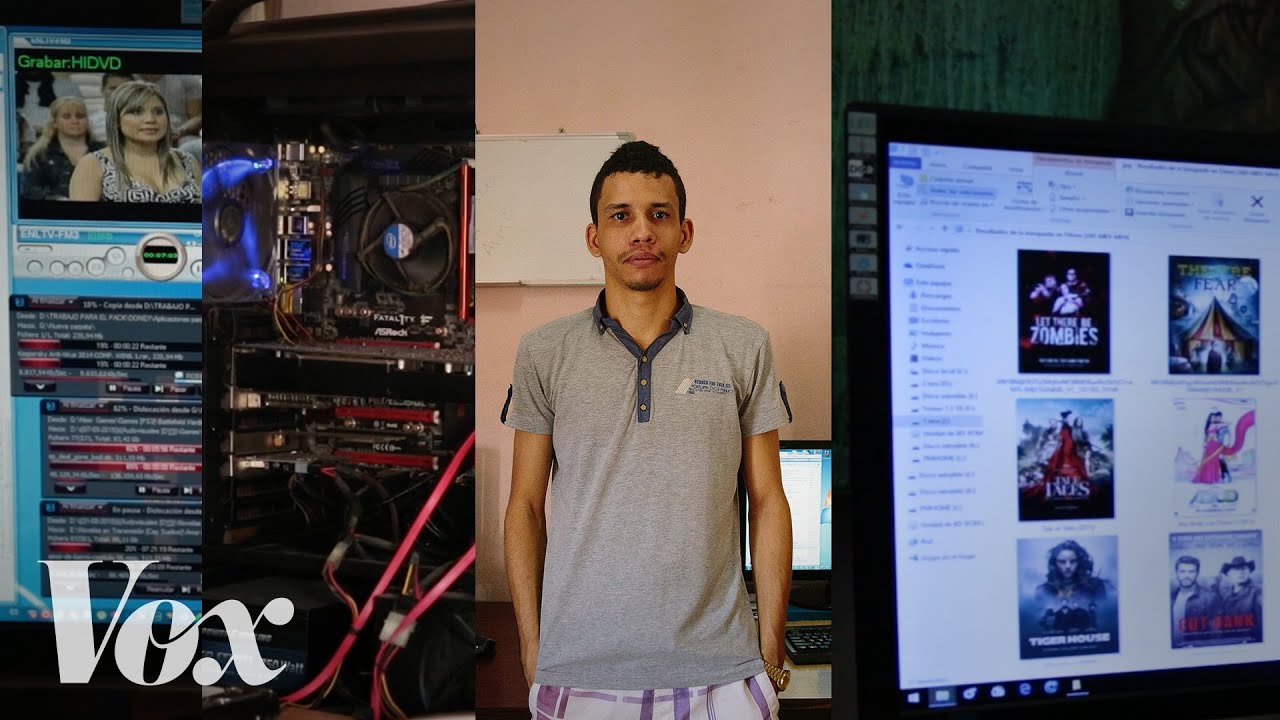
A generation of so-called "informaticos" are trading user codes, downloading compact discs, wheeling and dealing in computer software and perhaps most common of all, free computer-to-phone calls to family and friends in the United States.
This internet user, on condition of anonymity, demonstrated some of the websites which can save money or make it.
UPSOUND: (Spanish)
"Basically, the main uses of the internet are: those who burn CD's opt for websites to do with music, download, and there are others who look for things useful for their work, or to make calls. And there are people who like to chat who go to chat sites, to get to know people, and that is basically what internet users here do".
Cuba is already working with foreign investors to bring its telecommunications up to date.
Stephen Marshall, a British citizen, builds web sites in partnership with the government and plans to invest several (m) million U-S dollars on internet access in Cuba in the near future.
This website allows relatives and friends of Cubans abroad to order gifts that are then delivered in Cuba.
Two cybercafés opened last year and several more are set to follow.
SOUNDBITE: (English)
SUPER CAPTION: Stephen Marshall, Businessman
Find out more about AP Archive: http://www.aparchive.com/HowWeWork
Twitter: / ap_archive
Facebook: / aparchives
Instagram: / apnews
You can license this story through AP Archive: http://www.aparchive.com/metadata/you...
Повторяем попытку...

Доступные форматы для скачивания:
Скачать видео
-
Информация по загрузке: