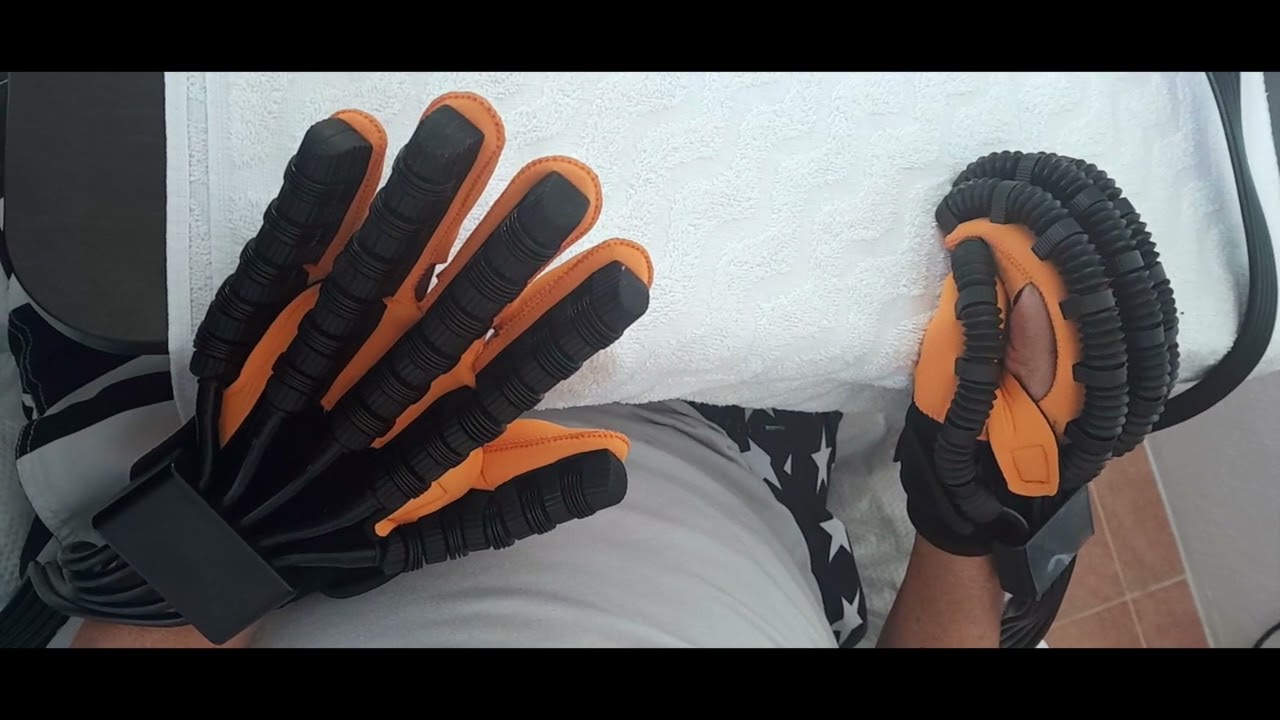
Robotic pneumatic glove
Автор: Chris Ibarola
Загружено: 2025-07-16
Просмотров: 462
Описание:
#robotics #handtherapytraining #handtherapy
A robotic training glove is a wearable mechatronic device, or hand exoskeleton, designed to assist, resist, guide, or measure the movements of the hand and fingers.
These gloves are a cutting-edge fusion of robotics, neuroscience, and software, used primarily in two major fields: medical rehabilitation and skill acquisition/virtual reality.
Here’s a detailed breakdown of what they are, how they work, and their applications.
1. Core Applications
A. Medical Rehabilitation
This is the most common and impactful use of robotic gloves. They are designed to help patients regain hand function after neurological or musculoskeletal injuries.
Target Patients:
Stroke Survivors: The leading use case. To combat paralysis (hemiplegia) or weakness (hemiparesis) in the hand.
Spinal Cord Injury (SCI): To help retrain neural pathways.
Cerebral Palsy: To improve motor control and reduce spasticity.
Traumatic Brain Injury (TBI): For motor recovery.
Arthritis or Post-Surgery Rehab: To improve range of motion and strength.
How They Help in Rehab:
Promote Neuroplasticity: The brain's ability to rewire itself. By providing high-repetition, task-specific movements, the gloves help the brain form new neural connections to control the hand.
Passive Motion: The glove can move the patient's fingers and thumb through a full range of motion, even if the patient has no ability to move them. This prevents joint stiffness and muscle atrophy.
Active-Assisted Motion: If a patient tries to make a movement (e.g., close their hand) but is too weak, sensors in the glove detect this intent and the motors assist in completing the motion.
Gamification: Most modern rehab gloves are paired with software that turns repetitive exercises into engaging games. This dramatically increases patient motivation and adherence to therapy.
Data-Driven Therapy: The gloves track progress meticulously (e.g., range of motion, grip strength, speed, accuracy), giving therapists objective data to tailor treatment plans.
B. Skill Acquisition & Performance Enhancement
This application is focused on training healthy individuals to perform complex manual tasks better, faster, or more safely.
Target Users:
Surgeons: Training for minimally invasive or robotic surgery.
Musicians: Helping pianists or violinists perfect fingerings and build muscle memory.
Athletes: Improving grip strength and technique for sports like climbing or golf.
Industrial Workers: Training for complex assembly tasks.
Virtual/Augmented Reality (VR/AR) Users: To provide realistic haptic feedback, allowing users to "feel" virtual objects.
Повторяем попытку...
Доступные форматы для скачивания:
Скачать видео
-
Информация по загрузке:


