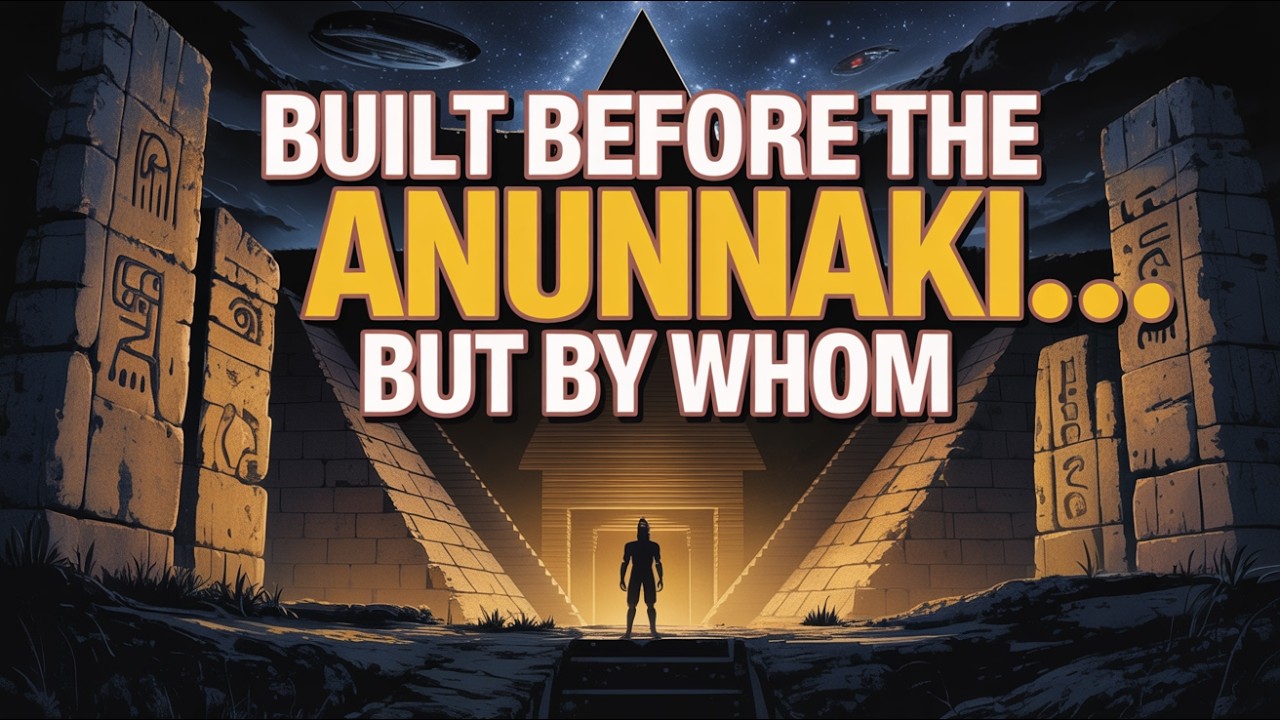
Who Built the Structures the Anunnaki Found When They Arrived? Sumerian Records | History For Sleep
Автор: Anu’s Ancestry
Загружено: 2026-03-18
Просмотров: 2231
Описание:
The Eridu Genesis (c. 1600 BCE cuneiform tablet, Nippur; ETCSL/Oxford, Britannica) opens with one of the most archaeologically precise statements in all of Sumerian literature: "A city had not been built. All the lands were sea. Then Eridu was made." The text presents Eridu not as the first construction project — but as the first city to receive divine assignment. This is a structural distinction that the cuneiform record never explains: if the gods arrived and assigned cities, who built the foundations those assignments were placed upon?
Archaeology at Tell Abu Shahrain — ancient Eridu, present-day southern Iraq — has produced an answer that no Sumerian tablet anticipated. Excavations led by Fuad Safar beginning in 1946 (documented in the full excavation report, Academic Commons, Stony Brook University; National Geographic, 2025; ThoughtCo; Zamaniyat.com) uncovered 18 successive temple layers built one directly on top of another, the earliest dating to the Ubaid period c. 5570 BCE — predating writing, predating the Sumerian King List, and predating any Anunnaki council decree recorded in cuneiform. Each layer was built on the ruins of its predecessor, each following the same orientation and the same floor plan. No cuneiform text assigns the construction of the earliest layers to anyone. The Sumerians themselves recorded only that this was the place where kingship descended from heaven — not that they built what was already there when it landed.
The Sumerian King List (Weld-Blundell Prism, c. 1800 BCE, Ashmolean Museum; ETCSL; ISAC/Chicago) lists five antediluvian cities — Eridu, Bad-tibira, Larag (Larak), Sippar, and Shuruppak — as pre-existing structures through which divine kingship passed sequentially. The text does not describe their construction. It records them as standing institutions, each with functioning governance, long before the flood erased the era. The Gudea Cylinders (c. 2125 BCE, Louvre; ETCSL; Wikipedia) add another layer: when the god Ningirsu commands Gudea to build the Eninnu temple at Lagash, the divine instructions reference restoring a sacred site to its original plan — implying the site's design predated even the gods' commission. Gudea is not given an original blueprint. He is given a recovery blueprint.
Göbekli Tepe (c. 9600–8200 BCE, UNESCO World Heritage Site; Smithsonian, Wikipedia, History.com) stands as the most direct archaeological parallel: a site of precisely coordinated megalithic architecture, T-shaped pillars weighing up to 20 tonnes, carved with astronomical and zoological imagery, built by a population that left no writing, no recorded name, and no stated divine authority — and then, uniquely, deliberately buried. The builders sealed their own structures beneath fill before abandoning them. No Sumerian tablet names Göbekli Tepe. No cuneiform text describes its construction or its burial. It simply exists, 5,000 years before Sumer's first city, in the same upper Mesopotamian region the Anunnaki council governed. Tonight, History for Sleep reads the original Sumerian passages that describe arriving at, assigning, and restoring structures — and sits with the silence where their construction should be recorded.
#SumerianRecords #HistoryForSleep #Anunnaki #WhoBuiltIt #Eridu18Temples #EriduGenesis #UbaidPeriod #GöbekliTepe #FiveCities #SumerianKingList #GudeaCylinders #EninuTemplate #PreExistingStructures #TellAbuShahrain #FuadSafar #AncientBuilders #UnknownBuilders #PreFloodCities #AncientMesopotamia #SumerianMythology #AncientMysteries #SleepPodcast #AncientHistory #MesopotamianMythology #ForbiddenArchaeology #SacredFoundations #DivineAssignment #CuneiformTablets #PreSumerianCivilization #HistoryNarration
Повторяем попытку...
Доступные форматы для скачивания:
Скачать видео
-
Информация по загрузке: