Instrument Pilots: Are You Ignoring These Symbols?
Автор: Flight-Levels
Загружено: 2026-02-27
Просмотров: 5640
Описание:
Most pilots can fly a needle, but few truly understand the "protected box" they are flying in. In this video, we go beyond the basic instrument rating and dive into the high-stakes world of TERPS (Terminal Instrument Procedures). We are fact-checking the critical math that determines whether an approach is safe to fly, specifically focusing on the invisible "slopes" that approach designers use to keep you away from the towers, trees, and terrain.
The Deep Dive: 34:1 and 20:1 Obstacle Identification Surfaces (OIS)
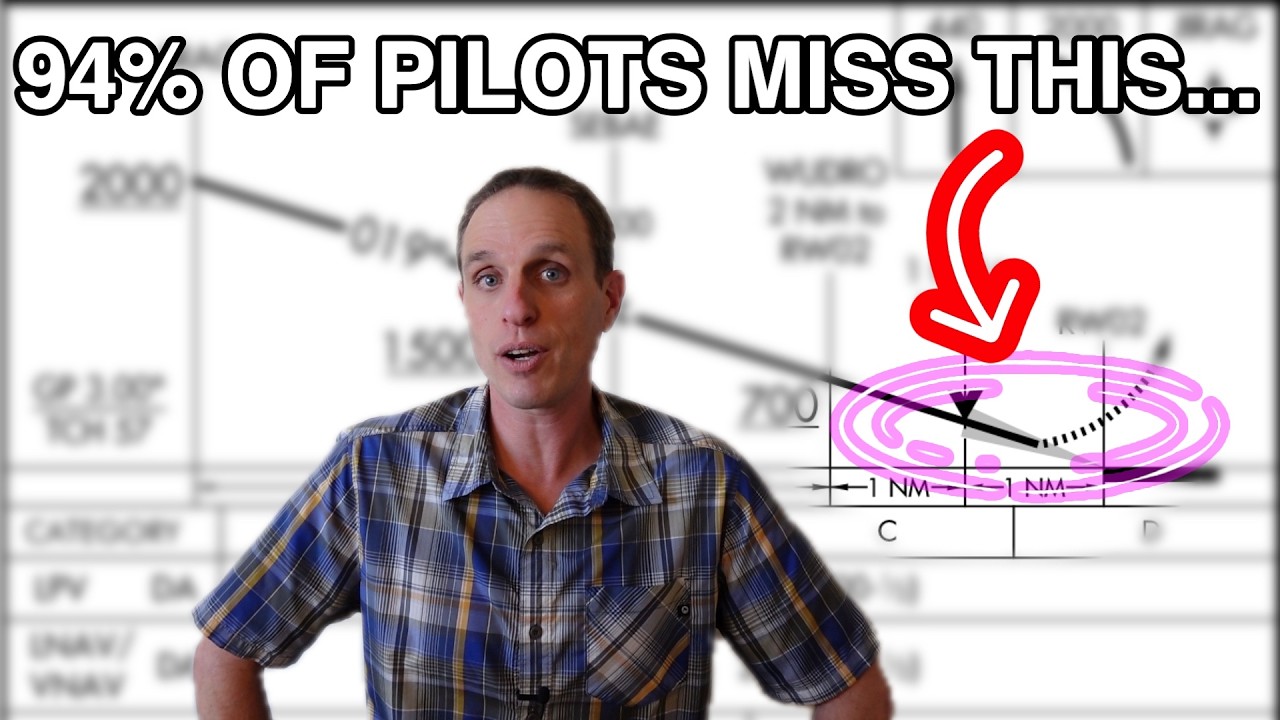
Understanding these ratios is critical for situational awareness. We break down the use of visual descent points and shaded grey arrows to identify hazards. If an obstacle penetrates these planes, it changes everything from your minimums to the visual notes you see on your approach plate.
In this video, we discuss:
The "Invisible Funnel": How designers evaluate the final approach segment for safety.
Surface Geometry: Breaking down the 34:1 (approx. 1.69°) and 20:1 (approx. 2.86°) slopes and what they mean for your descent path.
Mastering the technical side of TERPS doesn't just make you a better pilot—it makes you a safer one. When you understand the math, you understand the margin for error.
Are you ready to stop "following the needles" and start understanding the procedure? Let's get into the numbers.
#Aviation #IFR #TERPS #InstrumentFlight #PilotLife #AviationMath #FlightSafety #ApproachPlate #InstrumentPilot #AviationEducation #FlySafe #PilotKnowledge
X2WTQRWR9JIPGEG4 HHWARSWXRYXPGUUC
Повторяем попытку...
Доступные форматы для скачивания:
Скачать видео
-
Информация по загрузке: