Conquering the 2026 TOEFL
Автор: Inspired to Thrive
Загружено: 2026-01-16
Просмотров: 149
Описание:
What is the TOEFL Exam?
The Test of English as a Foreign Language (TOEFL) is an assessment designed for non-native English speakers who wish to study or work in English-speaking countries.
Changes in the New TOEFL (Starting January 2026)
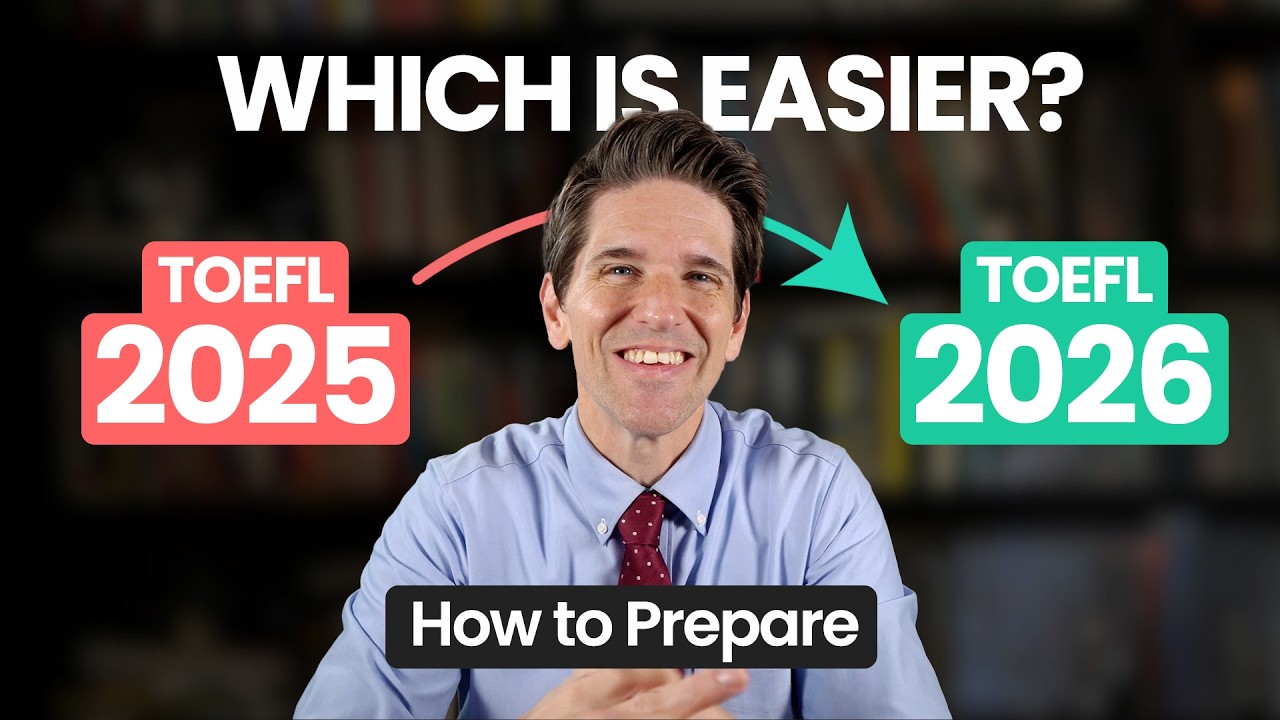
Starting January 21, 2026, the TOEFL iBT will undergo a significant redesign to become shorter, adaptive, and more focused on real-world communication.
• Adaptive Format: The Reading and Listening sections will become adaptive, meaning the difficulty of the second module will depend on your performance in the first. If you perform well initially, you receive a "hard module"; if not, you receive an "easy module".
• Shorter Duration: The test will take approximately 2 hours or less, compared to the previous 3-hour format.
• New Scoring Scale: The 0–120 scale will be replaced by a 1–6 band system that aligns with CEFR levels (e.g., a score of 5.5–6.0 represents C1–C2 proficiency).
• Reading Changes: The section will include new task types like "Complete the Words" (filling in missing letters in a paragraph) and "Read in Daily Life" (emails, texts), alongside shorter academic passages.
• Speaking Overhaul: All previous speaking tasks (1–4) will be removed. They will be replaced by two tasks with no preparation time:
◦ Listen and Repeat: Repeating sentences exactly as heard.
◦ Take an Interview: Answering follow-up questions in a simulated interview format.
• Writing Changes: Tasks will shift toward practical writing, including "Write an Email" and "Build a Sentence," alongside the Academic Discussion task.
--------------------------------------------------------------------------------
How to Study for Each Section
1. Reading Section
• Skimming and Scanning: Do not read the entire passage in detail immediately. Skim the first and last sentences of paragraphs to identify main ideas, then scan for specific keywords to answer questions.
• Active Reading: When practicing, try to summarize each paragraph simply, as if explaining it to a six-year-old, to ensure true comprehension.
• Analyze Mistakes: If you get a question wrong, determine if it was because you misread the passage, misread the question, or lacked vocabulary knowledge, then adjust your strategy.
• Vocabulary: For the 2026 format, practice recognizing word patterns for the "Complete the Words" task by studying the Academic Word List and using context clues.
• Practice Resources: Read science and academic articles from websites like Mental Floss, Smithsonian Magazine, or ScienceNews to get comfortable with TOEFL-style topics.
2. Listening Section
• Strategic Note-Taking: Do not try to write everything down. Focus on writing nouns, verbs, and adjectives that trigger your memory. Use symbols (e.g., arrows for "leads to") to increase speed.
• Structure Your Notes: For conversations, create a table to separate what the student says from what the professor/employee says. For lectures, listen for linking words (e.g., "however," "first") to identify when a new main idea is introduced.
• Active Listening: Instead of passively hearing words, listen as if you need to respond to the speaker. Ask yourself, "Why is the professor sharing this detail?".
• Varied Accents: Listen to podcasts and news from the UK, Australia, and North America to get used to different English accents.
3. Speaking Section
• Current Format (Pre-2026): Use templates to structure your responses (e.g., "The reading states... The professor disagrees because..."). Focus on speaking casually and confidently.
• 2026 Format Preparation:
◦ Abandon Templates: The new "Take an Interview" task requires spontaneity. Rehearsed answers may lower your score.
◦ Train Auditory Memory: For the "Listen and Repeat" task, practice listening to short sentences and repeating them exactly to improve recall and pronunciation.
• Record and Review: Record your responses and review them for filler words ("um," "uh") and pronunciation errors. This builds self-awareness.
4. Writing Section
• Understand the AI (e-rater): Your essay is scored by both humans and AI. The AI looks for structure, grammar, and vocabulary complexity. Ensure you use clear paragraph breaks and transitions.
• Focus on Grammar: Do not neglect grammar study; errors in verb tense or sentence structure can significantly lower your score.
• Academic Discussion Task: Practice writing a response in 10 minutes. State your opinion clearly, provide a specific reason, and add a new perspective to the discussion rather than just copying the provided text.
• Sentence Variety: Use a mix of simple and complex sentences. Using conjunctions (like while, although, but) to create longer sentences can help improve your score.
• Proofreading: Always allocate time to check for spelling and punctuation errors, as the test does not have a spell-checker
Повторяем попытку...

Доступные форматы для скачивания:
Скачать видео
-
Информация по загрузке: