X-ray Interactions [Summary Table for Radiologic Technologists / Radiographers]
Автор: How Radiology Works
Загружено: 2021-01-11
Просмотров: 1467
Описание:
Check out the BEST NEW RADIOGRAPHY BOOK https://tinyurl.com/RadPhysicsMastery , to help one your ARRT registry. Study of X-ray Interactions is important for Radiologic Technologists and Radiographers as this is the basis for how the x-ray and CT images are made and also contributes to x-ray dose. In this video we will provide a summary table that will be great for studying for AART exams and generally being able to separate the importance of Coherent Scatter, Photoelectric Effect and Compton Scatter.
For more details and figures from this video on x-ray interactions please see this post on our site:
https://howradiologyworks.com/x-ray-i...
Chapter Summaries
00:00 Intro
01:17 Products X-ray Interactions
03:00 Outcome Summary X-ray Interactions
03:47 Energy Dependence X-ray Interactions
04:28 Z Dependence X-ray Interactions
05:17 X-ray / CT Image Generation
05:53 Patient Dose
06:21 Staff and Room Dose
7:10 Next Steps
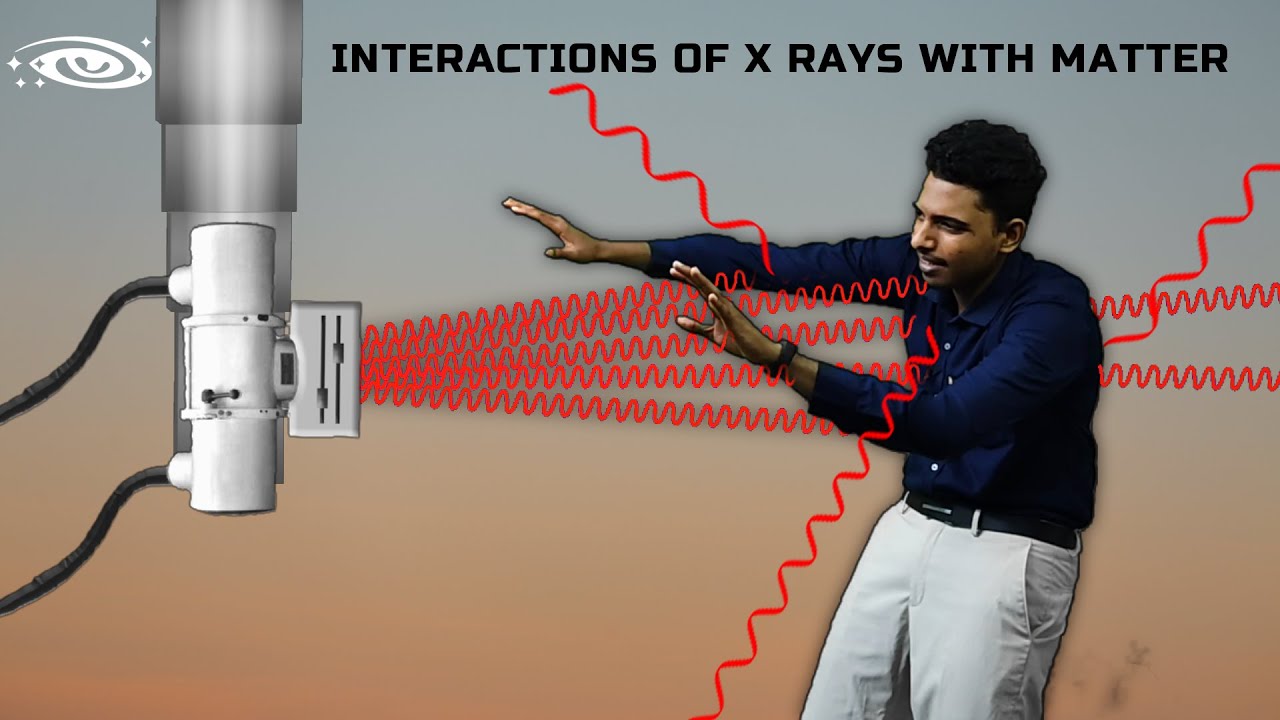
When x-rays interact with the human body during an x-ray exposure, they form an image that is highly dependent on the type of interactions of matter and x-rays. Diagnostic x-ray interactions are dominated by two different physical interactions – the photoelectric effect and Compton scatter.
Understanding the impact of the photoelectric effect and Compton scatter and their behavior as a function of energy can greatly improve your ability to select the best technical parameters for a given clinical situation.
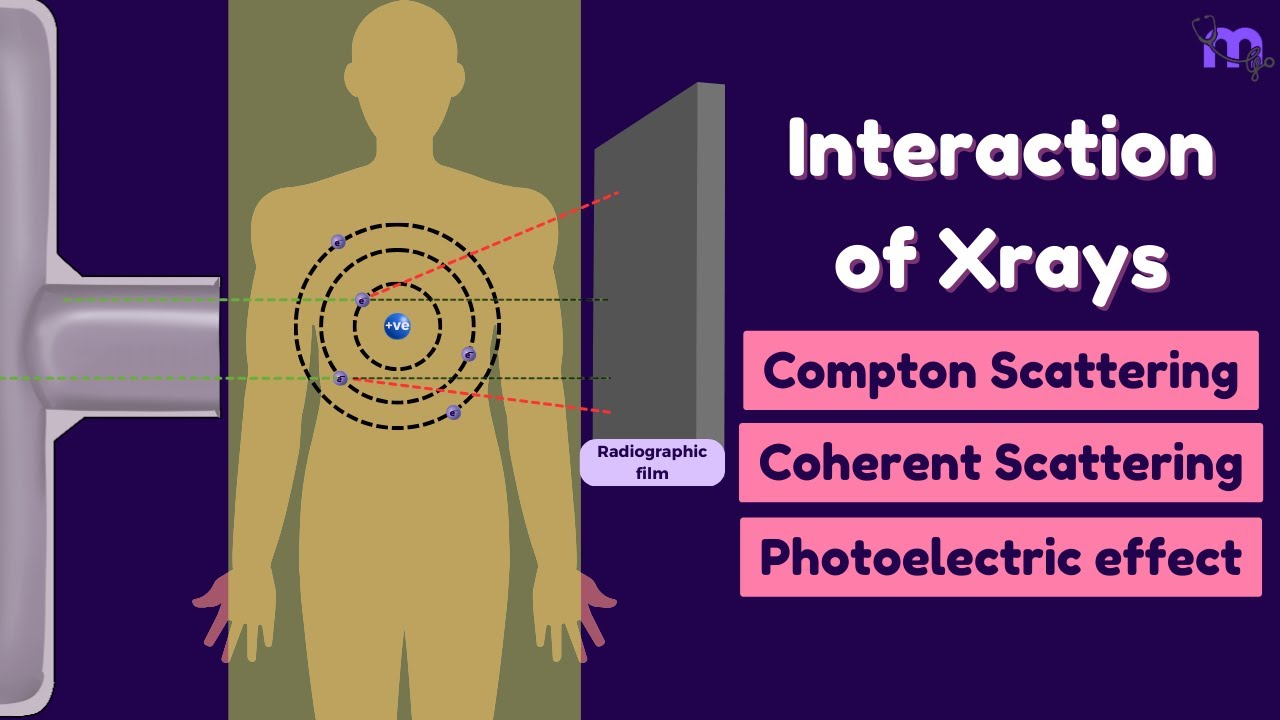
We start with a high level summary graphic that demonstrates the differences between the x-ray interactions of: photoelectric, compton and coherent scattering and then go into detail on each of the interactions.
X Ray Interactions
The photoelectric effect is the dominant contributor to the generation of signal in an x-ray image as the x-ray is coming in and will be stopped and deposit its energy locally.
The photoelectric effect occurs when an x-ray interacts with an electron in the matter. The photo is completely absorbed and its energy is transferred to an electron that is removed from the electron cloud.
Since the electrons that are in the inner shells are at a more stable configuration the electrons in the outer shells will transition to an inner shell and a characteristic x-ray will be emitted. These secondary events are very low energy and are absorbed relatively locally and do not contribute to the measured image signal.
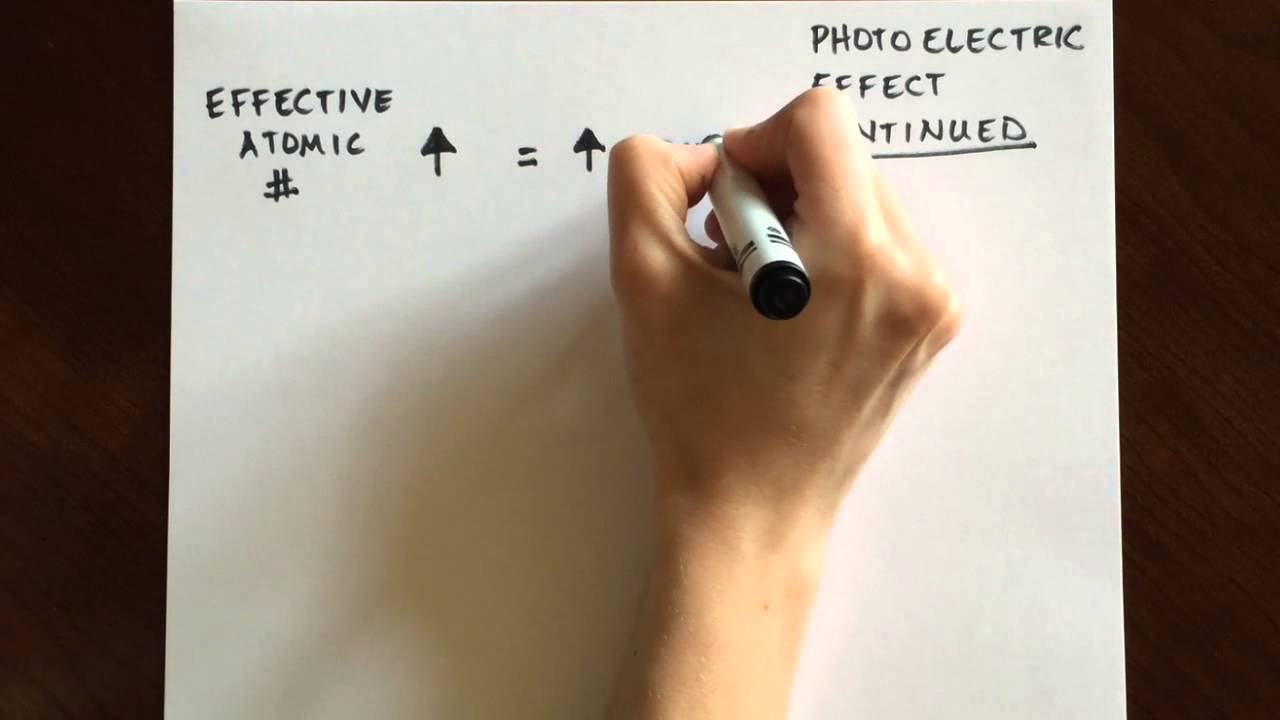
The likelihood of such interactions with inner shells depends strongly on atomic number Z (i.e. Z^3), or how many protons are in nucleus.
Therefore, image contrast in x-ray and CT is much better for materials with high Z elements.
During this interaction, electrons which move to the inner shell, preserve energy and emit secondary x-ray photon.
Another important point is that the likelihood of interaction is much higher for lower diagnostic x-ray energies, i.e. (1/E^3), where E is the energy of the x-ray photons.
Therefore, when possible it is typically beneficial to use lower energy photons for a given imaging task, provided that they can penetrate the patient.
Rad Take-home Point: In the photoelectric effect an x-ray comes in and deposits its energy locally mostly in an energetic electron (which then deposits its energy locally).
Compton Scattering
Compton Scattering is the second dominant effect in x-ray imaging. In this case, the x-ray photon interacts with an electron in the outer shell, and hence the likelihood of Compton Scattering doesn’t depend on Z.
X-Ray Interactions with Matter and Image Signal Generation in X-Ray Imaging
As shown in the Figure the X-Ray photon knocks the electron out. Then the photon goes out in an opposing direction from the knocked out electron in order to conserve momentum.
It is important to remember here is that unlike in the photoelectric effect, the energy is not all deposited locally.
The scattered photon may still have a significant fraction of the energy of the incoming photon. It can still travel through the patient and potentially could have a secondary scatter effect or could get measured on the detector.
For more information on the impact of x-ray scatter on image quality and the effect of technical parameters on x-ray scatter please see our post on x-ray scatter.
Rad Take-home Point: In the Compton effect an x-ray interacts with a weakly bound electron and the electron and photon both continue on in opposing directions.
Повторяем попытку...
![X-ray Interactions [Summary Table for Radiologic Technologists / Radiographers]](https://imager.clipsaver.ru/PIXIcSaBWD8/max.jpg)
Доступные форматы для скачивания:
Скачать видео
-
Информация по загрузке: