Diagnostic Approach to Soft Tissue Tumors of Tongue| Oral Pathology 360| Updates
Автор: Oral Pathology 360
Загружено: 2020-10-19
Просмотров: 2099
Описание:
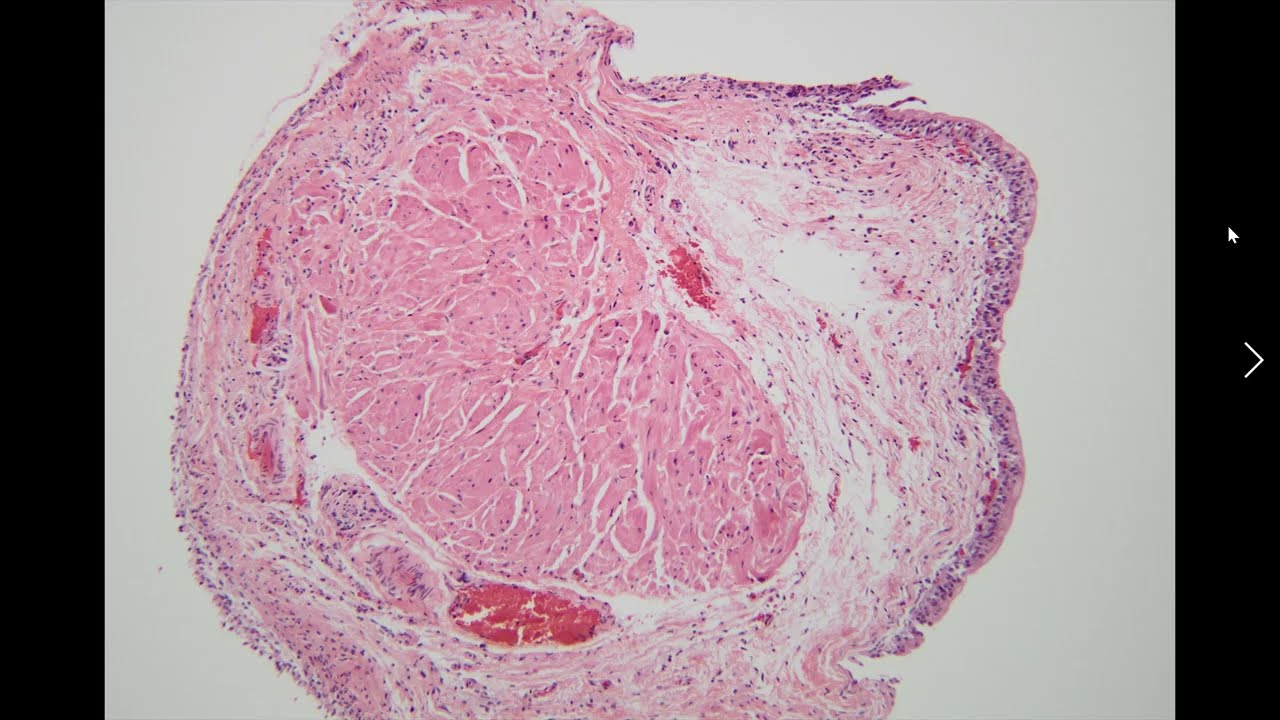
This lecture deals with FNABC, cell block, histopathology and IHC in the diagnosis of soft tissue tumours and sarcomas of the tongue. Among soft-tissue tumours in general, those in the head and neck region are relatively uncommon, and the proportion of all soft tissue sarcomas that arise in this region is no more than 5–10%.
The incidence of sarcomas in the oral cavity is about 2% of which about 60% occurs in the tongue.
Muscles, blood vessels and nerves constitute the soft tissue components of the tongue, and so almost all types of soft tissue tumours originating from these structures are known to occur. As these are extremely rare, only case reports are available.
There are certain clinical pictures which help to distinguish sarcoma from carcinoma of the tongue.
In epithelial malignancy, scrape cytology is practised while in soft tissue tumours FNABC is essential. Often surgical biopsy doesn't yield representative material as these mesenchymal tumours lie deep below the lining epithelium of tongue. FNABC is an ideal method to procure representative diagnostic material.
The cytological picture gives not only a clue to sarcoma but helps to classify these lesions.
The cytological material can be used to prepare a cell block. The cell block can be used not only for histopathological study and IHC for exact categorisation of the sarcomas. It can also be used to study cytogenetics, molecular studies and even liquid biopsy.
These studies are essential for personalised medicine and target therapy which are opening the avenues for most recent treatments of malignancy apart from neoadjuvant therapy, surgery, radiotherapy and other chemotherapies.
Повторяем попытку...

Доступные форматы для скачивания:
Скачать видео
-
Информация по загрузке: