How to properly inflate the cuff on an endotracheal tube after you have intubated a patient.
Автор: Sharyn Garrigan
Загружено: 2022-08-25
Просмотров: 4045
Описание:
I cannot access the email for this channel so I am porting this channel over to a different channel. Please search: SharynGarrigan@SharynGarrigan-106 and subscribe. Thank you everyone.
After a patient has been induced and intubated, the anesthetist must do several things at approximately the same time. Because all patients have slightly different responses and the timing of these responses are slightly different, I cannot tell you a set time to do each thing, but I can tell you what needs to be done. Your patient needs to have the breathing tubes attached to the endotracheal tube, the cuff inflated, the oxygen and the anesthesia turned on, and eye lube applied to each eye. The patient will need to be repositioned into a position necessary for surgical prep… or whatever procedure is needed.
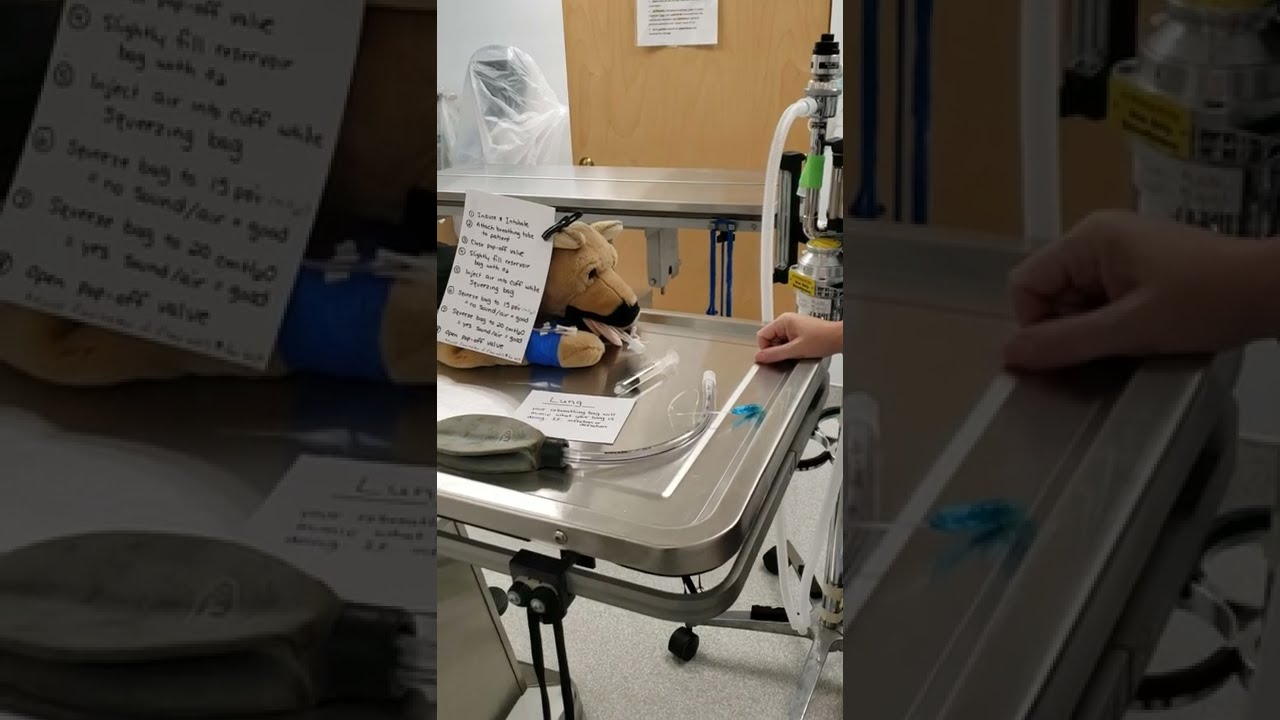
This demonstration will focus on “how to inflate the cuff on the endotracheal tube properly”. I have used a reservoir (breathing/ rebreathing) bag as a lung. The endotracheal tube is inserted into the bag until the cuff is just inside the bag. I will increase the volume of air into the cuff until the volume reaches the proper pressure. I will identify the pressure using the manometer on the anesthetic machine.
The more common “grape method” is frequently seen and often adequate enough but consider it a game of “Russian Roulette”. By squeezing the bubble and thinking it feels ok, you could be wrong and either allow fluid into your patients lungs or cause damage to the tissue.
The steps to proper inflation are:
1) INDUCE and INTUBATE
2) Attach BREATHING TUBES to the endotracheal tube/ patient
3) CLOSE POP-OFF VALVE
4) Slightly fill reservoir bag with OXYGEN
(You will need to have the flowmeter set at least 1.5-2 L/min… larger bags may need a higher setting to get enough air into them to get quick results… do NOT flush with fresh gas when patient is attached!)
5) Inject AIR INTO CUFF while squeezing the bag
6) SQUEEZE bag, WATCH Manometer, LISTEN for air flow
-- Squeeze bag until manometer reads 15 cmH2O and listen…. NO air/sound… good
-- Squeeze bag until manometer reads 18-20 cmH2O and listen…. YES air/sound… good
7) OPEN POP-OFF VALVE
8) Turn on ANESTHESIA (re-adjust flowmeter to calculated flow rate if you increased it during the cuff inflation)
If you have injected the proper amount of air into the cuff, the cuff will seal off the trachea. Water will not be allowed to flow into the lungs and the anesthetic gas and oxygen will not leak out of the lungs. You will also have a soft enough cuff that, if the pressure inside the lungs should reach a critical point… this point is 20cmH2O… that a slight amount of the air inside the lungs can leak out.
Lungs can POP (rupture) at greater than 20cmH2O!
This whole process should take ~1 minute on a LIVE patient.
It can be helpful to know how many cc's of air can be put into the cuff of the tube you have placed in your patient. You can identify this when you leak check your endotracheal tubes.
Повторяем попытку...
Доступные форматы для скачивания:
Скачать видео
-
Информация по загрузке: