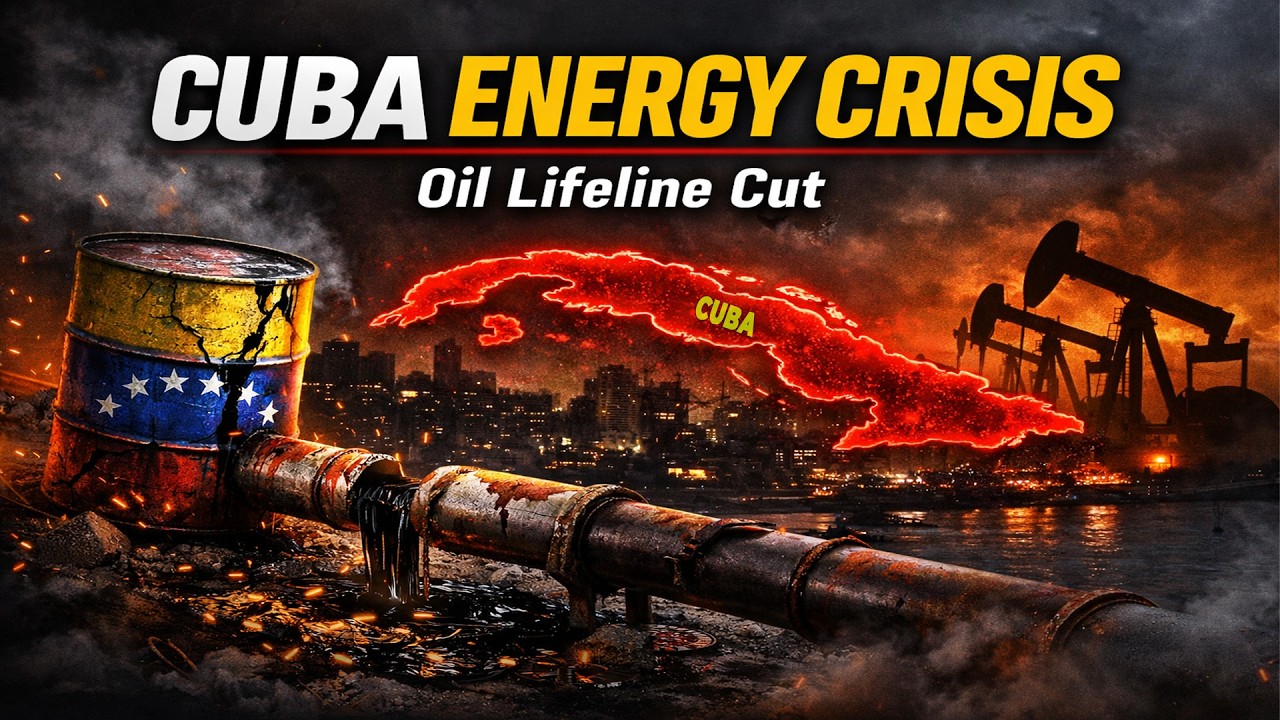
What Happens to Cuba After Venezuela Oil Stops? Inside the 2026 Energy Crisis
Автор: New York Center for Foreign Policy Affairs
Загружено: 2026-03-13
Просмотров: 10
Описание:
Cuba is experiencing one of its most severe economic crises in decades after losing a critical oil lifeline from Venezuela. For years, the island relied heavily on subsidized crude shipments from Caracas, an arrangement originally established during the presidency of Hugo Chávez and later continued under Nicolás Maduro.
In early 2026, that system abruptly collapsed.
After the seizure of Maduro and the tightening of U.S. control over Venezuelan oil exports, the United States effectively halted fuel shipments that had been sustaining Cuba’s fragile energy infrastructure. The move was backed by policies introduced by Donald Trump, aimed at increasing political pressure on Havana.
For Cuba, the impact has been immediate and severe.
For more than two decades, the island received between 27,000 and 35,000 barrels of oil per day from Venezuela through an arrangement that exchanged Cuban medical services for subsidized fuel. By 2025, Venezuelan crude still accounted for more than half of Cuba’s imported energy supply.
Once that flow stopped, Cuba’s vulnerable energy system began to collapse.
Across the country, blackouts lasting up to 20 hours per day have become common. Power shortages have disrupted hospitals, transportation networks, water treatment facilities, and waste management systems. Food distribution has slowed dramatically as fuel shortages affect logistics and trucking.
The economic consequences are spreading quickly.
Tourism, one of Cuba’s most important sources of foreign currency, is also under pressure. Airlines have reduced flights because of jet fuel shortages, while hotels have been forced to cut services and staff. At the same time, inflation is rising as supply chains break down.
The crisis has been made worse by geopolitical pressure on secondary fuel suppliers.
Mexico’s state energy company Pemex suspended shipments to Cuba after warnings of potential U.S. trade consequences. Other potential suppliers, including countries in Africa and Eurasia, are reconsidering deliveries due to financial and diplomatic risks tied to sanctions.
Meanwhile, Cuba’s leadership under Miguel Díaz‑Canel has condemned the policy, calling it economic pressure designed to destabilize the government.
The broader question now facing analysts and policymakers is whether economic pressure will force political reform in Cuba or deepen humanitarian hardship across the island.
History shows that economic crises in Cuba often trigger migration waves across the Florida Straits. Experts warn that prolonged shortages, blackouts, and economic deterioration could once again push thousands of Cubans to leave the island.
In this video, we break down:
• Why Venezuela’s oil was crucial for Cuba
• How the 2026 intervention disrupted energy supply chains
• Why blackouts and shortages are spreading across the island
• The geopolitical strategy behind U.S. sanctions
• What the crisis means for migration, tourism, and regional stability
The unfolding Cuba energy crisis highlights how energy policy, sanctions, and geopolitics can reshape an entire country’s economy almost overnight.
#CubaCrisis
#CubaEnergyCrisis
#CubaBlackouts
#VenezuelaOil
#Geopolitics
#LatinAmericaPolitics
#CubaEconomy
#GlobalEnergyCrisis
#USForeignPolicy
#WorldNewsAnalysis
Повторяем попытку...
Доступные форматы для скачивания:
Скачать видео
-
Информация по загрузке: