High Tensile Electric Fence Layout & Design
Автор: Small-Scale Meat Producers Association
Загружено: 2025-03-21
Просмотров: 1061
Описание:
In this video, we walk through the first steps of building a straight, high-tensile electric fence from the ground up — starting with layout, corner post placement, and tying off wires properly.
The old barbed wire fence on this stretch was removed, and we’re replacing it with a purpose-built high-tensile system. This section is approximately 280 feet long with no changes in direction, and we’ve chosen 40-foot line post spacing for this build.
Step 1: Choose Corner Locations First
Before building braces or setting line posts, the first step is always:
Select your corner post locations
Drive corner posts and any change-of-direction posts
Establish a straight reference line
In this case, we reused one existing corner post and drove a new one on the opposite end.
Getting corners correct is critical. Everything else in your fence depends on these locations being straight, square, and well set.
Step 2: Pull a Guide Wire
Once corners are installed, we pull a guide wire from corner to corner. This guide wire will eventually become one of the fence wires, but initially it serves to:
Establish a straight line
Remove bends or irregularities
Help determine accurate line post placement
Ensure brace posts are positioned correctly
Lightly tension the guide wire just enough to remove sag and create a clean visual reference.
Step 3: Mark Wire Locations on Corner Posts
After braces are built, mark your wire heights directly on the corner post. This ensures:
Consistent spacing
Accurate installation
Clean alignment across the entire fence
We use:
X marks for hot wires
Line marks for ground wires
Additionally:
Hot wires are marked with red tape
Ground wires are marked with white tape
This makes identification easy during installation and future maintenance.
Fence Configuration
In this build, we are alternating wires from the ground up:
Ground – Hot – Hot – Ground – Hot – Hot
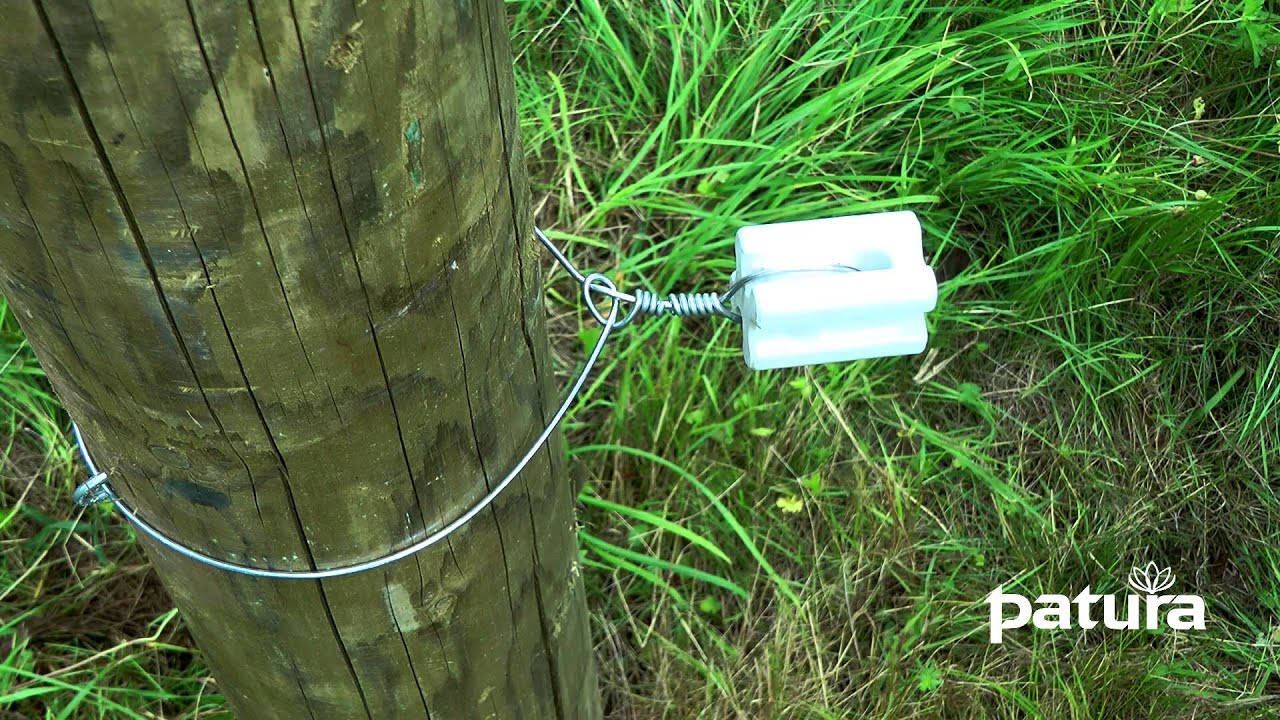
Hot wires require insulators to prevent current leakage.
Ground wires can be tied directly to the post.
Tying Off with a Termination Knot
For both insulators and ground wires, we use a termination knot, a strong, reliable method for securing high-tensile wire to posts.
The process includes:
Biasing the insulator slightly toward the fence line
Using a chain strainer to remove slack
Leaving enough tail to complete the knot properly
Installing an inline strainer later for final tension
When tying off:
Cross the wire cleanly through the insulator
Maintain control of the insulator so it doesn’t rotate
Make five tight wraps to secure the knot
Leave a tail when necessary to connect adjacent hot wires without additional insulated jumper wire
The termination knot is a foundational skill in high-tensile fence construction and ensures a secure, long-lasting connection at every corner.
Why This Matters
Proper layout and termination determine:
Fence longevity
Consistent wire tension
Electrical performance
Ease of future maintenance
Taking the time to establish straight lines, consistent spacing, and clean tie-offs makes the entire fence stronger and more professional.
If you’re building permanent electric fencing, mastering corner layout and termination knots is essential. Start with solid corners, pull a clean guide line, and build from there.
Related Videos in This Series
How to Test and Size Your Energizer and Grounding System
• How to Install a Proper Grounding System f...
How to Build a Proper Brace for High-Tensile Fence
• How to Build a Strong H-Brace for Multi-St...
Common Faults in Permanent High-Tensile Electric Fence
• Common Faults in Permanent High-Tensile El...
For more, check out our:
Rotational Grazing Playlist
• Rotational Grazing
Electric Fencing Playlist
• Electric Fencing
Subscribe for more fencing and grazing education:
https://www.youtube.com/c/SmallScaleM...
Повторяем попытку...

Доступные форматы для скачивания:
Скачать видео
-
Информация по загрузке: