Mammography 4: Your Results
Автор: SMIL Southwest Medical Imaging
Загружено: 2015-07-09
Просмотров: 6751
Описание:
This is video 4 of a 6-part series on Mammograms. Join Dr. Denise Reddy in this video series as she discusses all the options when receiving mammogram results.
Destry: We are continuing our 6-part series on mammograms. We have taken you through the process, answered some of your questions and now it’s time for results. We are here at Scottsdale Medical Imaging along with Dr Denise Reddy and Pam Turgeon, a Nurse Navigator at SMIL.
We all want to hear the all clear but what happens when you get results that say “wait a second, you have to come back and do something more”? I know this can be a potentially very frightening time for women.
Dr Reddy: That’s what we call a “call back”. What that means is there was a finding on your mammogram and we need to do some additional tests to find out if it is a problem or not. About 1 in 10 women are called back for more tests but something that looks suspicious on your screening mammogram does not mean you have cancer.
A suspicious finding may be just dense breast tissue, a cyst, or even a tumor that isn’t cancer. Sometimes, it’s simply that your screening mammogram isn’t showing us everything we want to see and we want additional views.
Callbacks are very important. You've got to come back; but if you get a call back take a deep breath. It's not likely to be cancer. The majority of time the further testing shows the suspicious area is harmless.
SMIL’s Same Day Answers program makes a big difference because we can take care of callbacks the same day as your screening mammogram or schedule your call back at that time.
Destry: You get a Diagnostic Mammogram correct? What exactly is that?
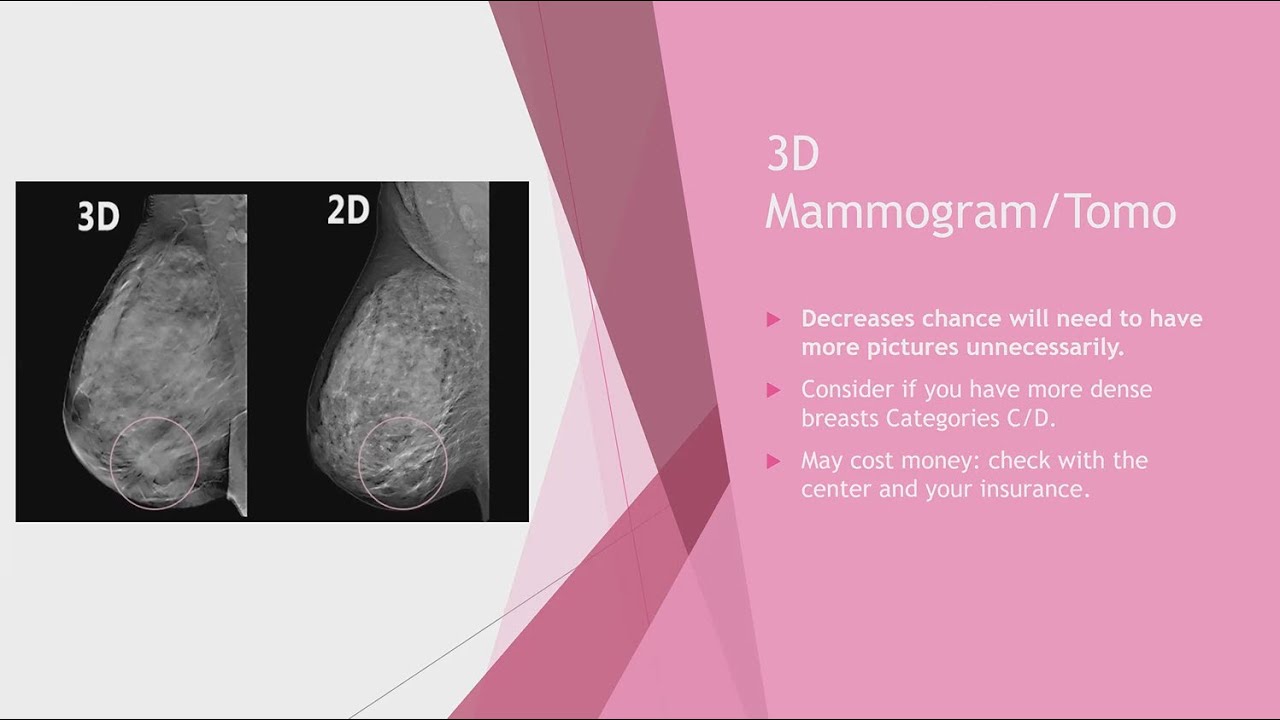
Dr Reddy: Your diagnostic mammogram is still an x-ray of your breasts, but it’s done for a different reason. More pictures are taken during a diagnostic mammogram so that any areas of concern can be carefully studied. A radiologist is on hand to advise the technologist (the person who operates the mammogram machine) of any special views we need.
Destry: Do you add additional tests like an Ultrasound?
Dr Reddy: Yes, in some cases we’ll also use ultrasound to look more closely at any areas of concern found on a mammogram. Ultrasound can be a great problem-solving tool uses sound waves to create a computer image of the tissues inside your breasts. For this test, you will lie on a table while your SMIL ultrasound technician applies some gel and places a “transducer” – a small instrument that looks like a microphone – on your skin.
The test doesn’t hurt at all, and does not expose you to radiation. The gel that the technician puts between the skin and the transducer feels a little cold and wet but that’s about it.
Ultrasound can often “see” if a breast mass that looks suspicious on a mammogram is actually solid like a tumor or filled with fluid like a cyst. Ultrasound can also be helpful for some women with dense breast tissue because it provides an additional way of “seeing” through very dense tissue.
Destry: What’s a biopsy?
Dr Reddy: If you need a breast biopsy, it doesn’t mean you have cancer. Most biopsy results show the suspicious area is not cancer, but a biopsy is the only way to find out.
During the biopsy, a tiny amount of tissue is removed and looked at under a microscope. There are several different types of biopsies – most use a very fine needle. The only difference is the type of imaging equipment the radiologist uses to guide the needle into the area that needs to be biopsied. The type you have depends on things like how suspicious the tumor looks, how big it is, where it is in the breast, how many tumors there are, other medical problems you might have.
The tissue sample will be sent to a lab where a specialist, called a pathologist, will look at it. It will take a few days, for you to find out the results. Your doctor will go over them with you. Sometimes a SMIL Breast Nurse Navigator will also go over the results with you.
4 out of 5 biopsies are negative for cancer. If your results show no signs of cancer be sure to ask the doctor whether you need any additional follow-up, and when you should have your next screening mammogram.
If the biopsy shows there are atypical or cancer calls present, your doctor may refer you to a breast surgeon or other breast specialist. At this point some women opt to work with SMIL’s Breast Nurse Navigator program...
Повторяем попытку...

Доступные форматы для скачивания:
Скачать видео
-
Информация по загрузке: