International Civil Aviation Organization
Автор: Free Online Gemological course
Загружено: 2020-06-03
Просмотров: 77
Описание:
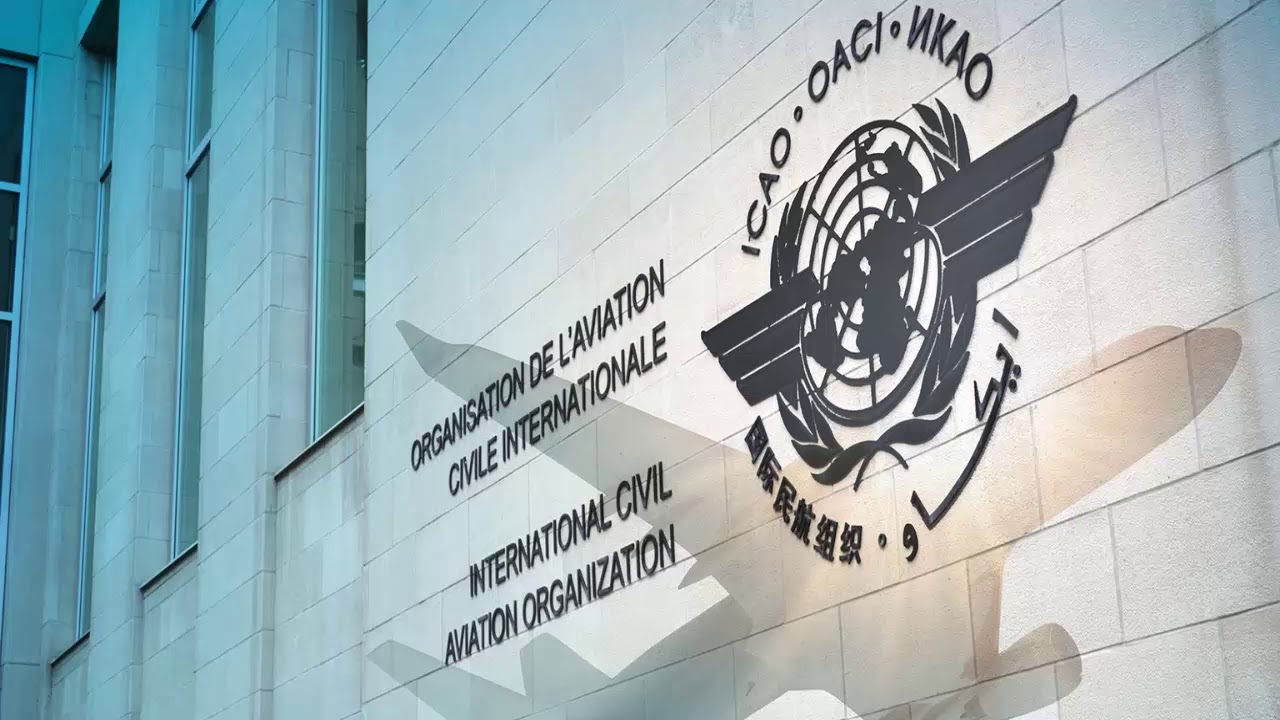
The International Civil Aviation Organization (ICAO; French: Organisation de l'aviation civile internationale; Chinese: 国际民航组织) is a specialized agency of the United Nations. It changes the principles and techniques of international air navigation and fosters the planning and development of international air transport to ensure safe and orderly growth.[1] Its headquarters is located in the Quartier International of Montreal, Quebec, Canada.
The ICAO Council adopts standards and recommended practices concerning air navigation, its infrastructure, flight inspection, prevention of unlawful interference, and facilitation of border-crossing procedures for international civil aviation. ICAO defines the protocols for air accident investigation that are followed by transport safety authorities in countries signatory to the Chicago Convention on International Civil Aviation.
The Air Navigation Commission (ANC) is the technical body within ICAO. The Commission is composed of 19 Commissioners, nominated by the ICAO's contracting states and appointed by the ICAO Council.[2] Commissioners serve as independent experts, who although nominated by their states, do not serve as state or political representatives. International Standards And Recommended Practices are developed under the direction of the ANC through the formal process of ICAO Panels. Once approved by the Commission, standards are sent to the Council, the political body of ICAO, for consultation and coordination with the Member States before final adoption.
ICAO is distinct from other international air transport organizations, particularly because it alone is vested with international authority (among signatory states): other organizations include the International Air Transport Association (IATA), a trade association representing airlines; the Civil Air Navigation Services Organization (CANSO), an organization for Air navigation service providers (ANSPs); and the Airports Council International, a trade association of airport authorities.
Contents
1 History
2 Statute
3 Membership
4 Council
5 Standards
5.1 Passport standards
5.2 Aerodrome reference code
6 Registered codes
6.1 Airport codes
6.2 Airline codes
6.3 Aircraft registrations
6.4 Aircraft type designators
7 Use of the International System of Units
7.1 Table of units
8 Regions and regional offices
9 Leadership
9.1 List of Secretaries General
9.2 List of Council Presidents
10 Climate change
10.1 Agreement on CO2 emissions from international aviation, October 2016
11 Investigations of air disasters
12 Drone regulations and registration
13 See also
14 References
15 External links
History
The forerunner to ICAO was the International Commission for Air Navigation (ICAN).[1] It held its first convention in 1903 in Berlin, Germany, but no agreements were reached among the eight countries that attended. At the second convention in 1906, also held in Berlin, twenty-seven countries attended.[3] The third convention, held in London in 1912 allocated the first radio callsigns for use by aircraft. ICAN continued to operate until 1945.[4][5]
Fifty-two countries signed the Chicago Convention on International Civil Aviation, also known as the Chicago Convention, in Chicago, Illinois, on 7 December 1944. Under its terms, a Provisional International Civil Aviation Organization was to be established, to be replaced in turn by a permanent organization when twenty-six countries ratified the convention. Accordingly, PICAO began operating on 6 June 1945, replacing ICAN. The twenty-sixth country ratified the Convention on 5 March 1947 and, consequently, PICAO was disestablished on 4 April 1947 and replaced by ICAO, which began operations the same day. In October 1947, ICAO became an agency of the United Nations under its Economic and Social Council (ECOSOC).[6][4]
ICAO headquarters in Montreal
In April 2013, Qatar offered to serve as the new permanent seat of the Organization. Qatar promised to construct a massive new headquarters for ICAO and to cover all moving expenses, stating that Montreal "was too far from Europe and Asia", "had cold winters", was hard to attend due to the Canadian government's slow issuance of visas, and that the taxes imposed on ICAO by Canada were too high.[7] According to The Globe and Mail, Qatar's invitation was at least partly motivated by the pro-Israel foreign policy of Canadian Prime Minister Stephen Harper.[8][9] Approximately one month later, Qatar withdrew its bid after a separate proposal to the ICAO's governing council to move the ICAO triennial conference to Doha was defeated by a vote of 22–14.[10][11][12]
Повторяем попытку...
Доступные форматы для скачивания:
Скачать видео
-
Информация по загрузке: