Tokyo's Most Successful Railway: Intensifying Congestion Plan with 10 Years
Автор: Takagi Railway
Загружено: 2026-01-17
Просмотров: 5194
Описание:
CHAPTERS
0:00 Tsukuba Express Kita-Senju Station
1:42 History of the Tsukuba Express
8:50 Increase in number of passengers
10:14 Nagareyama Otakanomori Station
11:39 Minami-Nagareyama Station
14:27 Yashio Station
15:22 Rokucho Station
16:16 Further congestion relief measures
ABOUT THIS VIDEO
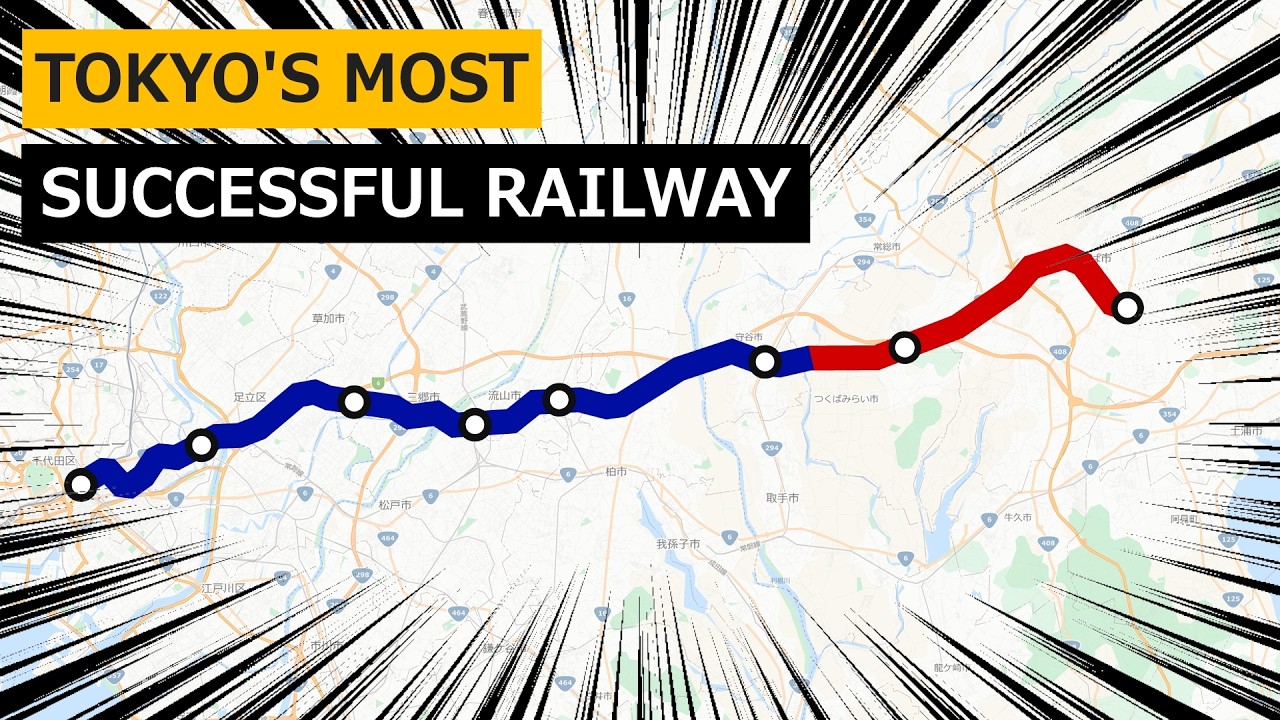
The Tsukuba Express, which opened in 2005, is often cited as one of Japan's most successful modern railway projects. Connecting Akihabara to Tsukuba at speeds of up to 130 km/h (80 mph), it has triggered explosive population growth in areas like Nagareyama City.
However, this success has brought a significant challenge: intense morning rush hour congestion. In this video, I explore the evolution of the Tsukuba Express, from its origins as the "Second Joban Line" to its current status as a high-speed commuter artery. We take a close look at the specialized operations at Kita-Senju, the unique dual-voltage (AC/DC) power system, and the massive, decade-long project currently underway to extend all platforms and increase train lengths from six to eight cars. Discover how this third-sector railway managed to become profitable 10 years ahead of schedule and how it plans to sustain its growth through the 2030s.
WHAT YOU WILL LEARN
The historical shift from a JNR-led project to a successful third-sector railway model
Why the line uses both DC and AC electrification and the impact on vehicle design
The reason behind the Tsukuba Express's high-speed capability and 130 km/h maximum speed
How Nagareyama-otakanomori and Minami-Nagareyama became top-ranked residential areas
The secret behind the "empty" platform spaces at stations like Minami-Nagareyama
Why the line replaced its "cross seats" with "long seats" just 15 years after opening
Technical hurdles of extending underground and elevated platforms while maintaining daily operations
The significance of the 2019 Special Measures Law in linking railway construction with residential development
A sneak peek at the transition to 8-car train operations scheduled for the early 2030s
ABOUT THIS CHANNEL
Welcome! I am a Japanese rail enthusiast dedicated to uncovering the deep history and hidden secrets of Japan’s incredible infrastructure.
While focusing on the complex network of Tokyo, I travel from north to south to bring you rare footage and detailed research you won't find anywhere else.
Note on Narration:
As a native Japanese creator, I use AI-assisted narration to share these stories with a global audience as clearly as possible. I’m constantly working to improve the experience, and I truly appreciate your support on this journey!
Don't forget to subscribe and explore the fascinating world of Japanese railways with me!
Повторяем попытку...
Доступные форматы для скачивания:
Скачать видео
-
Информация по загрузке: