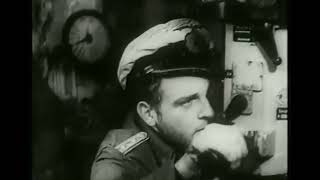
How US Submarines Hunted in Wolfpacks to Strangle Japan
Автор: WW2 Stories
Загружено: 2025-11-29
Просмотров: 71
Описание:
During World War II, the U.S. Navy transformed submarine warfare in the Pacific through the innovative use of wolfpack tactics. Initially, American submarines operated as lone hunters, conservative and cautious, often engaging targets at long range and retreating when counterattacked. This early strategy yielded limited results, and many skippers struggled against Japan’s vast merchant fleet.
The concept of submarine wolfpacks, inspired in part by German U-boat tactics in the Atlantic, involved coordinated attacks by multiple submarines. Boats would share intelligence, communicate sightings of convoys, and approach from multiple angles to overwhelm escort defenses. Three submarines operating together could tackle heavily protected convoys that a lone boat might avoid. These coordinated attacks required precise communication, careful positioning, and a willingness to press attacks despite the danger of depth charges, aircraft, and surface patrols.
The first U.S. wolfpack patrol in October 1943, east of the Marianas, demonstrated the potential of this strategy. While coordination was imperfect and communication sometimes faltered, the pack proved that submarines could work together to engage targets that otherwise might have gone unchallenged. Captain Leon “Bud” Blair’s pack in May 1944, nicknamed “Blair’s Blasters,” exemplified the tactical execution: two boats maneuvered ahead of a convoy at night while a third shadowed from behind. At dawn, the pack attacked simultaneously from multiple directions, sinking several ships and damaging others. By dividing Japanese escort efforts, wolfpacks rendered convoy protection increasingly ineffective.
Submarine wolfpacks were not only tactical innovations—they were shaped by aggressive leadership. Lieutenant Commander Dudley “Mush” Morton of USS Wahoo pioneered audacious attacks, including the famous “down-the-throat” torpedo shot against an onrushing destroyer. Morton’s patrols in heavily defended areas such as the Yellow Sea demonstrated that bold, well-coordinated submarine action could paralyze Japanese shipping, forcing the enemy to divert resources and rethink convoy routes. Even after Wahoo’s loss in the Sea of Japan in 1943, Morton’s legacy inspired later operations like Operation Barney in 1945, where nine submarines penetrated heavily mined straits using new FM sonar to hunt Japanese shipping in their inner sea.
The success of wolfpacks was amplified by technology, training, and the courage of the crews. Submarines relied on low-power radio transmissions to share targeting information, coordinated night surface runs to maneuver into attack positions, and trained relentlessly in formation and attack drills. Forward bases at Pearl Harbor and Australia extended patrol duration and allowed multiple boats to operate together. Crews endured extreme conditions: long periods submerged, mechanical failures, limited food, and the constant threat of death.
By war’s end, wolfpack tactics had reshaped the Pacific submarine campaign. American submarines, representing just 2 percent of Navy personnel, sank 55 percent of Japan’s merchant shipping, crippling the economy and cutting off vital fuel and supplies. The combination of aggressive tactics, coordination, and technological innovation proved decisive. Wolfpacks demonstrated that submarines, when used collectively and skillfully, could dominate the sea, disrupt supply lines, and exert strategic pressure far beyond what a lone boat could achieve.
The legacy of U.S. submarine wolfpacks endures. Beyond the tonnage sunk, these operations highlighted the importance of leadership, teamwork, and adaptability in warfare. Modern naval doctrines continue to reflect these principles, and preserved museum submarines such as USS Bowfin allow visitors to witness firsthand the courage and skill of the men who hunted in packs and helped bring victory in the Pacific.
Повторяем попытку...

Доступные форматы для скачивания:
Скачать видео
-
Информация по загрузке: