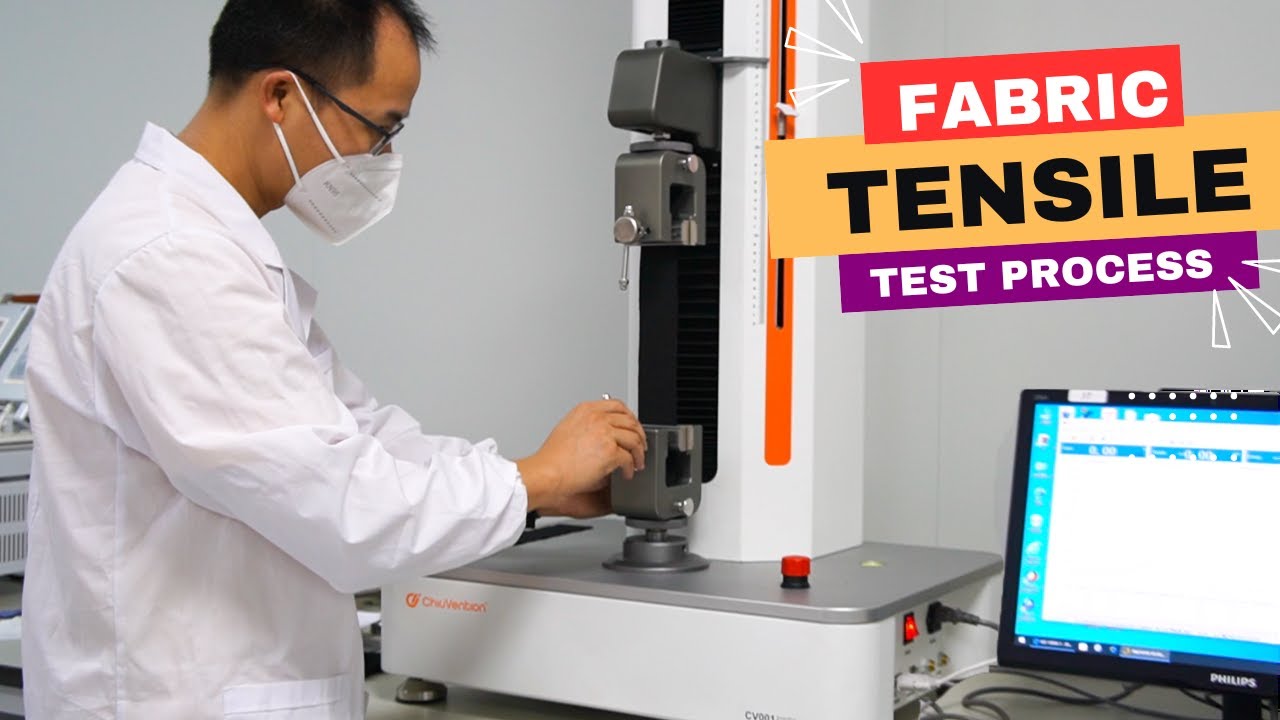
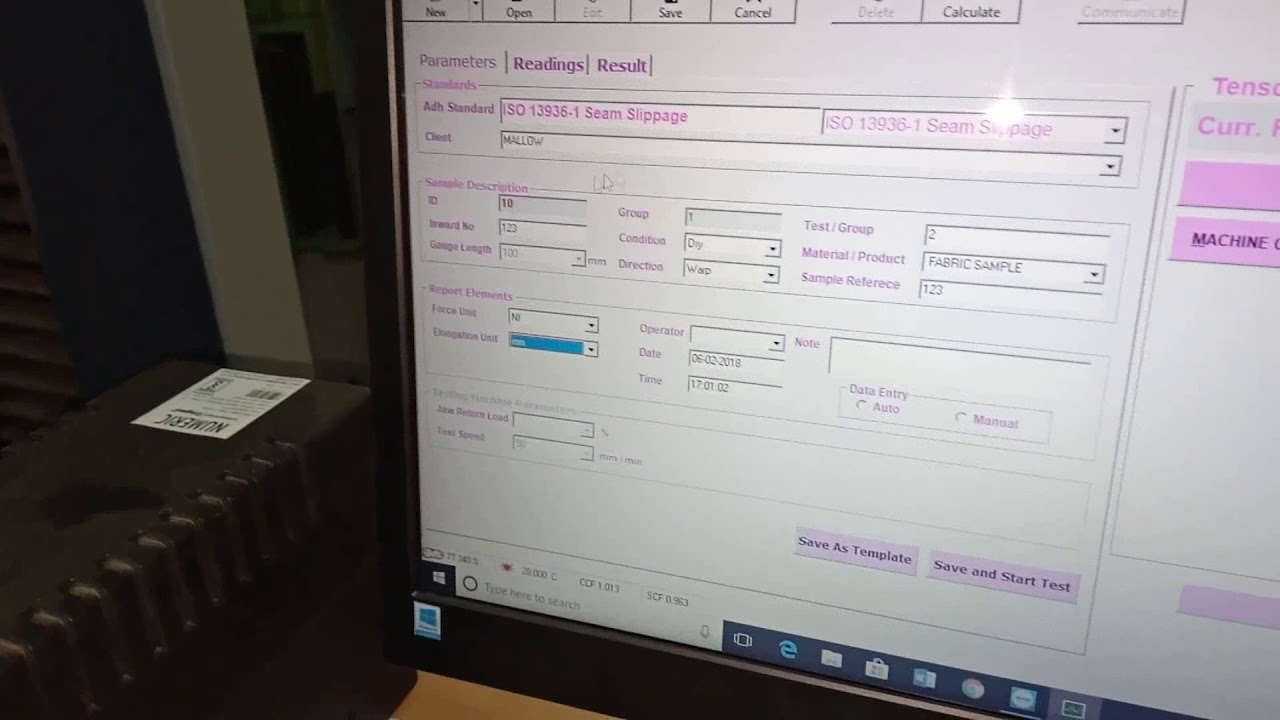
Seam Slippage | ASTM D434 | Textile testing
Автор: Testex TV
Загружено: 2023-04-29
Просмотров: 4134
Описание:
Rahat Sarfraz (myself) found this platform to train textilians specially New comers for success in their field.
I saw many hurdles in my textile life for gaining knowledge.
So enjoy learning and if anyone found any mistakes in my videos about testing please let me know for my correction.
My channel link.
/ @testextv
Test Details are below in description.
Scope
This test method covers the determination of the resistance to slippage of filling yarns over warp yarns, or warp yarns over filling yarns, using a standard seam.
The test method is not intended for upholstery fabrics.
Significance and Use
This method is considered satisfactory for acceptance testing because the method has been used extensively in the trade for acceptance testing. In case of disagreement arising from differences in values reported by the purchaser and the seller when using this test method for acceptance testing, the statistical bias, if any, between the laboratory of the purchaser
and the laboratory of the seller should be determined with each comparison being based on testing specimens randomly drawn from one sample of material of the type being evaluated.
Summary of Test Method
The load-elongation curve of the fabric is superimposed over a load-elongation curve of the same fabric with a standard seam sewn parallel to the yarns being tested. Resistance to yarn slippage is reported as the load at which a slippage of a specified size is seen.
No of Specimens
For final testing, five specimens in the direction of the greater slippage, are required.
Preparation of Specimen
Cut a piece of fabric 4 by 14 in. (100 by 350 mm) with the long direction parallel to the filling yarns, if the warp yarns slide over the filling yarns. If the filling yarns slide over the warp yarns the long dimension is parallel to the warp yarns.
Fold the specimen 4 in. (100 mm) from one end with the fold parallel to the short direction of the fabric. Sew a seam 1⁄2 in. (13 mm) from the fold using a needle approximately 0.030 in. (0.76 mm) in diameter (measured at the eye), No. 00 3-cord (approximately 39 tex) white mercerized cotton or approximately 36 tex polyester cotton core thread, 14 +/- 1⁄2 stitches to
the inch (570 per metre) and a plain lockstitch.
Be careful to make the stitches under uniform tension and to sew the seam parallel to the warp yarns. Movement of the thread should not be restricted by knotting or backstitching at the end of the seam. After seaming, cut the fold open.
Draw a line 1.5 in. (38 mm) from the edge parallel to the long direction to aid in placement of the specimen in the testing machine.
Procedure
Elongation of Seamed Fabric:
Place the end of the specimen closest to the seam squarely in the upper clamps, being careful that the drawn line is next to the edge of the front jaw and that the seam is midway between the upper and lower clamps. Place the specimen in the lower clamp and attach the auxiliary clamp to obtain tension of the specimen.
Place the pen of the recording device on the zero ordinate and any convenient abscissa. Start the machine and record the load-elongation curve of the fabric with seam.
Elongation of Base Fabric:
Using the same specimen, place the end of the specimen farthest from the seam squarely in the upper clamp being careful that the drawn line is next to the edge of the frontjaw, and grip securely. Place the specimen in the lower clamp and attach the auxiliary clamp to obtain equal tension on the specimen. When correct alignment and tension are achieved, tighten the lower clamp and remove the auxiliary clamp.
Place the pen of the recording device on the zero ordinate and on the same abscissa that was used to record the load-elongation curve for the fabric with the seam. Start the machine and record the load-elongation curve for the fabric without the seam, beyond the point where the seam broke.
Repeat the steps outlined in 10.1 and 10.2 for each specimen to be tested. Start the recording device on a different abscissa for each specimen.
Evaluation
To measure 1⁄4-in. (6.4-mm) slippage, set the dividers at one quarter the distance of chart travel for 1 in. (25 mm) of lower jaw travel. Gear-driven recorders may exhibit odd ratios of actual magnification.
NOTE 8—Example—Set dividers at 9⁄32 in. (7 mm) for a 1.125:1 ratio;
at 1⁄4 in. (6.4 mm) for a 1:1 ratio; at 9⁄16 in. (14.3 mm) for a 2.250:1 ratio.
Add to this the compensation, which is the distance between the load-elongation curves of the specimen with and without the seam at the 1-lbf (4.45-N) ordinate (point B to C, Fig. 1).
Повторяем попытку...

Доступные форматы для скачивания:
Скачать видео
-
Информация по загрузке: