"Personalizing Exercise for Your Cancer Care" - Rob Newton, PhD, DSc
Автор: Cancer Patient Lab
Загружено: 2025-10-26
Просмотров: 324
Описание:
September 17, 2025 CancerPatient Lab Session 164
Join the discussion: community.cancerpatientlab.org
Full transcript: https://docs.google.com/document/d/1p...
“Patients who are more physically active have less risk of recurrence. They survive longer, overall, which is not surprising. Anyone who is physically active is likely to live longer. But more particularly, we see that their cancer-specific survival is greatly enhanced.
We never knew before this fantastic study, called the CHALLENGE trial, whether it was a reverse causation. In other words, that association was the fact that patients who were doing better, feeling better, were more likely to survive, and they also did more physical exercise.
Now we have very solid evidence in a very large trial to show a direct causative drive, and this is in a randomized controlled trial. That study was presented at the American Society of Clinic Oncology in Chicago in the middle of this year.
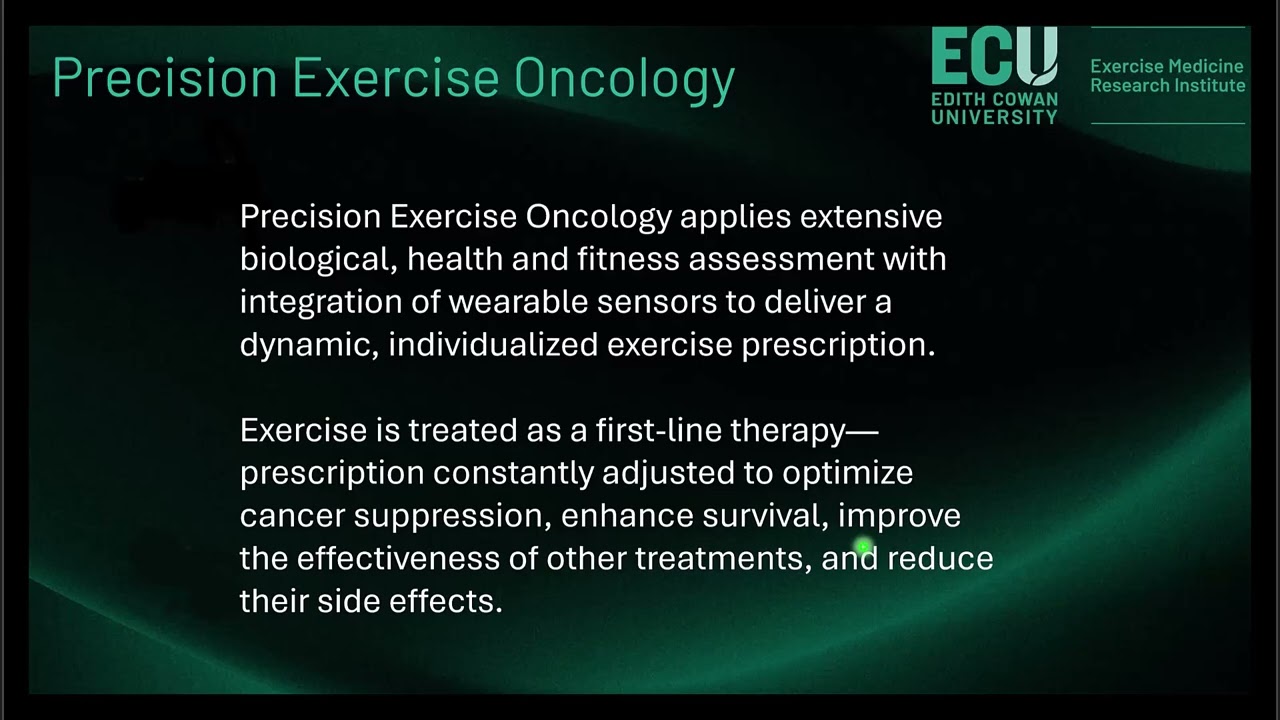
Increasingly targeted exercise is being established as a first line treatment. It's not a ‘nice to have’. It's not something that you just say, ‘I'll talk to your patient.’ ‘It'd be great if he did some more walking, or if he played a bit more golf.’ It's much more nuanced than that. We're realizing that it's absolutely essential as a component of the overall care of the patient, and the evidence now is that it enhances the effectiveness of mainstream cancer treatments.
“We need to stop talking about fitness. We need to talk more about the internal mechanisms of the levers that we are adjusting and tuning to produce a more cancer-suppressive environment, or to enhance the effectiveness of a treatment, or to reduce the side effects. More so than just, ‘Are they fitter?’ Having higher cardio respiratory fitness is nice, and it is related to survival, but I'm not sure that's the actual medicine.
“We now know that muscle tissue is a major endocrine organ, and it's signaling to all the other tissues in the body. In particular, our muscle tissue is a major moderator of signaling to our immune system and modulating the effectiveness of our immune system. So if a patient has low muscle mass, they have dramatically compromised immune capacity, and of course, this is a major issue in trying to fight their cancer.” – Rob Newton, PhD, DSc
Meeting Summary
Cancer treatment is episodic and focused practically entirely on the primary medical treatments of surgery, chemotherapy, and radiation therapy. While these treatments can be lifesaving, truly integrative oncology encompasses other treatments and therapies as well. Exercise medicine, nutrition therapy, and psychological support are major pillars of cancer care, but access is limited at best. Fortunately, quality research is accumulating providing clear evidence that these “adjunct” treatments extend survival, enhance quality of life, facilitate the primary treatments while reducing their side effects, and reduce risk of recurrence. As a result, access is opening up with more and more hospitals and cancer centers providing more extensive integrative oncology, including treatment in the home utilizing the greatly expanded capacity of the internet and virtual health care due to Covid19.
Rob Newton, PhD, DSc, is uniquely qualified to lead a discussion on personalizing exercise to complement traditional cancer care. He is Professor of Exercise Medicine in the Exercise Medicine Research Institute that he established (2004) at Edith Cowan University, Perth, Western Australia. His current major research directions include: exercise medicine as neoadjuvant, adjuvant, and rehabilitative cancer therapy to reduce side-effects and enhance effectiveness of surgery, chemotherapy, and radiation therapy; the influence of targeted exercise medicine on tumor biology, and exercise medicine for enhancing survival and reducing decline in quality of life, strength, body composition and functional ability in cancer patients.
Please view this session to learn:
What is personalized exercise for cancer care?
What are examples of personalizing exercise to your situation?
What are the standard exercise targets and how should you vary from them?
How can you measure progress from exercise interventions?
Should you consider blood flow restriction training?
Follow research from Rob Newton's Exercise Medicine Research Institute at Edith Cowan University
Contact Rob Newton: rob at fitmed.com
The information and opinions expressed on this website or platform, or during discussions and presentations (both verbal and written) are not intended as health care recommendations or medical advice by Cancer Patient Lab, its principals, presenters, participants, or representatives for any medical treatment, product, or course of action. You should always consult a doctor about your specific situation before pursuing any health care program, treatment, product or other course of action that might affect your health.
Повторяем попытку...
Доступные форматы для скачивания:
Скачать видео
-
Информация по загрузке: