Pyongyang , capital of North Korea, Taedong River, Korea Bay, communism, rivers, willow trees,
Автор: Cities of the World
Загружено: 2015-12-30
Просмотров: 464
Описание:
Pyongyang , capital of North Korea, Taedong River, Korea Bay, communism, rivers, willow trees, flowers and parkland.
Pyongyang,capital of North Korea,North Korea, North Korean, korea, korean,Taedong River, Korea Bay, communism, rivers, willow trees, flowers, parkland, peaceful land, peace, russian style, architecture, winter, tailor,traffic, traffic girls, library, hotel, bathhouse, government, statues, golden statues, communistic, communistic statues, East Asia, terraced landscaping, mosaics , ceilings,decorations, clinic, station, stadium, Ryugyong Hotel, skyline, units, military, military parade,
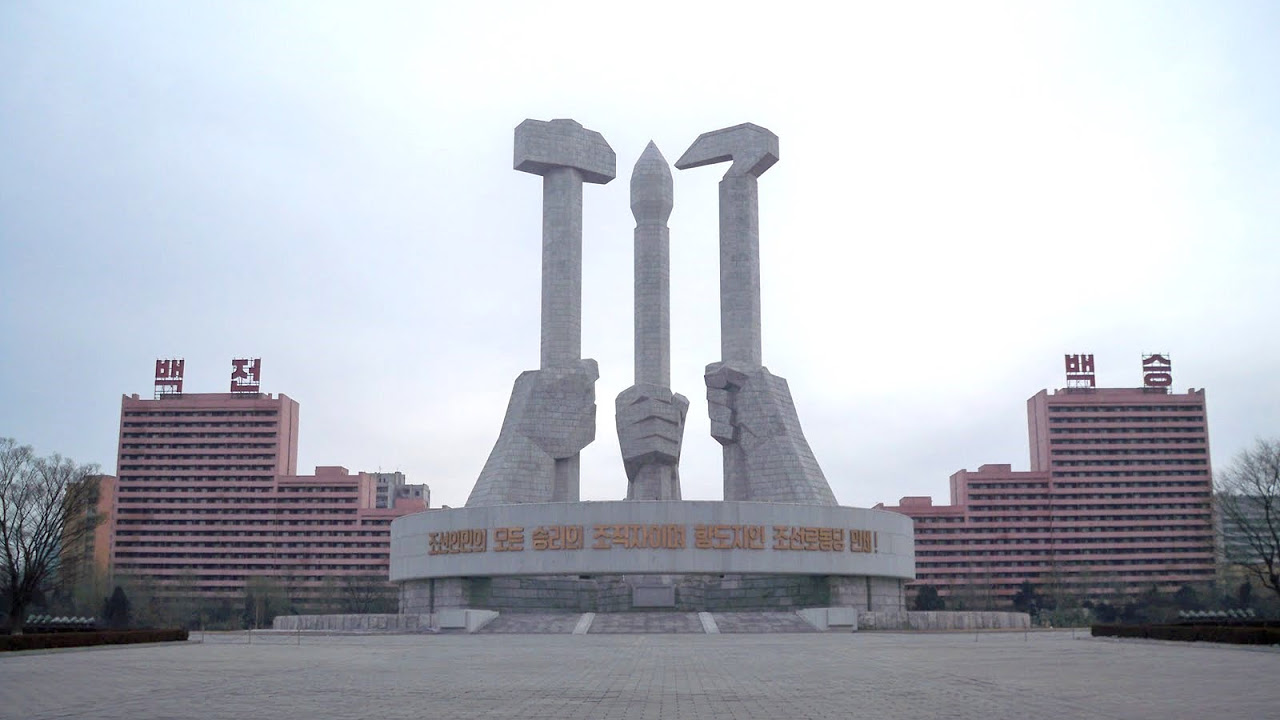
Pyongyang : "Flat Land" or "Peaceful Land", approved: P’yŏngyang;[7] several variants[8]) is the capital of North Korea and the largest city in the country. Pyongyang is located on the Taedong River and, according to preliminary results from the 2008 population census, has a population of 3,255,388.[9] The city was split from the South Pyongan province in 1946. It is administered as a directly governed city (chikhalsi, 직할시) on the same level as provincial governments, not a special city (teukbyeolsi, 특별시) as Seoul in South Korea.st. Pyongyang is in the west-central part of North Korea; the city lies on a flat plain about 50 kilometres (31 mi) east of the Korea Bay, an arm of the Yellow Sea. The Taedong River flows southwestward through the city toward the Korea Bay. The Pyongyang plain, where the city is situated, is one of the two large plains on the Western coast of the Korean peninsula, the other being the Chaeryong plain. Both have an area of approximately 500 square kilometers.[20]Pyongyang was reduced to rubble during the Korean War and has been entirely rebuilt according to a design reflecting Kim Il-Sung's vision.[28] His dream was to create a capital that would boost the morale and ego of Koreans in the post-war years.[29] The result was a city with wide, tree-lined boulevards and monumental public buildings with terraced landscaping, mosaics and decorated ceilings.[28] Foreign visitors have described Pyongyang as one of the most beautiful cities they have seen; its Russian-style architecture makes it reminiscent of a Siberian city during winter snowfall, although edifices of traditional Korean design somewhat soften this perception. In summer, it is notable for its rivers, willow trees, flowers and parkland.[28]
The streets are laid out in a north-south, east-west grid, giving the city an orderly appearance.[28] North Korean designers applied the Swedish experience of self-sufficient urban neighbourhoods throughout the entire country, and Pyongyang is no exception. Its inhabitants are mostly divided into administrative units of 5,000 to 6,000 people (dong). These units all have similar sets of amenities including a food store, a barber shop, a tailor, a public bathhouse, a post office, a clinic, a library and others. Many residents occupy high-rise apartment buildings.[30] One of Kim Il-Sung's priorities while designing Pyongyang was to limit the population. Authorities maintain a restrictive regime of movement into the city, making it atypical of East Asia as it is silent, uncrowded and spacious.[31]
Structures in Pyongyang are divided into three major architectural categories: monuments, buildings with traditional Korean motifs and high-rises.[32] Some of North Korea's most recognisable landmarks are monuments, like the Juche Tower, the Arch of Triumph and the Mansu Hill Grand Monument. The first of them is a 170-meter granite spire symbolizing the Juche ideology. It was completed in 1982 and contains 25,550 granite blocks, one for each day of Kim Il-Sung's life up to that point.[32] By far the most prominent building on Pyongyang's skyline is Ryugyong Hotel,[32] the 7th highest building in the world terms of floor count and one of the tallest hotels in the world, which has never opened.[33][34]
High-rise apartment buildings dominate the cityscape. The government launched a mass construction campaign aiming to build 100,000 new homes in 2011. The Changjon Street Apartment Complex was part of this effort. Construction of the complex began after late leader Kim Jong-il reportedly described the area as "pitiful".[35] Other housing complexes are being upgraded as well, but most are still poorly insulated while elevators and central heating in them remain rare.[36]
Повторяем попытку...
Доступные форматы для скачивания:
Скачать видео
-
Информация по загрузке: