Hair wax production process
Автор: bunique
Загружено: 2026-03-06
Просмотров: 5
Описание:
1. Phase Preparation (The Split)
Hair wax production begins by separating ingredients into two distinct tanks: the Oil Phase and the Water Phase.
The Oil Phase: In a large heated stainless steel vat, solid waxes (Beeswax, Carnauba, or Microcrystalline) are combined with oils (Castor oil, Lanolin, or Petrolatum). These are heated to approximately 75°C to 85°C until they reach a uniform liquid state.
The Water Phase: In a separate tank, distilled water is mixed with water-soluble components like Glycerin (for moisture) and PVP/VA copolymers (for "film-forming" hold). This mixture is also heated to match the temperature of the oil phase to prevent "thermal shock" during mixing.
2. Emulsification (The Marriage)
This is the most critical stage. Under high-shear agitation, the water phase is slowly introduced into the oil phase.
Because oil and water naturally repel each other, an emulsifier (such as Ceteareth-25 or Glyceryl Stearate) acts as a molecular bridge. A high-speed homogenizer rotates at thousands of RPMs to break the oil into microscopic droplets, dispersing them evenly throughout the water. This creates the creamy, smooth texture of the wax.
3. Incorporation of Solids (The Texture)
For matte waxes or "clays," this is when the texturizing agents are introduced.
Clay Dispersion: Fine powders like Kaolin or Bentonite are sifted into the emulsion.
Cooling Control: The temperature is slowly lowered. If it cools too fast, the wax becomes brittle; too slow, and it remains a soup. Manufacturers use "jacketed" cooling tanks that circulate cold water around the exterior of the vat to manage this transition.
4. Cooling and Fragrance
Fragrance oils and essential oils are highly volatile and can evaporate or "flash off" if added to boiling liquids. Therefore, the batch is cooled to roughly 45°C to 50°C before the scent and preservatives (to prevent mold and bacteria growth) are folded in.
5. Automated Filling and Setting
The wax is still in a pourable, semi-liquid state at this stage.
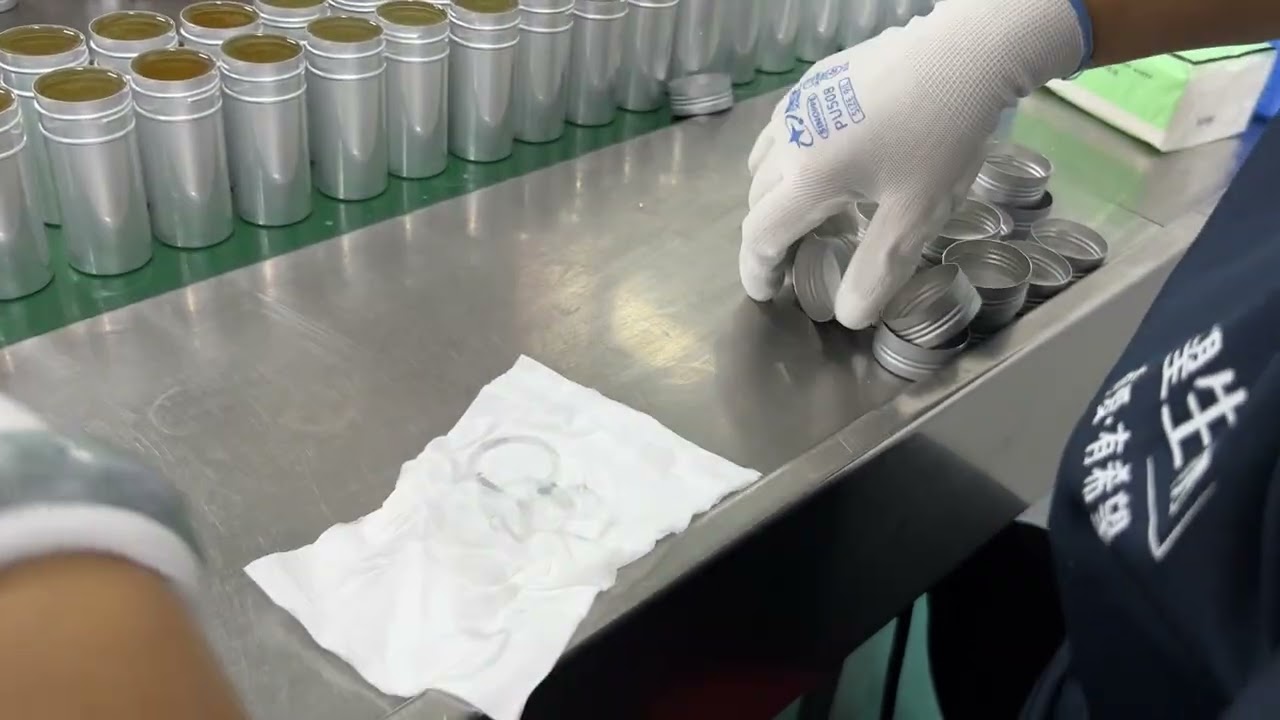
Conveyor Injection: Automated nozzles dispense a precise weight of liquid wax into plastic or aluminum tins.
Cooling Tunnel: The open tins pass through a cooling tunnel (essentially a long industrial refrigerator). This allows the waxes to "set" and crystallize, giving the product its final firm surface.
Capping & Labeling: Once solid, the tins are capped, induction-sealed for freshness, and labeled with batch numbers for quality tracking
Summary of the Process FlowStageActionPurposeMeltingHeating waxes/oils to 80°CLiquefying solids for blendingHomogenizationHigh-shear mixingCreating a stable emulsionSiftingAdding Clays/PowdersCreating matte texture and "grip"StabilizingAdding PreservativesEnsuring 12–24 month shelf lifeSettingFlash-cooling in tinsAchieving the final "scoopable" density
Повторяем попытку...
Доступные форматы для скачивания:
Скачать видео
-
Информация по загрузке: