Pieve di Romena
Автор: SalMac Production
Загружено: 2022-07-30
Просмотров: 712
Описание:
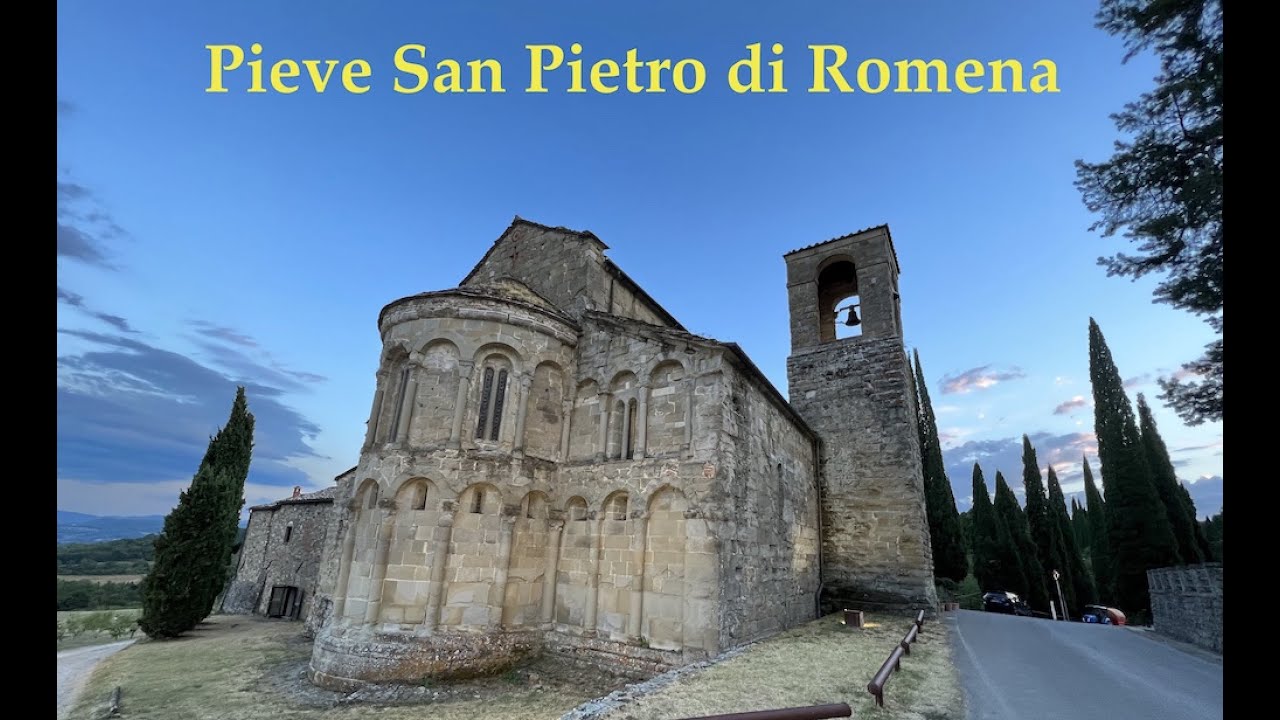
Pieve San Pietro di Romena - Pratovecchio - Arezzo
#tuscany #cinematic #casentino #pievesanpietrodiromena #pratovecchio #arezzo #djimini3pro #goprohero8 #cinematicvideo
Music : The Art Of Loneliness by The Art of Loneliness
Copyright: Art-List
DJI : Mini3 Pro
Gopro Hero 8
Filtri ND8
25 fps 4:3 scaled 16:9 shutter 1/50 100 iso
Insta SMO 4 K per cinewoop
************************* IT / EN ***********************
IT- L'attuale Pieve di Romena è stata costruita alla metà del XII secolo sopra una precedente chiesa triabsidata risalente all'VIII secolo di cui sono visibili i resti sotto al presbiterio.
Leggende popolari attribuiscono alla duchessa Matilde di Toscana un ruolo nella fondazione dell'edificio.
Sconvolta da una frana provocata dallo smottamento del terreno causato da un sottostante fossatello nel 1678 che la privò delle prime due campate e da un successivo terremoto del 1729 che le provocò altri gravi danni alla facciata, all'abside che venne spaccata da una profonda fenditura e nel campanile che da allora è rimasto sbassato, oggi dopo numerosi restauri appare come una dei più interessanti edifici romanici del Casentino.
La facciata è semplice e rustica ed è stata realizzata in pietre conce con alla sinistra il campanile. Monumentale l'abside che presenta due ordini di arcate e delle aperture costituite da una trifora e due bifore.
All'interno, a tre navate e cinque campate su colonne monolitiche di macigno e arricchite dai motivi decorativi dei capitelli a fogliami. Il soffitto è a capriate scoperte e inoltre presenta il presbiterio rialzato; il pavimento è a diversi livelli.
I caratteri decorativi dei capitelli sono molteplici, dagli elementi geometrici e vegetali stilizzati alle raffigurazioni umane e zoomorfe, sempre attuati con grande intensità espressiva. In due capitelli della navata sinistra si ricorda il nome del committente, il pievano Alberico, e la data con la precisazione TEMPORE FAMIS MCLII (in tempo di carestia 1152) in uno e nell'altro sono scolpiti i quattro evangelisti con le iscrizioni Quaecumque solveris super terram e ALBERICUS PLEB. FECIT HOC OPUS.
A destra dell'edificio è il battistero, coperto con volta a crociera costolonata e riferibile al periodo tardoromanico. Per motivi di sicurezza dalla chiesa sono state tolte tutte le opere d'arte che un tempo la ornavano.
EN - The current Pieve di Romena was built in the mid-twelfth century over a previous three-apsed church dating back to the eighth century, the remains of which are visible under the presbytery.
Popular legends attribute a role in the foundation of the building to the Duchess Matilda of Tuscany.
Shocked by a landslide caused by the landslide caused by an underlying ditch in 1678 which deprived it of the first two spans and by a subsequent earthquake of 1729 which caused other serious damage to the facade, to the apse which was split by a deep fissure and in the bell tower that has remained low since then, today after numerous restorations it appears as one of the most interesting Romanesque buildings in the Casentino.
The façade is simple and rustic and was made of tanned stones with the bell tower on the left. The apse is monumental and has two orders of arches and openings consisting of a three and two mullioned windows.
Inside, with three naves and five spans on monolithic columns of sandstone and enriched by the decorative motifs of the foliated capitals. The ceiling has uncovered trusses and also has a raised presbytery; the floor is at different levels.
The decorative characters of the capitals are manifold, from geometric and stylized vegetal elements to human and zoomorphic representations, always implemented with great expressive intensity. In two capitals of the left aisle the name of the client is remembered, the parish priest Alberico, and the date with the specification TEMPORE FAMIS MCLII (in time of famine 1152) in one and in the other the four evangelists are carved with the inscriptions Quaecumque solveris super terram and ALBERICUS PLEB. FECIT HOC OPUS.
To the right of the building is the baptistery, covered with a ribbed cross vault and referable to the late Romanesque period. For safety reasons, all the works of art that once adorned it have been removed from the church.
Повторяем попытку...
Доступные форматы для скачивания:
Скачать видео
-
Информация по загрузке: