Philippine House of Representatives elections, 2013 | Wikipedia audio article
Автор: wikipedia tts
Загружено: 2018-11-07
Просмотров: 17
Описание:
This is an audio version of the Wikipedia Article:
Philippine House of Representatives elections, 2013
Listening is a more natural way of learning, when compared to reading. Written
language only began at around 3200 BC, but spoken language has existed long ago.
Learning by listening is a great way to:
increases imagination and understanding
improves your listening skills
improves your own spoken accent
learn while on the move
reduce eye strain
Now learn the vast amount of general knowledge available on Wikipedia through
audio (audio article). You could even learn subconsciously by playing the audio
while you are sleeping! If you are planning to listen a lot, you could try using
a bone conduction headphone, or a standard speaker instead of an earphone.
You can find other Wikipedia audio articles too at:
/ @wikipediatts983
In case you don't find one that you were looking for, put a comment.
This video uses Google TTS en-US-Standard-D voice.
SUMMARY
=======
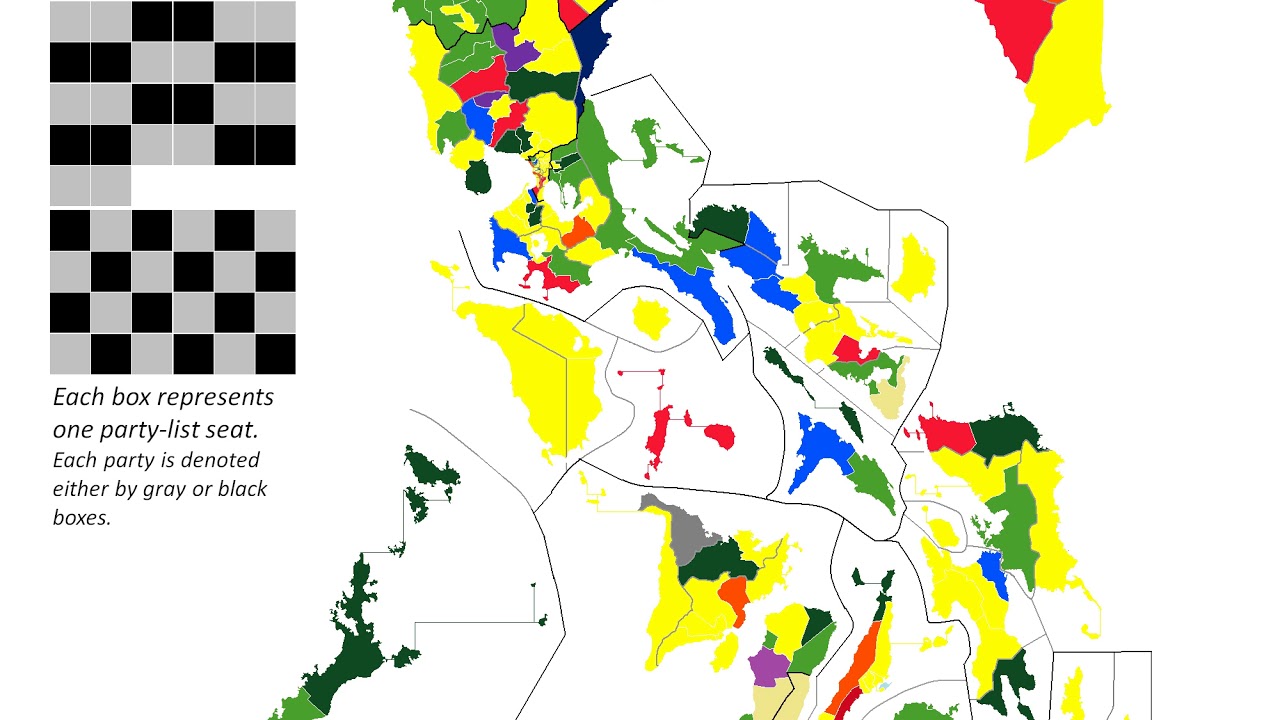
The 2013 Philippine House of Representatives elections were the 33rd lower house elections in the Philippines. They were held on May 13, 2013 to elect members to the House of Representatives of the Philippines that would serve in the 16th Congress of the Philippines from June 30, 2013 to June 30, 2016.
The Philippines uses parallel voting for the House of Representatives: first past the post on 234 single member districts, and via closed party lists on a 2% election threshold computed via a modified Hare quota (3-seat cap and no remainders) on 58 seats, with parties with less than 1% of the first preference vote winning one seat each if 20% of the party-list seats are not filled up. Major parties are not allowed to participate in the party-list election.
While the concurrent Senate election features the two major coalitions in Team PNoy and the United Nationalist Alliance (UNA), the constituent parties of the coalitions contested the lower house election separately, and in some districts, candidates from the same coalition in the Senate are contesting a single seat. Campaigns for the House of Representatives are done on a district-by-district basis; there is no national campaign conducted by the parties. No matter the election result, the party of the president usually controls the House of Representatives, via a grand coalition of almost all parties. Only the ruling Liberal Party can win a majority, as it is the only party to put up candidates in a majority of seats.
After release of preliminary results, the Liberal Party emerged as the largest party in the chamber. Its coalition partners also held most of their seats. Incumbent Speaker Feliciano Belmonte, Jr. is expected to be easily reelected as the Speaker of the 16th Congress.
Повторяем попытку...
Доступные форматы для скачивания:
Скачать видео
-
Информация по загрузке: