Paving the Way: How Gravel - Laying Machines Build Durable Surfaces
Автор: Machines & Soil
Загружено: 2026-02-13
Просмотров: 21645
Описание:
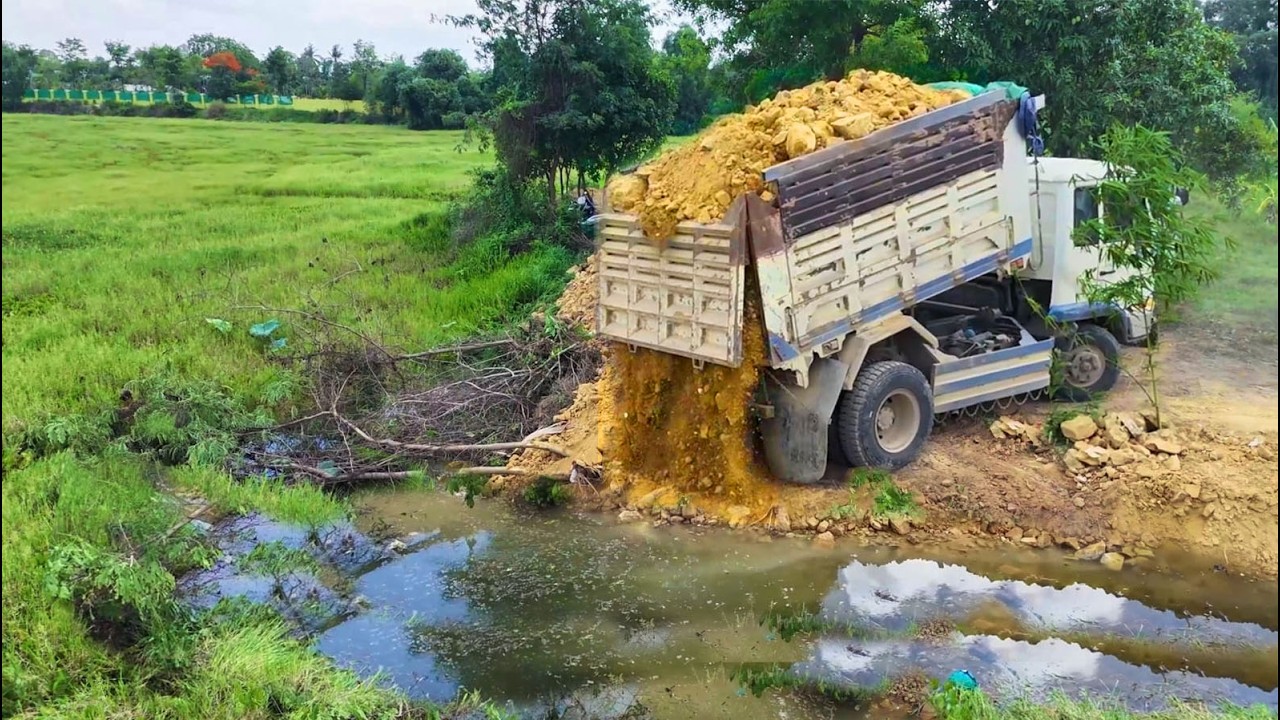
Gravel - Laying: The Foundation of Stable Infrastructure
For millennia, humans have sought ways to transform soft, unstable earth into surfaces that could withstand the weight of wheels, footsteps, and time. Ancient Mesopotamians used crushed limestone to pave the earliest trade roads, allowing merchants to transport goods across vast distances without sinking into mud. Medieval European masons relied on hand - packed gravel and stone to stabilize the foundations of castles and cathedrals, ensuring these massive structures endured centuries of weather and conflict. Today, excavators and loaders have revolutionized this age - old practice, merging mechanical power with time - tested engineering principles to construct roads, runways, industrial yards, and residential driveways with unprecedented speed and precision. This evolution hasn’t just sped up construction—it’s made infrastructure more durable, affordable, and accessible to communities worldwide.
Soil Stabilization Through Compaction: Gravel acts as a natural reinforcement, filling gaps between soil particles. When an excavator spreads it evenly, the weight of the machine (typically 10–50 tons for construction models) compresses the aggregate, creating a dense, rigid layer. This density can increase the soil’s load - bearing capacity by 30–50%, preventing shifts during rain (which causes mudslides in unstabilized soil), freeze - thaw cycles (which crack concrete over time), or heavy traffic (like truck convoys on construction sites). Proper compaction also reduces maintenance costs by up to 40% over the lifespan of the surface, as it minimizes potholes and erosion - related repairs.
Erosion Control and Drainage: Loose gravel has a porosity of 30–50%, meaning water can seep through instead of pooling on the surface. By laying it over sloped areas (with a gradient of 2–5% recommended), the excavator redirects runoff into designated drainage channels, protecting the site from washouts that could undermine foundations or erode topsoil. In regions with annual rainfall exceeding 30 inches, this erosion control is critical—unprotected soil can lose 1–2 inches of topsoil per year, rendering land infertile and increasing sediment in nearby waterways.
Load - Bearing Efficiency: Different gravel sizes serve unique structural roles. #1 crushed stone (2–4 inches in diameter) forms a stable base for heavy loads like truck ramps or airport runways, distributing weight across a wide area. #57 stone (3/4–1 inch) fills voids between larger rocks, while #10 gravel (fine powder) creates a smooth, compacted surface for driveways. An experienced operator follows a layered formula: a 6–12 inch base of #1 stone, a 4–6 inch middle layer of #57, and a 2–3 inch top layer of #10. This “pyramid” of gravel can support up to 100 tons per square foot, enough for semi - trucks or industrial machinery.
Speed and Precision in Construction: Modern excavators are equipped with hydraulic thumb attachments and GPS - guided systems, allowing operators to spread gravel with millimeter - level accuracy. A skilled operator can cover 500–1000 square feet per hour, depending on the gravel size and site conditions. This precision eliminates rework—unlike manual spreading, which often results in uneven layers that require additional grading. In large - scale projects like highway construction, this speed reduces project timelines by 20–30%, saving millions in labor and equipment costs.
In the end, gravel - laying is a dance between brute force and delicate precision—a testament to how human ingenuity transforms a humble material into the backbone of civilization. Every scoop of gravel from the excavator’s bucket is a brick in the foundation of progress, whether it’s a rural road that connects a farming community to markets or a runway that bridges continents. These machines don’t just lay rocks—they lay the groundwork for connection, commerce, and community, proving that even the most ordinary tasks, when done with skill and purpose, can leave a lasting legacy on the landscape.
Повторяем попытку...
Доступные форматы для скачивания:
Скачать видео
-
Информация по загрузке: