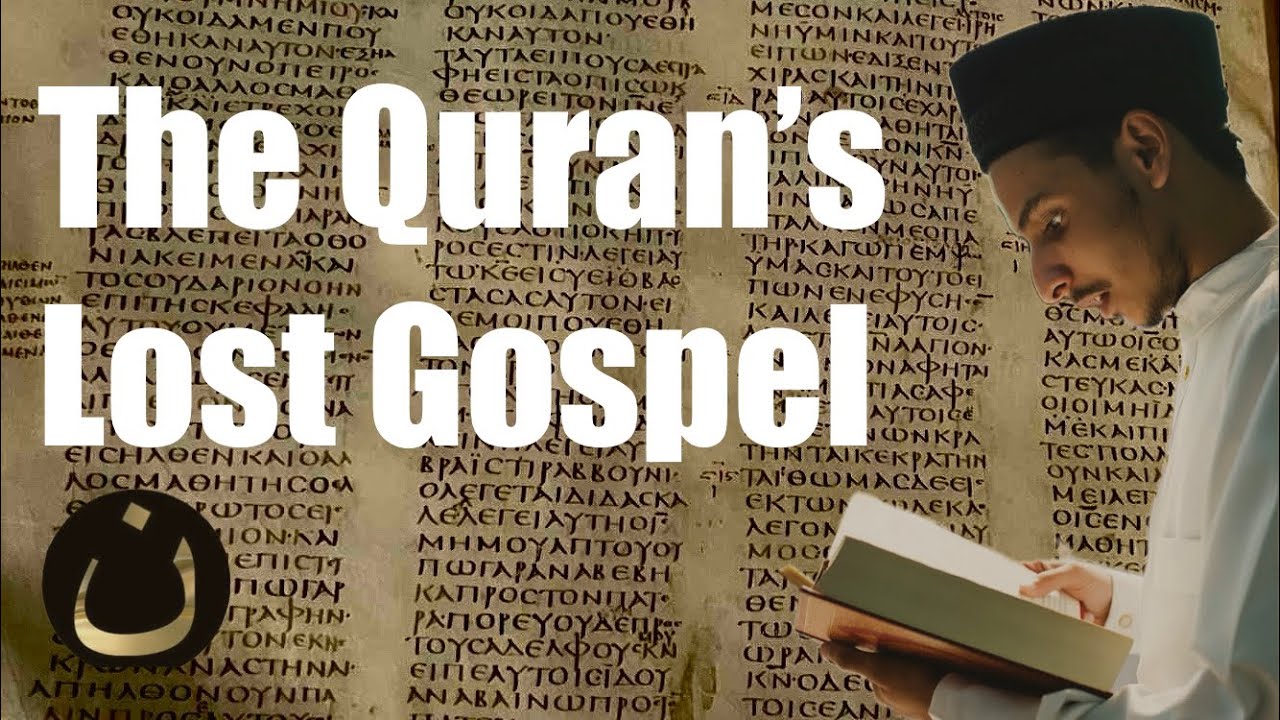
What is the Quran’s Lost Gospel? -Read my article in the description for further information.
Автор: Logosoul
Загружено: 2025-11-11
Просмотров: 183
Описание:
This monologue reveals from the Qur’an why many subscribe to the theory of a lost Gospel. It then takes you through a cursory exegesis of key texts that render this theory untenable.
If the Gospel isn’t lost, one must honestly consider what the Qur’an is referring to when it tells Christians to refer to the Gospel that Allah sent down to them (Surah 5:47). The rest of this video will explore that important question.
Many reflections of the First century, biblical Gospels (Matthew , Mark, Luke and John) are found in the Qur’an. This is no surprise given that the Hadith shows us Muhammad’s Christian cousin, Waraqah, reading and writing from the Gospels, which Muhammad likely learned from. Interestingly enough, the biblical Gospels are the only ones based on eyewitness account and embraced by the church. They are also the only Gospels that circulated through Christian churches and were readily available for Christians to refer to. This means Muhammad was likely referring to them when he tells the church to judge based on the Gospel (Surah 5:47).
Islamic texts outside the Qur’an also point to the biblical Gospels. One example is the earliest Sirat by Ibn Ishaq, which names the Gospel of John as the Gospel and even quotes a section from John 15-16, further jettisoning the notion of a lost Gospel. This reference to John is interesting because the Qur’an quotes John on several occasions. One instance is Surah 22:6-7 which quotes John 5:21 where where Jesus proclaims his power to give life and predicts a day when those who are in the graves will be raised. 600 years later, the Qur’an changes these verses to say Allah alone gives life, thus, Jesus’ earlier statement clearly presents him as none other than God in the flesh. Ibn Ishaq’s assertion that John’s Gospel is authentic certainly adds support to understanding the Qur’an’s Gospel as among the same Gospels which were circulating in the churches of Muhammad’s day, and which are in our bibles today. Remarkably, we have an ancient copy of John’s Gospel dating to the Second century A.D. that confirms the accuracy of our modern translations and coheres with the Qur’an’s assertion that none can change God’s words (Surah 6:115).
“Gospel” comes from the Greek term “euanjelion” where we get the Arabic transliteration “Injeel.” The four biblical Gospels were originally written in Greek and given this title “euanjelion.” This title not only connects it to the word used in the Qur’an for Gospel, but it has a powerful meaning - “good news” or “good message.” This should whet our taste buds to read it and discover for ourselves why it is “good news.”
For discussion on the claim that the First century Gospels have been corrupted, watch my video “Can We Read the Injeel Today?”
Finally, if you are Muslim and have heard imams disparaging the Gospel in light of what has been said, you might wonder, “why are they so afraid of people reading it?” This fear of the Gospels has sparked curiosity among many who had the courage to read it for themselves and have found the truth.
God bless you for watching. Please like this video and feel free to share any questions or comments.
Повторяем попытку...
Доступные форматы для скачивания:
Скачать видео
-
Информация по загрузке: