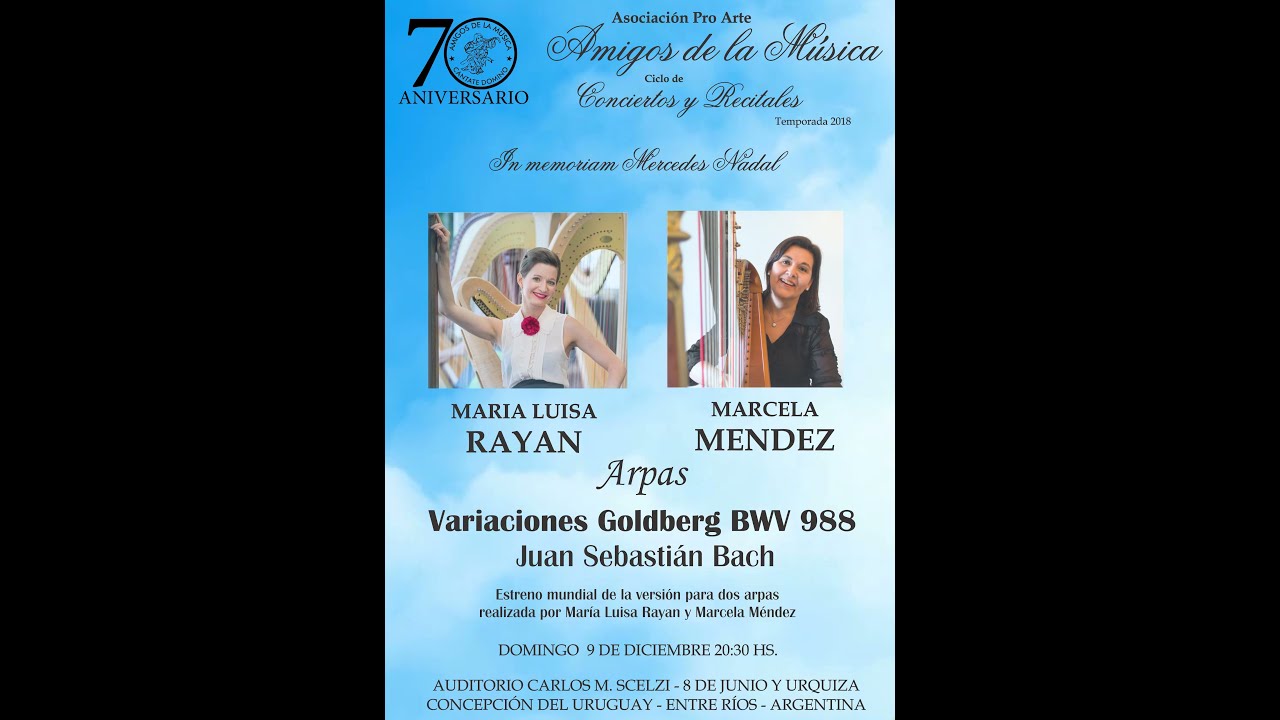
J. S. Bach Goldberg Variations BWV 988 for two Harps- M. Mendez & Maria L. Rayan World Premiere
Автор: Marcela Mendez
Загружено: 2023-08-04
Просмотров: 213
Описание:
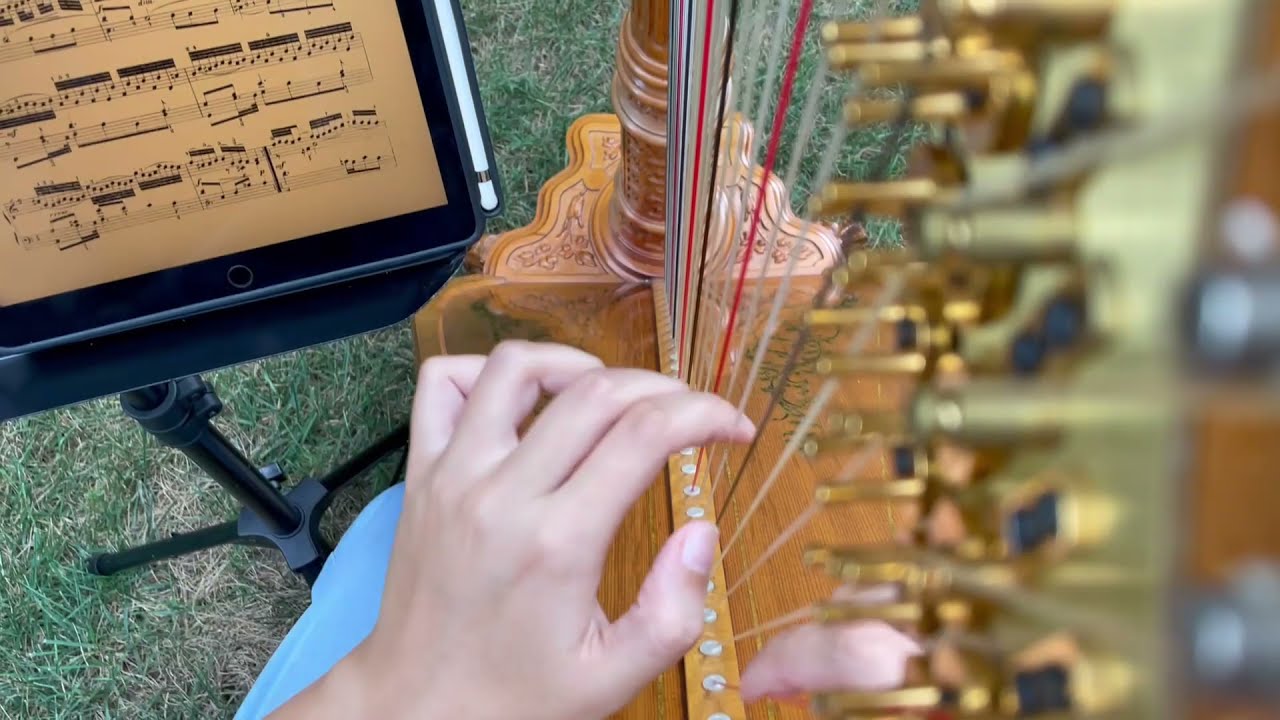
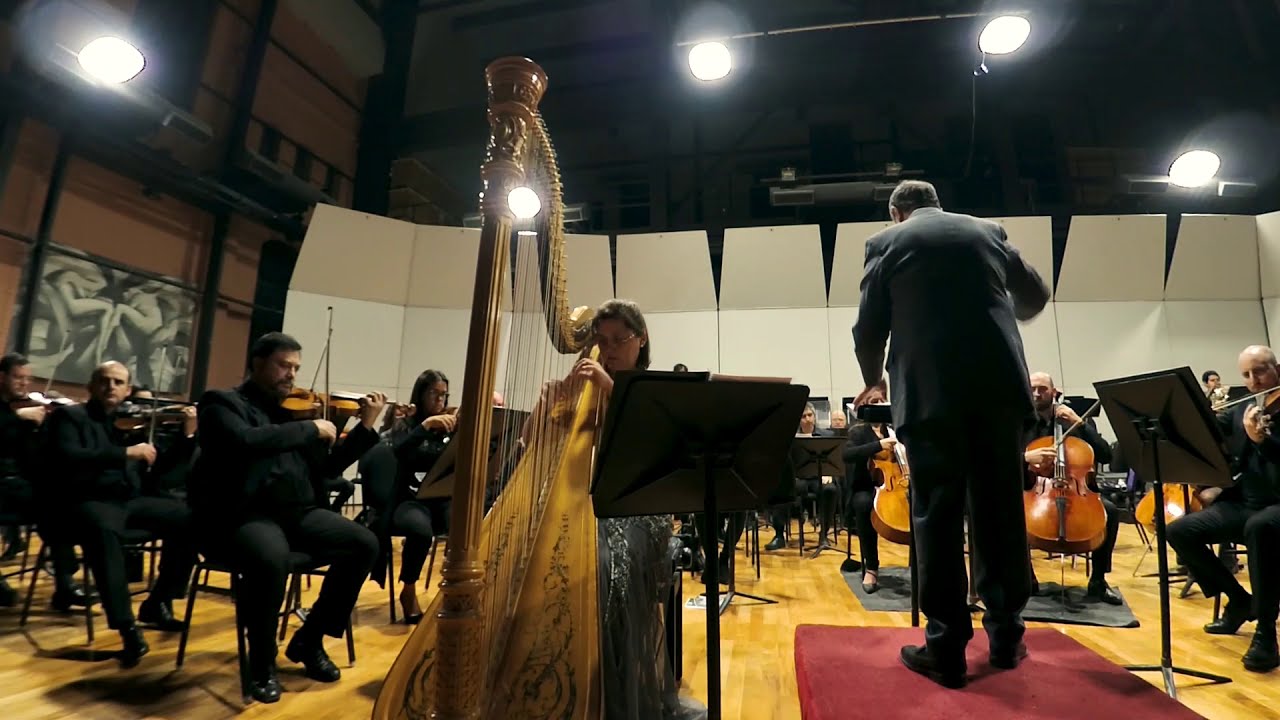
Harpists and arrangers: Marcela Mendez and Maria Luisa Rayan
World premiere recording - 9th December 2018 - Argentina
Our journey with Bach’s Goldberg Variations by Marcela Méndez and Maria Luisa Rayan
“Torniamo all'antico; sarà un progresso”—Giuseppe Verdi
Having in mind this famous quote by Verdi, and their duty for legacy transmission as artists and musicians, harpists Marcela Méndez and Maria Luisa Rayan are happy to present to the harp community an arrangement for two harps of selections of the Goldberg Variations BWV 988 by Johann Sebastian Bach.
A spiritual journey
Going through the process of arranging the Goldberg Variations was a true spiritual journey; this music is so powerful and so emotionally deep that this task could only be achieved in a practical dimension only if the two people facing this adventure are in the same spiritual quest and research of the subject matter.
We share not only our love for music and the harp; we have a connection that goes back to our childhoods, since we are both from a small town in Argentina called Concepción del Uruguay. We studied there with the same harp teacher, Elena Carfi, who with much dedication and patience was our source of instruction and inspiration for many years, even to the present day.
A challenging mission
In order to thoughtfully and carefully go through the process of arranging the Goldberg Variations for two harps, we realized we needed to share the following qualities if we wanted to end up with a result of the highest quality possible:
1. Having the same passion for understanding and playing Baroque music.
2. Being obsessed with the sonority we were looking for.
3. Realize that not all variations adapt optimally, therefore the need to make a selection.
4. Having a true understanding of the idiomatic possibilities of the harp in order to obtain a faithful re-elaboration vis à vis the original score.
Transcribing the music of Bach to the harp prompts many natural questions, some of which have more intricate answers than others, and most of these questions at the end require a personal judgement answer after careful research. Some of the questions we considered are:
1. If we take the liberty of playing Bach's harpsichord works on modern concert harps, are we not violating the composer's original artistic intentions?
2. If we commit ourselves to the previous basic question about instrumentation, what grounds do we have to make other judgements about what is stylistically appropriate?
3. To what extent should one follow the directions of the score, if the score fails to unambiguously specify the composer's intention, namely ornamentation, tempi and dynamics?
4. Should all repeats be observed, and how should one treat phrasing with regard to tempo?
5. Where should the musical work dominate the expressive tendencies of the players, and where should the opposite hold true?
Bach and the modern harp: a long work of study and reflection
Taking into consideration the previously presented questions about arranging the Goldberg Variations, we dove deep into research through books, scores, recordings and ultimately personal taste, while of course consulting with each other and exchanging points of view (we live in two different countries so it took a lot of communication back and forth over ideas).
Our starting point was the edition for two pianos that Josef Rheinberger made in 1883. As an interesting side point, Rheinberger made his arrangement about 140 years after the original piece composed by Bach, and we made ours about 140 after Rheinberger’s arrangement. After careful consideration, we decided that we wanted to come up with a version that is shorter in length and hopefully less intimidating to approach, so ultimately we chose the variations that best adapt to the harp. We took great care to choose fingerings that allow us to maintain fidelity to the musical ideas, reduce buzzings and feel comfortable on the fingers, therefore being more idiomatic on the harp.
Playing the music of J.S.Bach: a must for any instrumentalist
We strongly believe that the music of Bach is a fundamental tool in the development and growth of any instrumentalist since the early days of studies, regardless of whether the music has originally been written or not for that medium. The richness of this music helps a harpist, specifically; concentrate on the importance of melody, voicing, harmony and a clear left hand. These four elements are ever present in the music of Bach, and the harpist has to be careful to distinguish and understand these elements, so that then they can be conveyed in the playing. Besides these practical considerations, just playing and listening to the music of Bach is an incredibly rich, rewarding and emotionally fulfilling experience for both harpist and audience.
Повторяем попытку...
Доступные форматы для скачивания:
Скачать видео
-
Информация по загрузке: