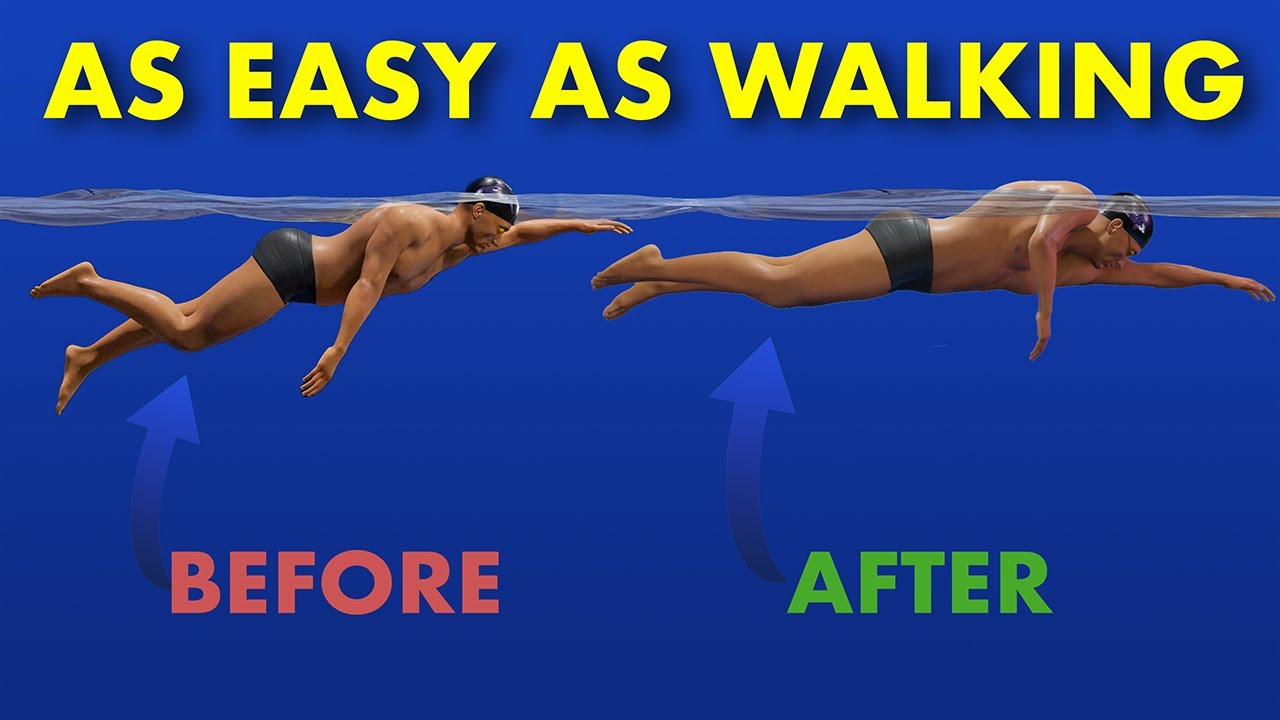
USMA Survival Swimming West Point Survival Swim Test (WPSST)
Автор: West Point Department of Physical Education
Загружено: 2020-08-31
Просмотров: 13189
Описание:
West Point Survival Swim Test (WPSST)
1. UNIFORM: Swimsuit, ACUs, Belt, Bloused Boots, IOTV/MOLLE, Weapon
2. PROTOCOL: Cadet will progress through the 3 event West Point Survival Swim Test
(WPSST), as outlined in the following segments:
A. Baseline Survivability (Objective: Rudimentary Watermanship)
Task: Controlled Seated Entry/3 Controlled Rhythmic Bobs/:40 Front Surface Support/Blouse Inflation/Validate Buoyancy/POS Recovery.
Condition: ACU’s with boots, 6-8 foot water depth, full complement of safety equipment.
Protocol: Soldier performs controlled seated entry into a depth of 6-8 feet of water, and upon releasing from the wall in a vertical posture position, performs three continuous rhythmic bottom bobs demonstrating adequate breath control and air exchange. Upon completion of the third rhythmic bob, the soldier assumes a front surface support treading position, maintaining both ears above the water’s surface in a stationary position for :40 seconds. Upon completion of the treading segment, the Soldier then assumes a survival float posture position, and inflates the ACU blouse achieving full buoyancy which is validated by the Soldier putting a closed fist on his/her head crown with no supporting kick and/or arm displacement.
Once full buoyancy is acknowledged by the Instructor, the Soldier then moves to a position of safety (POS) with any combination of a modified surface resting stroke utilizing the inflated blouse in conjunction with any form of surface locomotion.
B. Stationary Survivability (Objective: Surprise-Analysis-Basic Locomotion-Validate Buoyancy/POS Recovery)
Task: Rear Entry/Stationary Surface Ditch/20yd. Surface Swim Utilizing Survival Stroke of Choice/Blouse Inflation/POS Recovery.
Condition: ACU’s with boots, weighted IOTV/MOLLE, M4 carbine training aid (rubber duck), 6-8 foot water depth, full complement of safety equipment.
Protocol: With weapon in a cross-sling position, the Soldier performs a controlled rear entry into a depth of 6-8 feet of water wearing a weighted IOTV/MOLLE. Upon entry, the Soldier performs a stationary surface ditch of both the weapon and IOTV/MOLLE. Protocol for the IOTV release is “gator roll” rotation with horizontal locomotion utilizing the Emergency Quick Release (EQR). Upon doffing both the weapon and IOTV, the Soldier then performs modified surface resting stroke iteration (elementary back, sidestroke, and/or breastroke) for a distance of 20yds, culminating with ACU blouse inflation/validation (fist on head), and attainment of a position of safety (POS).
C. Operational Survivability (Objective: Analysis-Locomotion-Problem Solving)
Tasking: 1M Stride Jump Port Arms Entry/Cross Sling Weapon/20yd. Surface Swim (w/weapon)/Controlled Surface Ditch/Blouse Inflation/Boot Removal/Trouser Inflation/Validate Buoyancy/POS Recovery.
Condition: ACU’s with boots, weighted IOTV/MOLLE, M4 carbine training aid (rubber duck), 6-8 foot water depth, full complement of safety equipment.
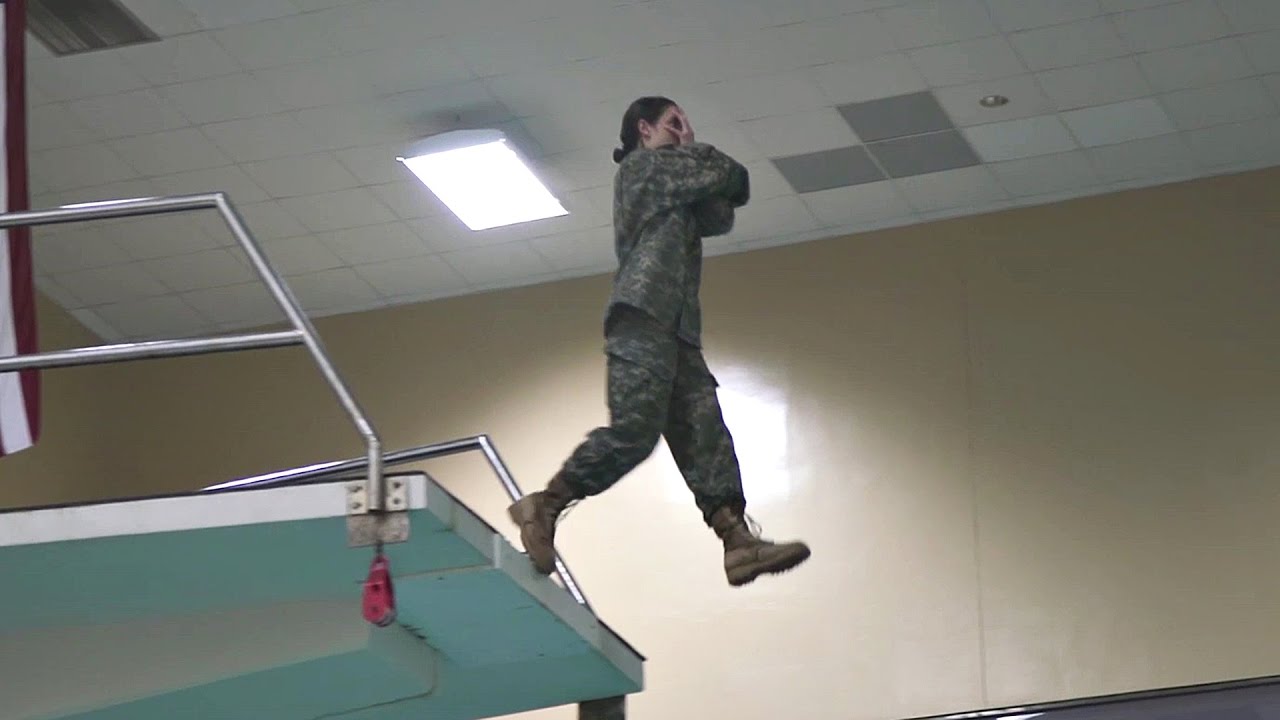
Protocol: With weapon in a port arms position, the Soldier performs a controlled giant stride entry into a depth of 6-8 feet of water wearing a weighted IOTV/MOLLE. Upon entry, the Soldier initiates any combination of a modified surface resting stroke (elementary back, sidestroke, and/or breastroke), cross slinging the weapon while achieving horizontal locomotion for a distance of 20yds. Upon completion of the swim iteration, the Soldier performs a stationary surface ditch of both the weapon and IOTV/MOLLE. Protocol for the IOTV release is “gator roll” rotation with horizontal locomotion utilizing the Emergency Quick Release (EQR). Upon doffing both the weapon and IOTV, the Soldier then assumes a survival float posture position and inflates the ACU blouse in achieving a state of resting buoyancy. While maintaining blouse inflation the Soldier removes both boots and commences with trouser removal. Once trousers are removed, the Soldier ties trouser legs (individually or together) and proceeds with any one of four approved solutions (flap, splash, hot air balloon, and/or parachute techniques) in achieving full buoyancy (no supporting kick-fist on crown of head). Once full buoyancy is acknowledged by the Instructor, the Soldier then moves to a position of safety (POS) with any combination of a modified surface resting stroke, utilizing the inflated trousers in conjunction with said form of surface locomotion.
3. STANDARDS:
Segment Score
Event # A (Baseline) 4 pts
Event # B (Stationary) 6 pts
Event # C (Operational) 10 pts
Повторяем попытку...

Доступные форматы для скачивания:
Скачать видео
-
Информация по загрузке:






![Hayes' Titans - West Point Superintendent vs. Commandant IOCT 2017 [4K]](https://imager.clipsaver.ru/agXcgJkmCiM/max.jpg)