Genealogy Research On Jewish Converso Ancestry In Puerto Rico
Автор: Knowing Your Puerto Rican Genealogy
Загружено: 2023-08-25
Просмотров: 573
Описание:
How to Find Out if Your Ancestors Were Conversos?
Do you have Spanish surnames in your family that you suspect might have converso origins? Or odd practices in your Catholic Hispanic family that might point to Sephardic roots? In this article, we’ll explore the mysterious and complex identity of Spanish and Portuguese conversos and how you can identify them in your family tree .
Who were the conversos?
The word converso simply means “convert,” but this term generally refers to Jewish converts to Christianity on the Iberian peninsula from the 14th century onward.
A very significant Jewish community lived on the Iberian peninsula, dating back to before the Roman invasion and ending with the expulsion of the Jews from Spain in 1492. During the late Middle Ages, especially as a result of the terrible riots and massacres that devastated Jewish communities across the region in 1391, many Jewish families living there converted to Christianity. There were a number of reasons they may have done so:
Forced conversion: Especially during riots and massacres — which unfortunately were not infrequent — many Jewish people were given the choice between conversion and death. In other cases, they were not given a choice at all: they were baptized against their will, and according to Catholic doctrine at the time (up until after World War II), even a person who is baptized against his or her will must live as a Christian from then on.
Voluntary conversion: Some Jewish people chose to convert out of their own free will. They may have done so for genuine religious reasons — that is, they believed that Christianity was the truth — or due to practical considerations. The laws in Spain and Portugal at the time were discriminatory against people of the Jewish faith, and adopting a Christian identity meant greater social and financial opportunities.
These new converts were known as conversos, “new Christians,” or — derogatorily — marranos. “Marrano” means “swine.” This nickname was used because many of them made a point of eating or displaying pork publicly to show that they had abandoned their Jewish traditions (which strictly forbid the consumption of pork).
Note that though the terms “conversos,” “crypto-Jews,” “marranos,” and “anusim” are often used interchangeably, they do not have the same meaning.
Converso: Spanish for “convert.” A person who converted, whether voluntarily or involuntarily.
Marrano: Spanish for “swine.” An insulting term for a convert.
Crypto-Jew: a person who practices Judaism in secret.
Anus: “forced one” in Hebrew (“anusim” in plural). A person who was forcibly converted.
Conversos were not necessarily crypto-Jews: they may have converted, but not practiced Judaism in secret. Crypto-Jews weren’t necessarily anusim: they may have practiced Judaism in secret, but not have been forced to convert. “Marrano” has become an accepted synonym for “converso,” but given its insulting origins, many prefer to avoid it.
Historians argue as to how many of the conversions were forced versus how many were voluntary. There is also a debate among scholars regarding how many of these conversions were sincere and how many were not. It’s very hard to tell because of what came next: the Spanish Inquisition.
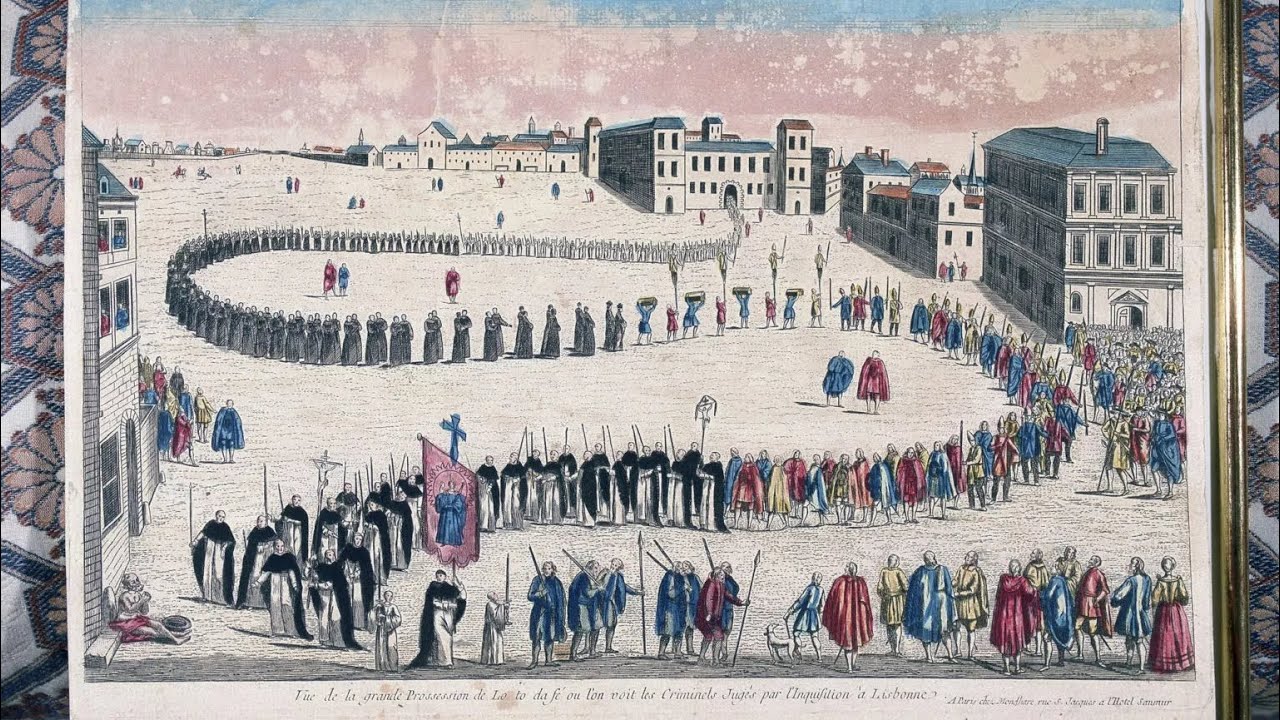
Conversos and the Spanish Inquisition
The institution of the medieval inquisition existed for centuries before Queen Isabel I and her confessor, Don Tomás de Torquemada, established the Spanish Inquisition in 1478. What Torquemada did was organize it and set forth clear guidelines for it. The procedures he established were actually considered quite advanced and humane compared to previous iterations. At the time, torture was considered an effective way to produce a sincere confession, but the Spanish Inquisition applied it sparingly relative to other common practices at the time.
Повторяем попытку...
Доступные форматы для скачивания:
Скачать видео
-
Информация по загрузке: