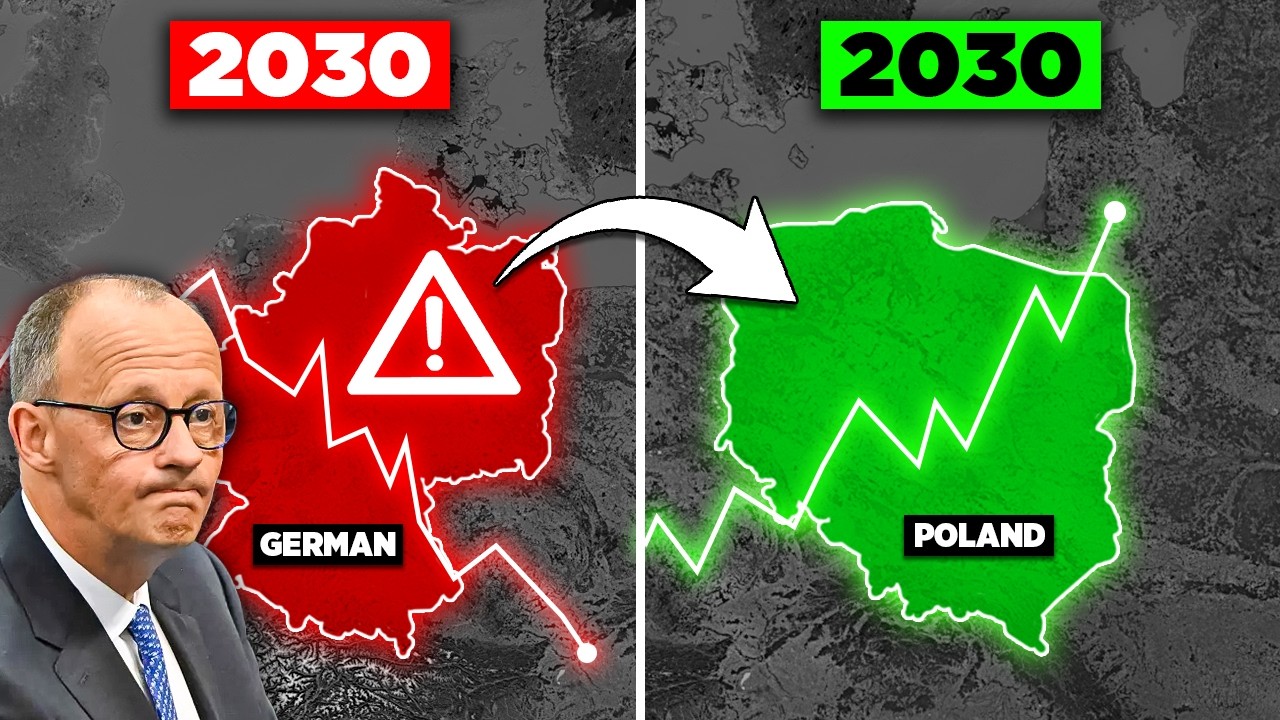
Why Poland Will Overtake Germany by 2030
Автор: Economics Edge
Загружено: 2026-03-12
Просмотров: 390
Описание:
Is Europe's economic map being redrawn? Poland's relentless growth means its economic output could approach Germany's by 2030, challenging old hierarchies.
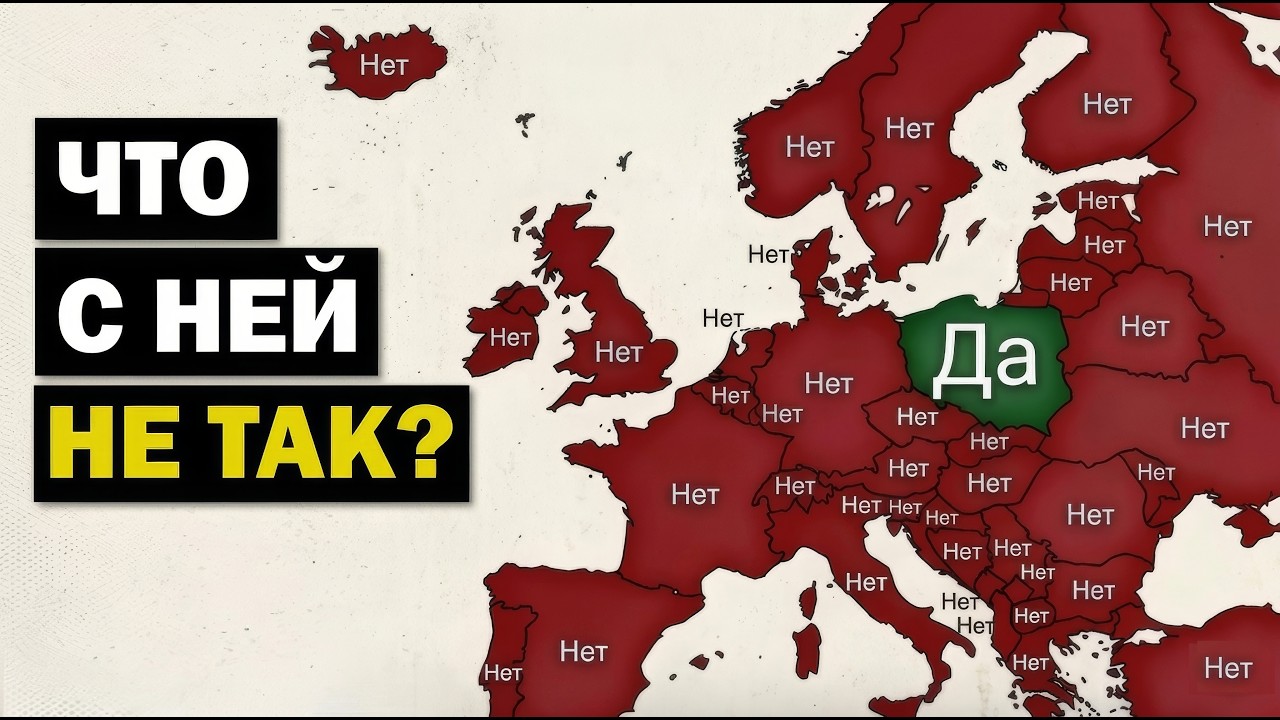
For decades, Germany has been Europe's industrial titan, but signs of decline are emerging as factories hemorrhage. Meanwhile, Poland boasts 34 consecutive years of economic expansion, attracting investment at rates unseen in Western Europe. This isn't just an underdog narrative; it's a cold mathematical reality unfolding.
Most analysts still view Poland as a peripheral economy, yet the data suggests otherwise. Three structural forces are converging to shift Europe's economic center: manufacturing migration, rapid productivity gains, and Germany's struggle with high energy costs. These factors are accelerating a rebalancing faster than anticipated, with profound implications for capital investment and geopolitical leverage.
Poland's GDP per capita, currently $45,000, is projected to reach $55,200 by 2030, significantly narrowing the gap with Germany, which is expected to remain around $65,400. This 49% reduction in economic distance will fundamentally alter perceptions, making Poland an increasingly attractive destination for industry and smart capital. The 316% GDP-per-capita growth since 1995 highlights Poland's exceptional dynamism compared to its Western European counterparts.
As manufacturing shifts eastward due to lower labor costs and a skilled workforce, and Poland's productivity continues to catch up, the country's economic resilience grows. This isn't a temporary blip; it's a structural realignment.
If this analysis of Europe's shifting economic landscape changes how you see the continent, subscribe — more like this every week.
0:00 - Germany's Decline, Poland's Rise
1:20 - The Unthinkable Economic Convergence
4:20 - Three Drivers Reshaping Europe's Factories
8:45 - The Geopolitical Earthquake
11:30 - Poland's Future Beyond 2030
13:15 - What the Data Really Means
Sources & References:
IMF Forecast via poland-accounting (2025) — poland-accounting.com
McKinsey Poland 2030 (PDF) — mckinsey.com
World Bank/Federal Statistical Office (2024) — worldbank.org
McKinsey Global Institute (2023) — mckinsey.com/mgi
Eurostat Database (2024) — ec.europa.eu/eurostat
#PolandGermany #EuropeEconomy #EconomicShift
Повторяем попытку...
Доступные форматы для скачивания:
Скачать видео
-
Информация по загрузке: