Why Fly.io Replaced Consul with a Gossip-Based SQLite Mesh
Автор: InfoQ
Загружено: 2026-02-02
Просмотров: 807
Описание:
Can your service discovery layer handle 800+ nodes with sub-second latency?
In this InfoQ video, Somtochi Onyekwere (Networking Team at Fly.io) reveals why they moved away from HashiCorp’s Consul and built Corrosion: a distributed, eventually consistent state replication engine built on Rust and SQLite.
Learn how Fly.io uses CRDTs (Conflict-free Replicated Data Types) and the SWIM gossip protocol to synchronize machine state globally without the bottlenecks of a central consensus leader. This is a masterclass for software architects and senior engineers on balancing the CAP theorem, optimizing networking layers, and building resilient distributed systems.
⏱️ Video Timestamps (For Navigation)
0:00 — Intro: What is Fly.io?
1:24 — The Problem: Why Consul + Raft didn't scale
3:45 — Introducing Corrosion: Distributed SQLite
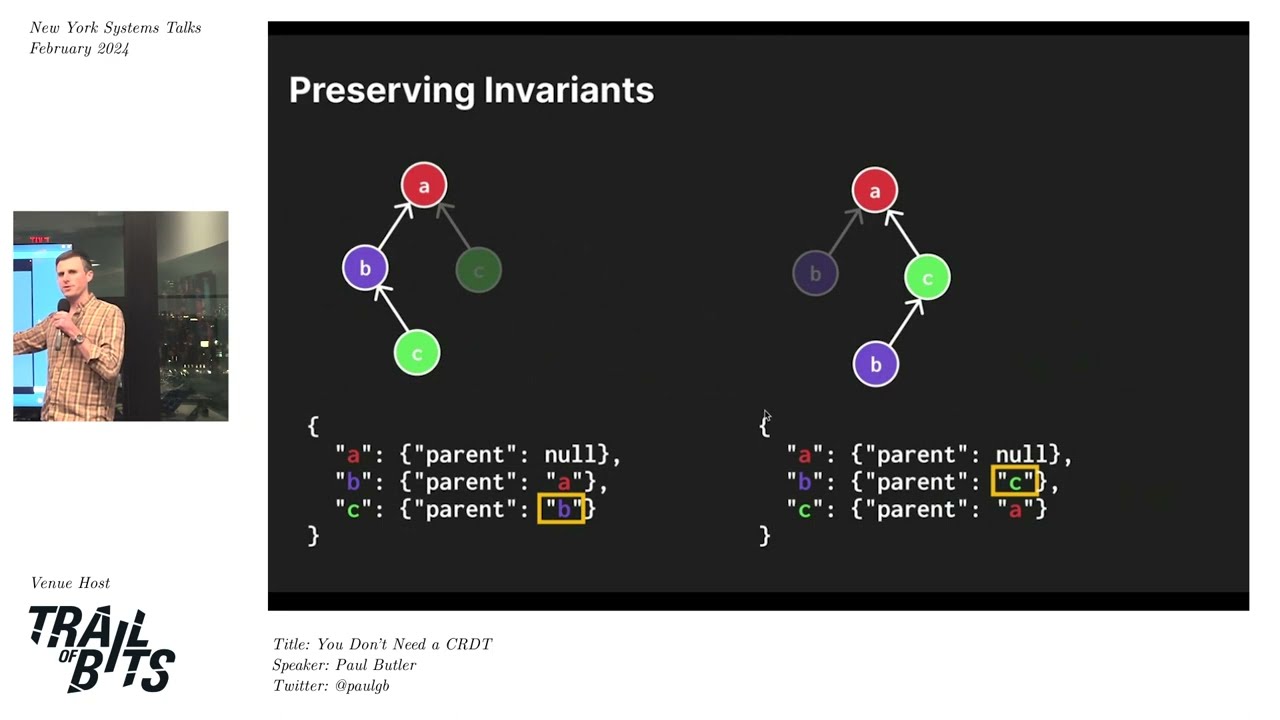
5:30 — CRDTs Deep Dive: Resolving conflicts without a leader
8:12 — [Demo] See cr-sqlite in action
11:05 — Gossip Protocols: How state "infects" the cluster
14:10 — Syncing lagging nodes & Periodic Anti-Entropy
16:45 — Subscription-based SQL queries for real-time updates
19:10 — Security & TLS within the cluster
20:30 — Lessons Learned: The "Broadcast Storm" incident
23:15 — Why Rust is the choice for modern systems
25:00 — Q&A: Handling transactions & network partitions
🔗 Transcript available on InfoQ: https://bit.ly/3NPJnsw
#DistributedSystems #SQLite #RustLang #SoftwareArchitecture #DevOps #Flyio #CRDT
Повторяем попытку...

Доступные форматы для скачивания:
Скачать видео
-
Информация по загрузке: