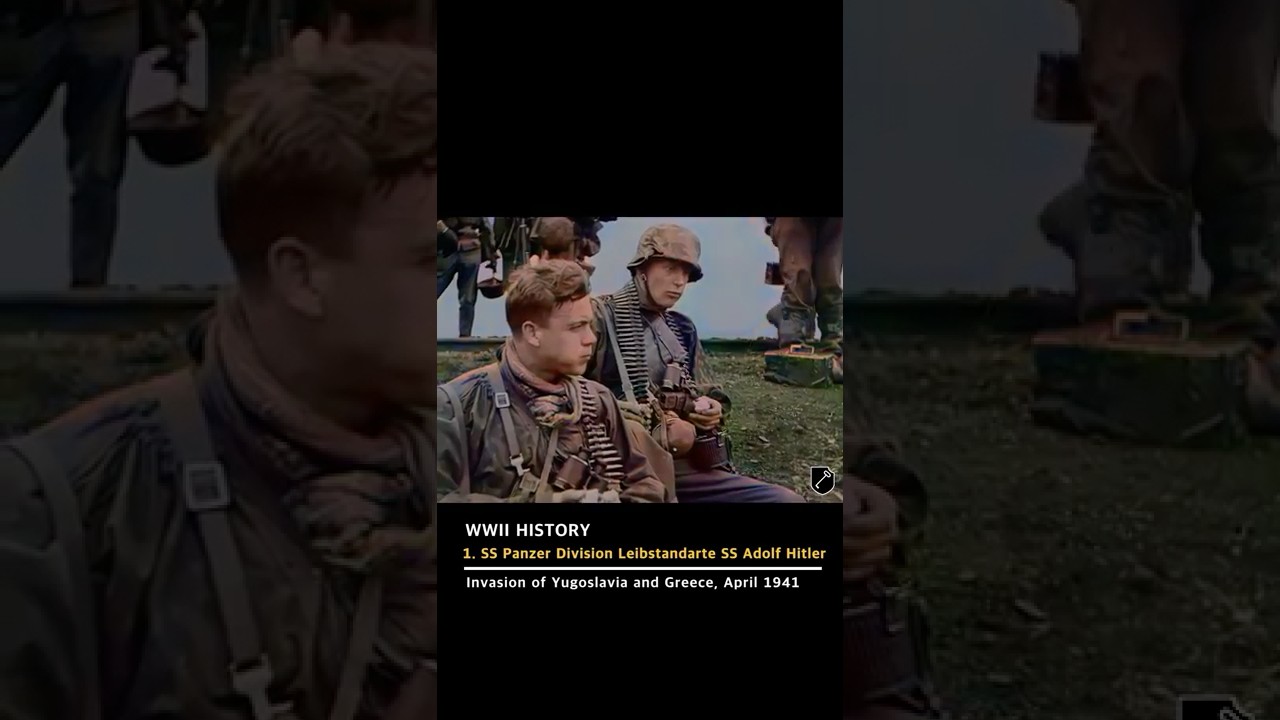
1st SS Panzer Division Leibstandarte SS Adolf Hitler during the Invasion of Yugoslavia
Автор: JK Park
Загружено: 2025-09-02
Просмотров: 195525
Описание:
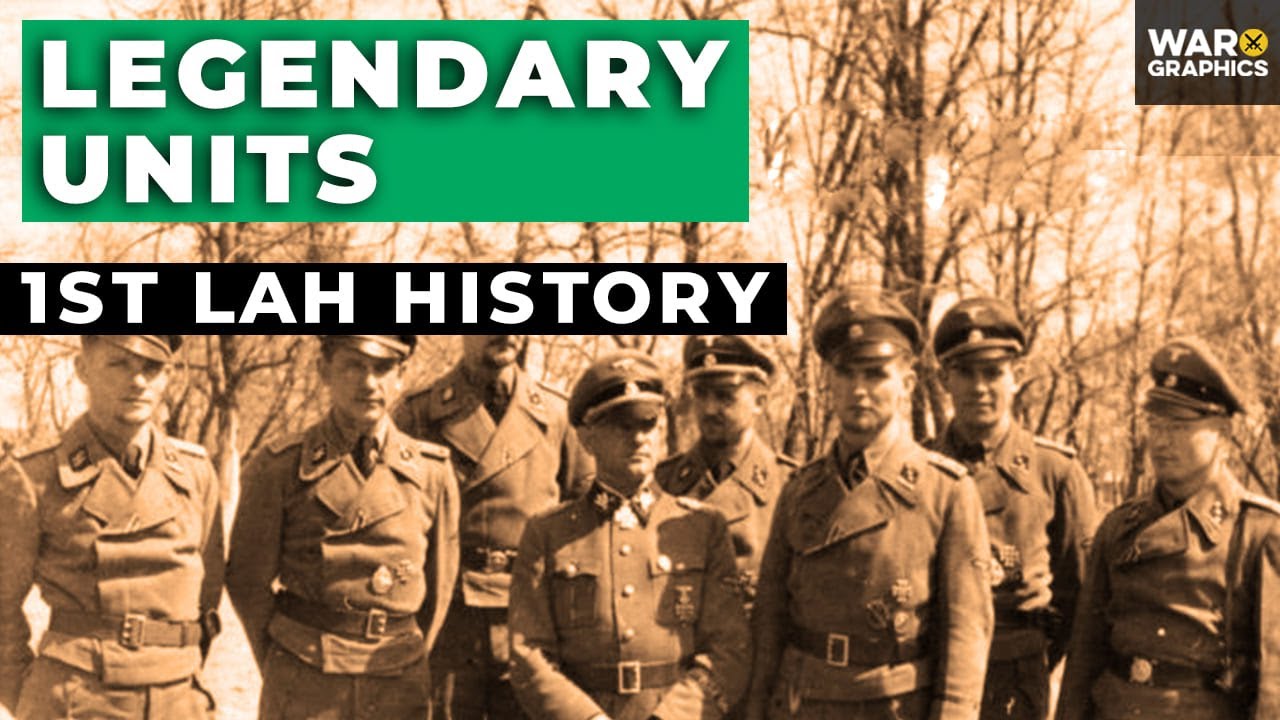
The 1st SS Panzer Division Leibstandarte SS Adolf Hitler or SS Division Leibstandarte, abbreviated as LSSAH, began as Adolf Hitler's personal bodyguard unit, responsible for guarding the Führer's person, offices, and residences. Initially the size of a regiment, the LSSAH eventually grew into an elite division-sized unit during World War II.
The LSSAH participated in combat during the invasion of Poland and was amalgamated into the Waffen-SS together with the SS-Verfügungstruppe (SS-VT) and the combat units of the SS-Totenkopfverbände (SS-TV) prior to Operation Barbarossa in 1941. By mid-1942 it had been increased in size from a regiment to a Panzergrenadier division and was designated SS Panzergrenadier Division "Leibstandarte SS Adolf Hitler". It received its final form as a Panzer division in October 1943.
Members of the LSSAH perpetrated numerous atrocities and war crimes, including the Malmedy massacre. They killed an estimated 5,000 prisoners of war in the period 1940–1945, mostly on the Eastern Front.
After the conclusion of the Western campaign on 22 June 1940, the LSSAH spent six months in Metz (Moselle). It was expanded to brigade size (6,500 men). A 'Flak battalion' and a StuG Batterie were among the units added to the LSSAH. A new flag was presented by Heinrich Himmler in September 1940. During the later months of 1940, the regiment trained in amphibious assaults on the Moselle River in preparation for Operation Seelöwe, the invasion of England. After the Luftwaffe's failure in the Battle of Britain and the cancellation of the planned invasion, the LSSAH was shifted to Bulgaria in February 1941 in preparation for Operation Marita, part of the planned invasion of Greece and Yugoslavia.
The operation was launched on 6 April 1941 by aerial bombings of central-southern Yugoslavia, especially over Belgrade, causing enormous destruction and thousands of victims and wounded. After the LSSAH entered on 12 April into the Yugoslavian capital, then to follow the route of the 9. Panzer-Division, part of General der Panzertruppe Georg Stumme's XL Panzer Corps. The LSSAH crossed the border near Bitola and was soon deep in Greek territory.
he LSSAH captured Vevi on 10 April. SS-Sturmbannführer Kurt Meyer's reinforced Aufklärungs-Abteilung (reconnaissance battalion), LSSAH was tasked with clearing resistance from the Kleisoura Pass south-west of Vevi and driving through to the Kastoria area to cut off retreating Greek and British Commonwealth forces. Despite stiff resistance, Meyer's unit captured the pass.
The brigade participated in the clearing the Klidi Pass just south of Vevi, which was defended by a "scratch force" of Greek, Australian, British and New Zealand troops. An Australian artillery officer wrote of the Germans' "insolence" in driving "trucks down the main road – to within 3,000 yards (2,700 m) of our infantry" and there unloading the troops. The Germans were forced off the road by artillery fire and faced fierce resistance for more than two days. On the morning of 12 April the Germans renewed their attack, and by late afternoon the pass was cleared.
With the fall of the two passes the main line of resistance of the Greek Epirus army was broken, and the campaign became a battle to prevent the escape of the enemy. On 20 April, following a pitched battle in the 5,000-foot-high (1,500 m) Metsovon Pass in the Pindus Mountains, the commander of the Greek Epirus army surrendered the entire force to Dietrich. British Commonwealth troops were now the only Allied forces remaining in Greece, and they were falling back across the Corinth Canal to the Peloponnesos. By 26 April the LSSAH had reached the Gulf of Patras, and in an effort to cut off the retreating British Commonwealth forces, Dietrich ordered that his regiment cross the Gulf and secure the town of Patras in the Peloponnesus. Since no transport vessels were available, the LSSAH commandeered fishing boats and successfully completed the crossing but were forced to leave much of their heavy equipment behind. By 30 April the last British Commonwealth troops had either been captured or escaped. The LSSAH occupied a position of honor in the victory parade through Athens. After Operation Marita, the LSSAH was ordered north to join the forces of Army Group South massing for the launch of Operation Barbarossa.
#worldwar2 #germanarmy #militaryhistory
Повторяем попытку...
Доступные форматы для скачивания:
Скачать видео
-
Информация по загрузке: