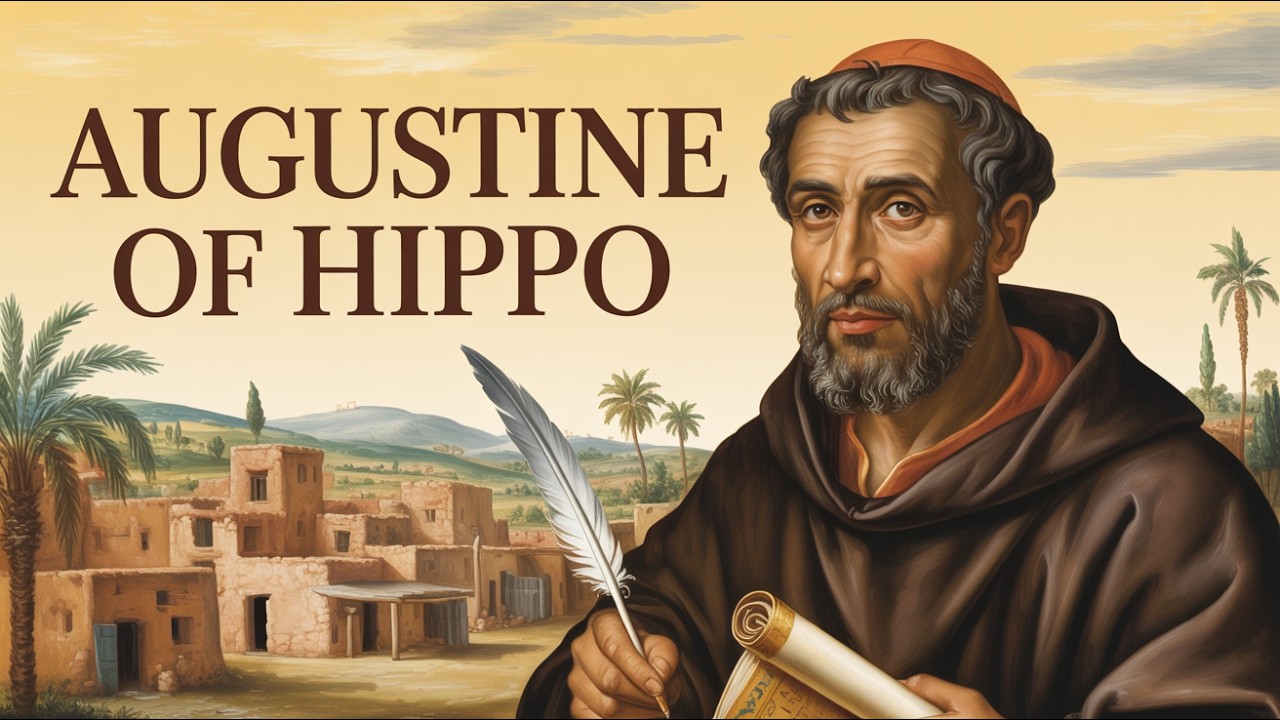
Augustine of Hippo - The North African Sinner, Saint, Bishop, Philosopher
Автор: Doug Vos
Загружено: 2025-11-29
Просмотров: 49
Описание:
#history #biography #philosophy #augustine #cityofgod #christianity
Lesson 2 in The City of God series of educational videos. This video provides biographical background on the St. Augustine of Hippo.
Augustine of Hippo: Beyond the Myths
Introduction: The Misunderstood Philosopher
Augustine of Hippo stands as a crucial bridge between ancient philosophy and medieval thought—yet he's widely misunderstood. Three common misconceptions paint him as: a dualist who hated the physical world, a guilt-obsessed moralist, and a political authoritarian. Let's examine the truth behind these charges.
The Dualist Myth: His Early Years
The Caricature: Augustine despised the human body and physical world.
The Reality: Young Augustine was ambitious and intellectually curious, rising from North Africa to Milan through public speaking. He explored Manichaeism and Neoplatonism—both forms of metaphysical dualism that divided reality into a pure spiritual realm versus a corrupt material world. Think of Plato's cave allegory: prisoners watching shadows, mistaking them for reality.
The Truth: Augustine rejected these philosophies. After converting to Christianity, he reached a radical conclusion—the physical world and human body weren't evil but fundamentally good creations to be valued.
The Moralist Myth: His Leadership
The Caricature: A guilt-obsessed preacher fixated on human sin.
The Reality: As bishop, Augustine revolutionized religious life by bringing monasticism into the city, not isolating it in deserts. His community was radical—they shared everything, rejected private property, and practiced brutal honesty about personal flaws. His logic? Why hide weaknesses from each other when God already knows them?
The Truth: His focus on human weakness wasn't about inducing guilt—it was the starting line for building communities based on grace and honesty, not pretense. Admitting flaws was the first step toward genuine transformation.
The Authoritarian Myth: His Legacy
The Caricature: A political strongman who crushed dissent.
The Context: Augustine engaged in major controversies—the Donatist conflict over forgiving persecuted leaders, and the Pelagian debate about whether humans need divine help to be good. His positions shaped Western Christianity for centuries, and he sometimes used Roman state power to enforce them.
The Truth: Augustine had a deeply anti-authoritarian streak. He repeatedly urged followers: "Don't follow me, follow reason. Follow the scriptures." He was reportedly furious when people treated his books as final authority. The tragic irony? Future generations fossilized his evolving thought into the rigid rulebook he warned against, making him the authority figure he opposed.
Why Augustine Still Matters
Understanding Our Past: He's the essential bridge from Plato to Aquinas — 1,000 years of philosophy and theology were conversations with his ideas.
Navigating Our Future: Our secular values have roots in his world. The idea that every person has infinite intrinsic value—taken for granted today—was forged in his theological debates.
Understanding Ourselves: Before becoming St. Augustine, he was simply Augustine—an ambitious professional, grieving father, skeptical academic, and long-time non-believer who understood doubt from the inside.
The Final Question
Strip away the myths and you find someone surprisingly human: driven, intellectually restless, flawed. This ancient thinker from a radically different world might be far less different from us than we imagine.
See my City of God study guide and resources.
https://dougvos.com/aug2
Повторяем попытку...
Доступные форматы для скачивания:
Скачать видео
-
Информация по загрузке: