Day 16 World Trade organisation Part 1( Economic ad Social Issues ) by CIVIL SERVICE CORNER
Автор: CIVIL SERVICE CORNER
Загружено: 2020-08-11
Просмотров: 212
Описание:
https://drive.google.com/file/d/1am2T...
Introduction:
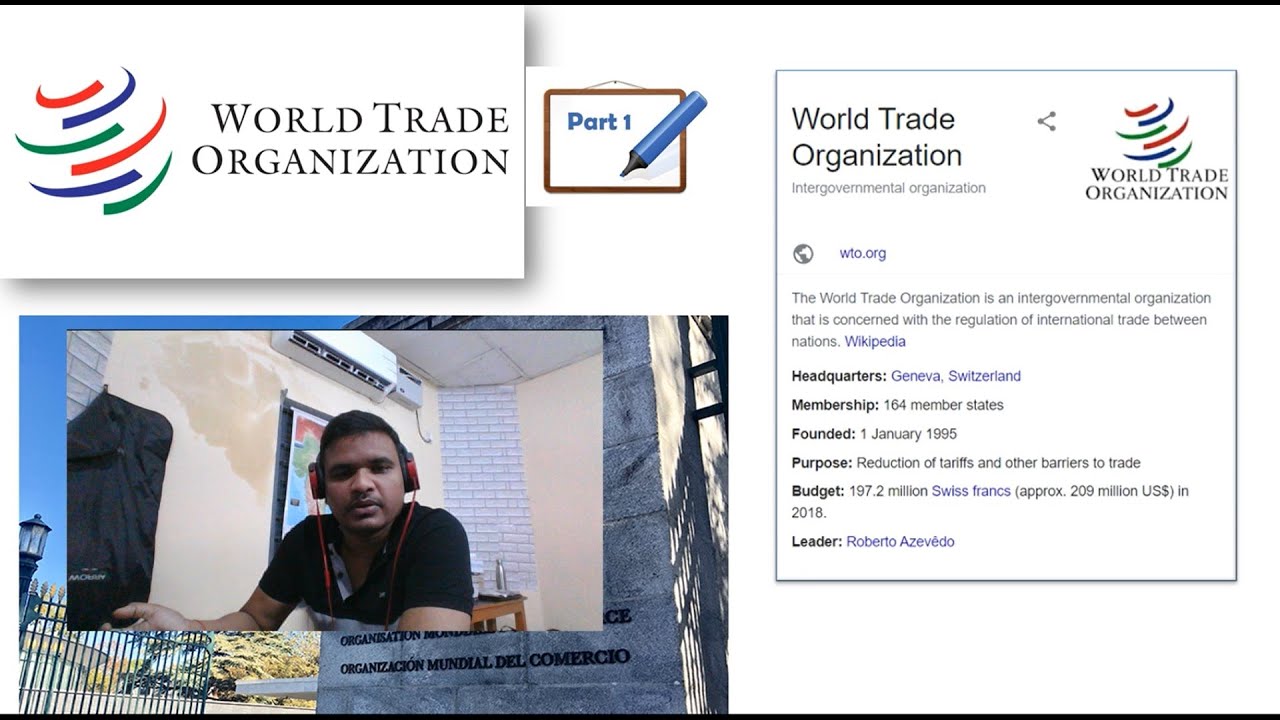
January 1st 2020 marked the silver jubilee of the World Trade Organisation. The world trade body was established on 1st of January, 1995. It was the biggest reform in international trade since the end of the Second World War. Ever since its inception, the world body has presided over international trade ensuring that it proceeds with a semblance of order. But in its 25th year, confidence in the global body has sunk to an unprecedented low. For just a few weeks ago, the WTO lost its power to resolve trade disputes. This was after the U.S. blocked the functioning of the Appellate Body – the WTO’s highest adjudicating body .
World Trade Organization, as an institution was established in 1995. It replaced General Agreement on Trade and Tariffs (GATT) which was in place since 1946.
ITO was successfully negotiated and agreed upon by almost all countries. It was supposed to work as a specialized arm of United Nation, towards promotion of free trade. However, United States along with many other major countries failed to get this treaty ratified in their respective legislatures and hence it became a dead letter.
Consequently, GATT became de-facto platform for issues related to international trade. It has to its credit some major successes in reduction of tariffs (custom duty) among the member countries.
Measures against dumping of goods like imposition of Anti-Dumping Duty in victim countries, had also been agreed upon. It was signed in Geneva by only 23 countries and by 1986, when Uruguay round started (which was concluded in 1995 and led to creation of WTO in Marrakesh, Morocco), 123 countries were already its member. India has been member of GATT since 1948; hence it was party to Uruguay Round and a founding member of WTO.
China joined WTO only in 2001 and Russia had to wait till 2012.
While WTO came in existence in 1995, GATT didn’t cease to exist. It continues as WTO’s umbrella treaty for trade in goods.
Limitations of GATT
It lacked institutional structure. GATT by itself was only the set of rules and multilateral agreements.
By developing countries it was seen as a body meant for promoting interests of wests. This was because Geneva Treaty of 1946, where GATT was signed had no representation from newly independent states and socialist states.
Under GATT countries failed to curb quantitative restrictions on trade. (Non-Tariff barriers)
WTO’s Appellate Body:
The Appellate Body, set up in 1995, is a standing committee of seven members that presides over appeals against judgments passed in trade-related disputes brought by WTO members.
Countries involved in a dispute over measures purported to break a WTO agreement or obligation can approach the Appellate Body if they feel the report of the panel set up to examine the issue needs to be reviewed on points of law. Existing evidence is not re-examined; legal interpretations are reviewed.
The Appellate Body has so far issued 152 reports. The reports, once adopted by the WTO’s disputes settlement body, are final and binding on the parties.
WTO Appellate Body on Shaky Ground:
Over the last two years, the membership of the body has dwindled to just three persons instead of the required seven.
The understaffed appeals body has been unable to stick to its 2-3 month deadline for appeals filed in the last few years, and the backlog of cases has prevented it from initiating proceedings in appeals that have been filed in the last year.
With the Appellate Body unable to review new applications, there is already great uncertainty over the WTO’s dispute settlement process.
If the body is declared non-functional, countries may be compelled to implement rulings by the panel even if they feel that gross errors have been committed.
Should such a country refuse to comply with the order of the panel on the ground that it has no avenue for appeal, it will run the risk of facing arbitration proceedings initiated by the other party in the dispute.
USA has crippled functioning the WTO:
Finally, the U.S. chose to spike the Appellate Body by resorting to starving funds for its functioning as well as blocking the selection process for filling six vacancies.
Consequently, the Appellate Body is left with only one member, who will not be able to deliver any rulings on the pending trade disputes.
A minimum of three members are required to adjudicate any dispute.
India’s Role:
As the U.S. loses interest in multilateralism in trade, India should actively try to arrest the organisation’s slide
India should be more actively engaged to make the WTO a more equitable organisation.
India needs to work on persuading all members of the WTO to return to the table and negotiate on issues like agriculture, industrial tariffs, and services.
Повторяем попытку...
Доступные форматы для скачивания:
Скачать видео
-
Информация по загрузке: