Iran Fighter Jets Launch UNEXPECTED ATTACK on USS Abraham Lincoln — US Navy’s Response is LETHAL
Автор: Military HQ
Загружено: 2026-02-02
Просмотров: 7757
Описание:
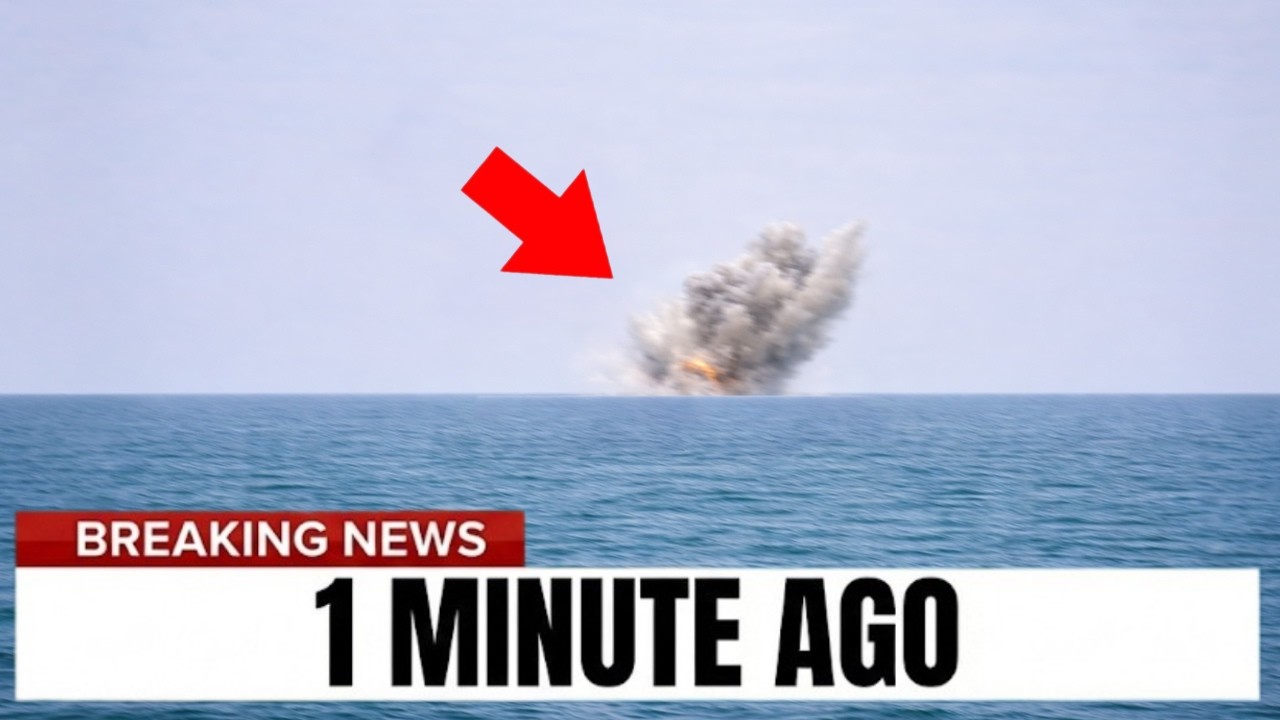
At exactly 4:37 a.m. in the Persian Gulf, 3 Russian-built Su-35S Flanker-E fighters worth $255 million made a catastrophic miscalculation. Iranian pilots flying Moscow’s most advanced 4th-generation export fighter launched 6 Kh-31A supersonic anti-ship missiles at Mach 3.5 toward the USS Abraham Lincoln, believing modern Russian technology would penetrate American defenses. What happened in the next 12 minutes reveals why $262.2 million in Iranian and Russian hardware was destroyed by $59.4 million in American interceptors before getting within 10 miles of the carrier.
This is the untold story of how American E-2D Hawkeye early warning detected the Su-35 formation at 190 nautical miles before Iranian pilots knew they were tracked, how F/A-18E Super Hornets fired AIM-120D AMRAAMs destroying 2 Su-35s beyond visual range while their Khibiny-M electronic warfare suites failed to spoof American radars, and why layered Aegis defense using SM-6 and ESSM interceptors destroyed all 6 supersonic missiles in 18 seconds. You’ll discover why Russia’s most capable export fighter couldn’t survive first contact with carrier air wing, how reconnaissance satellites detected Su-35 takeoff from Isfahan before wheels left tarmac, and why the cost-benefit mathematics of challenging networked American defenses guarantees strategic failure.
Inside this military documentary analysis:
• Russian Su-35S Flanker-E capabilities: Saturn AL-41F1S engines, Irbis-E radar, Khibiny-M ECM
• Iranian attack plan: 6 Kh-31A Mach 3.5 missiles with 94kg warheads against carrier
• E-2D Advanced Hawkeye AN/APY-9 radar detection at 190 nautical miles
• F/A-18E Super Hornet AIM-120D AMRAAM beyond-visual-range kills
• SM-6 Standard Missile layered defense destroying 5 missiles at 72 nautical miles
• ESSM Evolved Sea Sparrow destroying final missile at 18 nautical miles
• Real cost: $262.2M Iranian losses (3 Su-35s + 6 missiles) vs $59.4M US expenditure
• Why Khibiny-M electronic warfare failed against Aegis filtering algorithms
• Reconnaissance satellite infrared detection of turbofan engine signatures pre-launch
Technical Systems Covered:
• Su-35S Flanker-E: $85M unit cost, Irbis-E passive phased array radar, thrust vectoring
• Kh-31A anti-ship missile: Mach 3.5, ramjet engine, active radar seeker, $1.2M each
• E-2D Hawkeye: AN/APY-9 tracking 2,000+ targets, 190-mile detection range
• F/A-18E Super Hornet: AN/APG-79 AESA radar, AIM-120D integration
• AIM-120D AMRAAM: Mach 4, 50% range increase, improved jamming resistance, $1.5M each
• SM-6 Standard Missile: Mach 3.5, active radar homing, 250-mile range, $4.3M each
• ESSM Evolved Sea Sparrow: Mach 4, layered terminal defense
• Link 16 tactical datalink: 4-second tactical picture distribution across strike group
This engagement definitively proves Russian 4th-generation export fighters and supersonic anti-ship missiles cannot penetrate American carrier strike group defenses backed by networked early warning and layered interceptors. E-2D Hawkeye detected Su-35 formation at 190 nautical miles—Iranian pilots believed their low-altitude approach and Khibiny-M ECM would mask them, but American reconnaissance satellites had tracked their takeoff from Isfahan and Aegis systems filtered Russian jamming patterns collected over 3 years of intelligence gathering.
Learn why Iran’s $262.2 million attack (3 $85M Su-35s plus 6 $1.2M Kh-31A missiles) was defeated by $59.4 million in American interceptors without the carrier changing course, how AIM-120D AMRAAMs traveling Mach 4 destroyed 2 Su-35s beyond visual range while Khibiny-M ECM failed to spoof AN/APG-79 AESA radars, why SM-6 interceptors destroyed 5 of 6 Mach 3.5 missiles in 18 seconds at ranges exceeding 72 nautical miles, and how the final missile was destroyed 10 nautical miles from carrier after evading first SM-6 through 15-G maneuvering.
Subscribe for military analysis explaining why Russia’s most advanced export fighters guarantee expensive lessons when challenging American networked carrier defenses.
Related Topics:
Su-35S Flanker-E capabilities
USS Abraham Lincoln operations
Kh-31A anti-ship missiles
E-2D Hawkeye early warning
SM-6 Standard Missile defense
AIM-120D AMRAAM technology
F/A-18E Super Hornet
Aegis ballistic missile defense
Russian electronic warfare
Khibiny-M ECM systems
Layered air defense
Carrier strike group tactics
Persian Gulf operations
Military cost analysis
Повторяем попытку...
Доступные форматы для скачивания:
Скачать видео
-
Информация по загрузке: