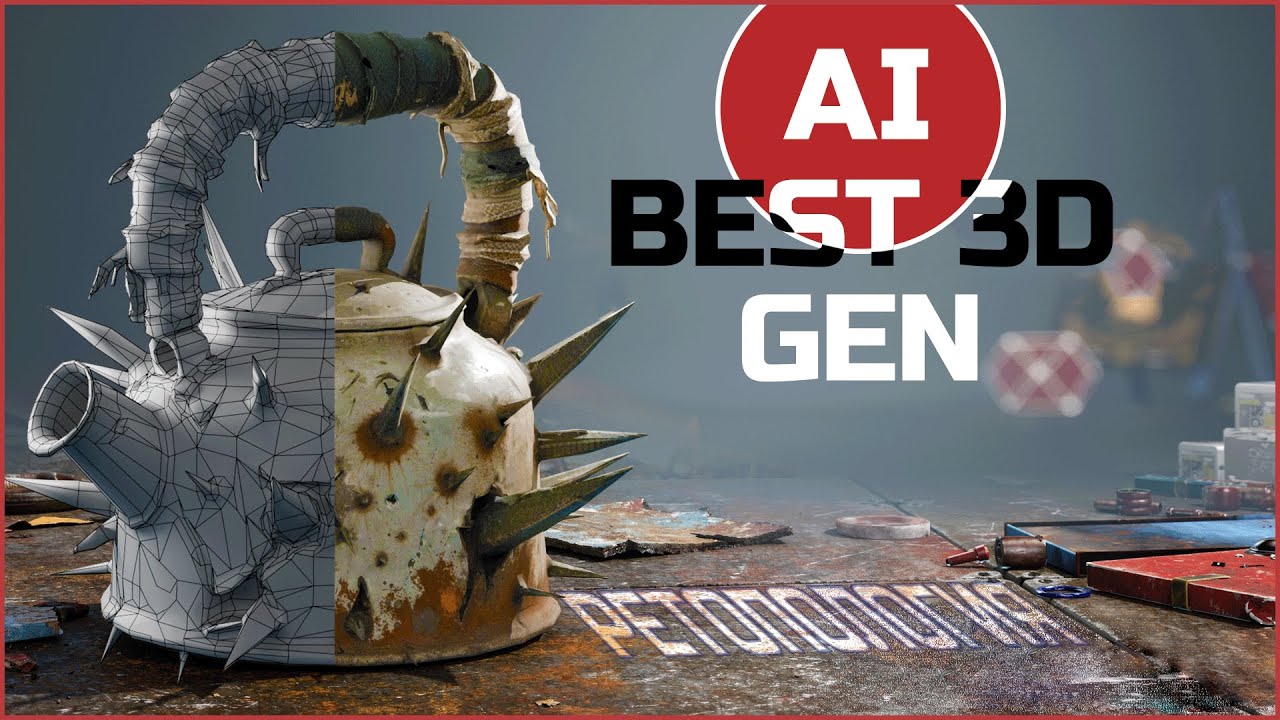
3D Animation II Design Solutions
Автор: Design Solutions
Загружено: 2024-07-06
Просмотров: 6
Описание:
Concept and Storyboarding: The process begins with developing a concept or story. Storyboards are created to visualize the sequence of events and shots in the animation. These storyboards act as a blueprint for the entire animation process.
Modeling: This stage involves creating 3D models of characters, props, and environments. Artists use specialized software like Blender, Maya, or 3ds Max to sculpt and refine these models. The models can range from simple geometric shapes to highly detailed figures.
Texturing: Texturing adds surface details to the 3D models, giving them color, patterns, and other visual characteristics. This involves mapping 2D images onto the 3D models to create realistic surfaces such as skin, fabric, metal, etc.
Rigging: Rigging is the process of creating a skeleton for the 3D models. This skeleton, or rig, consists of interconnected bones and joints that allow the model to be animated. Rigging also includes setting up controls that animators will use to move and pose the models.
Animation: Animators bring the rigged models to life by creating keyframes and defining their movements over time. This can involve both manual animation, where animators pose the models frame by frame, and automated processes like motion capture, where real human movements are recorded and applied to the models.
Simulation: Some aspects of 3D animation, such as hair, cloth, fluids, and particles, require simulation to achieve realistic motion. Specialized algorithms are used to calculate how these elements move and interact with the environment.
Lighting: Lighting in 3D animation is crucial for setting the mood, highlighting important elements, and adding realism. Virtual lights are placed in the scene to mimic real-world lighting conditions. Techniques like global illumination and ray tracing are used to achieve realistic light behavior.
Rendering: Rendering is the process of converting the 3D models, textures, lighting, and animation into 2D images or frames. This can be a time-consuming process, especially for high-quality productions, as it involves complex calculations to achieve realistic visuals.
Compositing and Post-Production: Once the frames are rendered, they may be further refined in post-production. Compositing involves combining rendered images with other elements like background plates, effects, and color correction to create the final look of the animation. Additional visual effects (VFX) and sound design are also added in this stage.
Output and Distribution: The final animated sequence is compiled and exported in the desired format, ready for distribution across various platforms like theaters, television, online streaming services, or interactive applications.
Throughout this process, collaboration among various artists, animators, and technical experts is crucial to ensure a cohesive and high-quality final product. Advances in technology continue to push the boundaries of what is possible in 3D animation, enabling creators to produce increasingly sophisticated and immersive experiences.
If you have any inquiries about aluminum, glass, cladding sheet, façade system, Lumion, SketchUp, AutoCAD.
you can contact with us. E-Mail: [email protected]
Phone: 92 306 4704587
👇
Use computer-assisted engineering and design software and equipment to prepare façade engineering design documents.
(Thanks for watching these videos)
Design Solutions: @ghulam-rasool4587
Повторяем попытку...
Доступные форматы для скачивания:
Скачать видео
-
Информация по загрузке: