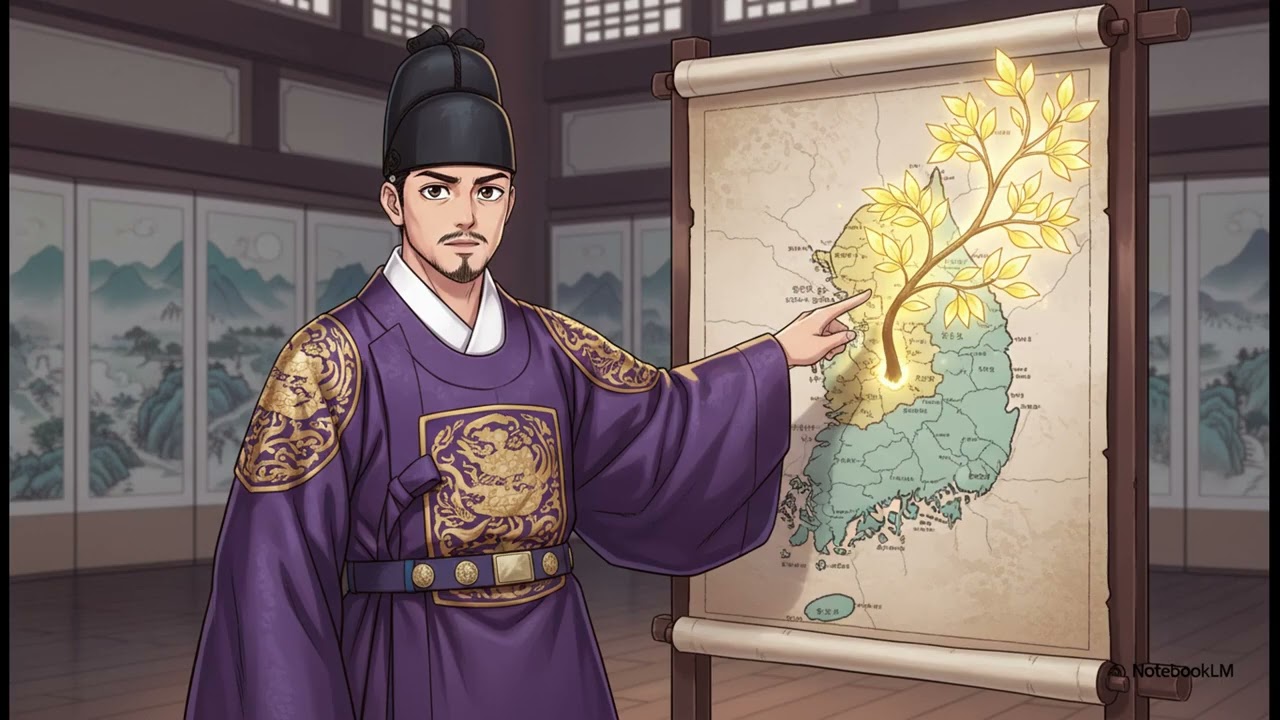
The Day Grandma and Grandpa Visit: Sharing Our Hearts Through Korean Jesa
Автор: DrJBHistory
Загружено: 2026-02-12
Просмотров: 114
Описание:
When you look at Jesa or Charye (Korean ancestral rituals),
most of the time, you only see the steps written in Hanja.
Many people follow them without really knowing why.
They just think, “This is the way it’s done” and copy it.
But actually, it’s really simple.
Think about it this way:
Imagine your late parents, grandparents, or elders are coming to visit our home for a short while today.
Jesa is in the process of welcoming them, treating them respectfully, offering them a meal, and then politely seeing them off.
Let’s look at the steps one by one.
First, we light incense.
Why do we do this?
It’s like saying, “Please come in.”
The incense symbolizes inviting their spirits.
Think of it like welcoming a guest at your front door.
Next, we offer a drink and a bow.
Since they came from outside, they might be thirsty, right?
So we give them a drink first.
Traditionally, the head of the household—usually a man—does this first.
Men bow two and a half times.
Why two and a half?
Two full bows are for the deceased,
and the half bow at the end is an extra gesture to show respect.
Women bow four times traditionally,
but in real life, it’s usually three and a half bows now.
The hand positions are different too:
Men place the left hand on top,
Women place the right hand on top.
This represents yang (male) and yin (female).
After the head of the household bows,
the rest of the family—sons, grandsons, daughters-in-law—bow in order.
This shows that the whole family is greeting the ancestors together.
Each person lights incense, offers a drink, and bows.
Next is meal time.
We open the lids of the rice bowls,
place the spoon on the rice,
and put chopsticks on the side dishes they liked when alive.
This doesn’t mean they actually eat, of course.
It shows that we honor them with care and respect.
Then everyone bows again, saying,
“Please enjoy your meal.”
After that, we switch to scalded rice water (sungnyung),
mix a little rice into water,
and drop condiments three times into a bowl.
These actions symbolize that the meal is in progress.
The family then steps out of the room for a while.
Why?
So they don’t disturb the ancestors while they “eat.”
This is why during jesa, people often face away from the table while waiting.
Later, we come back,
cover the rice bowls,
and put away the spoons and chopsticks.
Placing the chopsticks at the bottom of the bowl means the meal is finished.
Finally, it’s time to say goodbye.
All the family bows together, saying,
“Please return peacefully.”
Then we burn the paper tablet (Jibang).
This is to send the temporarily invited spirit back to its original place.
It’s like sending your respect and love up to the sky.
So you see, Jesa or Charye is not just a complicated ceremony full of Hanja.
It’s really about:
• welcoming your elders,
• offering them food,
• letting them “eat” respectfully,
• and politely sending them off.
The formality is not the most important thing.
Once you understand why each step exists,
everything you do will feel natural and meaningful.
At a memorial ritual (jesa), you may see difficult Hanja written on a paper tablet.
If you don’t know what they mean, they look complicated and scary.
But actually, the meaning is very simple.
“Hyun-go” means “late father.”
“Hyun-bi” means “late mother.”
These are just very polite and respectful ways to say “father” and “mother” after they have passed away.
The word “Haksaeng” (학생) does not mean a school student here.
In the past, it was a respectful title used for a man who did not hold a government position before he passed away.
“Yuin” was a respectful title used for a married woman in old times, similar to saying “Madam” or “Lady.”
“Boo-gun” is a respectful way to refer to a deceased father or male ancestor.
“Shinwi” means “the seat of the spirit.”
It refers to the place where we symbolically invite the spirit of the deceased to sit during the ritual.
So when you put all these words together,
it is not a magic spell.
It simply means:
“Father, Mother,
please come and join us today.”
That’s all.
It is like writing a letter that begins:
“Dear Father,
we have prepared this for you.”
The words may look difficult,
but the meaning is warm and simple.
More information
product.kyobobook.co.kr/detail/S000213686023
Повторяем попытку...

Доступные форматы для скачивания:
Скачать видео
-
Информация по загрузке: